The bill would reinstate protections for wetlands and seasonal streams eliminated by a 2023 Supreme Court ruling.


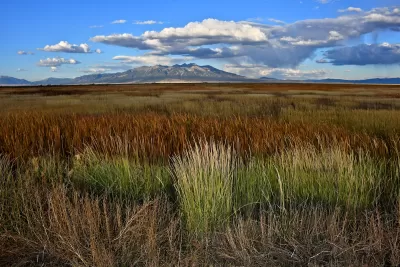
Colorado legislators approved a bill that will extend new protections to the state’s streams and wetlands after the U.S. Supreme Court reduced protections for wetlands last year, reports Daniel C. Vock in Route Fifty. “The issue of wetland regulations is particularly poignant in Colorado, where two-thirds of the state’s waters are temporary in nature and lack year-round flow, according to a friend-of-the-court brief the state filed in the Supreme Court case.”
Last year’s ruling, which states that “the Clean Water Act only applies to wetlands that have a continuous surface connection to bigger bodies of water,” makes states responsible for enacting — and funding — more stringent regulations that apply to non-contiguous wetlands and seasonal streams.
According to Vock, “Roughly half the states relied on federal rules to determine what waterways they would regulate for dredging and filling activities before the Supreme Court ruled, according to an analysis by James McElfish, an attorney at the Environmental Law Institute.”
Read the full story: After Supreme Court decision left wetlands unprotected, Colorado steps in

94% of wetlands could lose federal protections under proposed EPA rule
The ruling would only allot federal protections to waterways that flow nearly everyday, which few wetlands do.
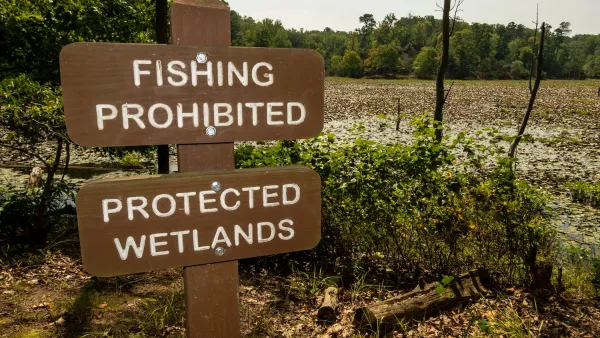
Proposed EPA Rule Change Would Exclude Millions of Acres of Wetlands and Waterways From Federal Protection
A proposed change to the Waters of the United States Rule would narrow the definition of protected waterways.
States Scramble in Wake of Clean Water Act Ruling
The removal of federal oversight of wetlands has left millions of acres unregulated and erected major hurdles for lawmakers seeking to protect them.

Planetizen Federal Action Tracker
A weekly monitor of how Trump’s orders and actions are impacting planners and planning in America.

California plans to bury El Niño’s downpour
If the state plays its cards right, it may be able to store a billion acre-feet of El Niño’s water in aquifers.

Chicago breaks ground on $3 billion megadevelopment
The new neighborhood, titled Foundry Park, will one day host 3,700 residences.

California High-Speed Rail Authority CEO resigns after $600,000 scandal
Under Ian Choudri, the authority used taxpayer dollars to fund first class flights and trips to nightclubs.

Want to study the Missouri River? Soon, you may need unanimous approval from 10 states
Legislation would require 10 governors’ permission to study or build projects moving water outside the basin.

Desperate measures: Advocates weigh draining Lake Powell to fill Colorado River
Draining the reservoir could reduce evaporation losses by a couple hundred thousand acre-feet.

FREE Course: Walkable City 1: Why Walkability?
After describing his path towards focusing on walkability as the essence of good planning, Jeff Speck marches through his five principal reasons for making more walkable places.
Reinventing Malls: Planning Alchemy—Turning Gray Fields Into Gold
The course focuses on the opportunities and imperatives that shape reinvention of mall sites.

City of Rosemead
Rutgers University, Edward J. Bloustein School of Planning and Public Policy
One Hundred Miles
Hunter College, City University of New York (CUNY)
The Architects Foundation
University of Cincinnati Online
City of Cambridge
Montrose County
The Pocatello Development Authority