Unhoused residents can sleep on public property when no shelter space is available, but still face penalties for violating new regulations or not moving into shelter if offered.


The Portland, Oregon city council approved a new policy that regulates sleeping and camping on public property.
As Alex Zielinski explains in an article for Oregon Public Broadcasting, the new policy eases a camping ban passed last year. “The proposal allows people experiencing homelessness to camp on public property if no shelter beds are available, which is often the case in Multnomah County. But it limits what people can do while camping. For instance, the policy prohibits people from using a propane heater, digging into the ground, starting a fire, selling bicycles or car parts, or blocking access to private property while camping.”
The policy includes penalties of up to $100 or seven days in jail for violations. “People could also face the same penalties if an outreach worker with the city informs them that shelter space is available, but they refuse to pack up their camp.”
An upcoming Supreme Court decision on a case from Grants Pass, Oregon could change how cities can regulate outdoor sleeping. “If the court rules in Grants Pass’ favor, Portland wouldn’t be able to immediately begin penalizing people camping in public spaces. It would still need to adhere to a state law that directs cities to establish rules that allow for public camping if there isn’t shelter space available.”
FULL STORY: Portland unanimously passes new regulations for camping on public property

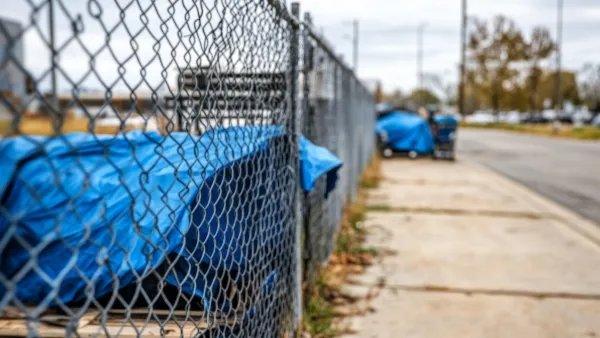
Camping Bans Proliferate After Supreme Court Ruling
A Supreme Court ruling in the case of Grants Pass v. Johnson has led over 100 cities to pass or step up enforcement of camping bans that criminalize unhoused residents.
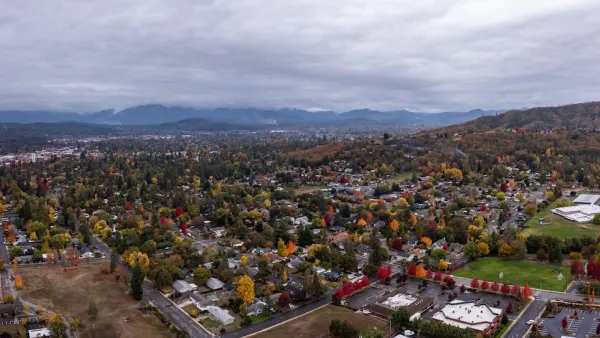
Grants Pass Bans Outdoor Sleeping, Creates Designated Camping Areas
The Oregon city was at the heart of a controversial Supreme Court case that paves the way for the criminalization of homelessness.
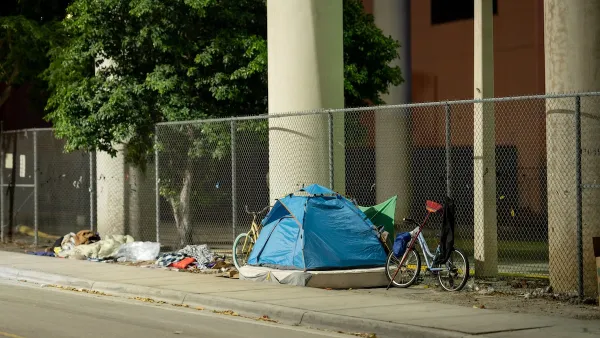
Grants Pass Homelessness Ruling Brings Issues Into Sharp Focus
Advocates for unhoused people are rallying to protect homeless populations as new legislation criminalizing homelessness rolls out around the country.

Planetizen Federal Action Tracker
A weekly monitor of how Trump’s orders and actions are impacting planners and planning in America.

The state-sanctioned urbicide of Austin
People don’t kill cities. Freeways do.

US to reduce Colorado River water deliveries to Mexico
A new Colorado Treaty amendment reduces Mexico’s Colorado River water allocation by 250,000 acre feet.

Mamdani overhauls NYC's Vision Zero plan with 100 new policy goals
The overhaul aims to reduce traffic deaths and make streets safer for pedestrians, cyclists and drivers through lower speed limits, new safety infrastructure and more.

Amtrak not solely to blame for New Jersey commuter rail's unreliability, report finds
A new study from the Garden State Initiative found that NJ Transit’s budget grew 20% across a 4 year period, but reliability declined significantly over the same period.

EPA erases limits on planet-warming pollution from power plants
Under Monday’s plan, power plants would still have some limits on how much mercury, arsenic and other contaminants they can emit.

FREE Course: Walkable City 1: Why Walkability?
After describing his path towards focusing on walkability as the essence of good planning, Jeff Speck marches through his five principal reasons for making more walkable places.
Reinventing Malls: Planning Alchemy—Turning Gray Fields Into Gold
The course focuses on the opportunities and imperatives that shape reinvention of mall sites.

Eagle County Government
Harvard University Graduate School of Design
Nashville Planning Department
The Architects Foundation
University of Cincinnati Online
The Pocatello Development Authority
The Urban Renewal Agency of the City of Pocatello
Journal of the American Planning Association