The plan will hinge on voter approval of a half-cent sales tax increase on the November ballot.


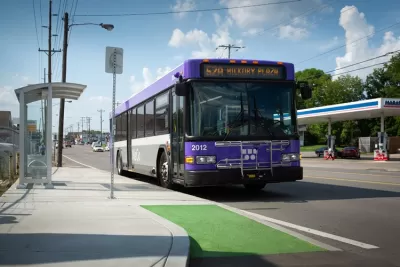
Nashville Mayor Freddie O’Connell announced a $3.1 billion dollar plan to expand transit in the city. The proposed initiative, called “Choose How You Move,” would be paid for with a half-cent sales tax increase that will appear on the ballot in November, reports Cassandra Stephenson for the Nashville Tennessean.
The majority of the proposed improvements (nearly 60 percent) would come in the form of expanded and enhanced bus service. According to Stephenson, the local WeGo bus service would nearly double under the plan, including the creation of four new express bus routes, as well as updated routes and increased frequency throughout the city. The rest of the plan will add sidewalks, upgrade and add traffic signals, and build new transit centers, as well as create a microtransit pilot and purchase 26 acres of land adjacent to transit center locations to use for things like housing and parks.
The proposed plan comes almost six years after Nashville voters firmly rejected a referendum for a $5.4 billion transit plan and a rebranding of Nashville MTA as WeGo. If voters approve the ballot measure in November, the plan will cost the average Nashville family about $70 more per year in sales tax and take 15 years to complete. The tax increase will cover around 40 percent of the plan’s total cost, writes Stephenson, with the remainder coming from fares, bonds, and state and federal programs. Mayor O’Connell said at a press conference that having a dedicated source of transit funding will make Nashville more competitive for federal grants.
Read the full story: Nashville's $3.1B transit plan: What's in it and how much it will cost taxpayers

Nashville Transit Ridership Back to Pre-Covid Levels
Local bus ridership is recovering quickly, hitting 2.2 million riders in the last quarter of FY 2023-2024.

Is Charlotte Overselling Plan to Expand Transit?
Even if voters approve a new one-cent transit sales tax, will Charlotte be able to deliver on its promise of two new commuter rail lines and a new bus rapid transit line?
'Better Bus' Is Nashville's Latest Attempt at Transit Upgrades
The Better Bus plan is the latest effort at rethinking public transit in Nashville.

Planetizen Federal Action Tracker
A weekly monitor of how Trump’s orders and actions are impacting planners and planning in America.

Amtrak, CN end decades-long dispute with eight-year agreement
The new operating agreement establishes an updated framework for the companies to work together, including processes to resolve disputes.

Judges permit Denver to divert 77,000 acre feet from the Colorado River for reservoir expansion
Overuse and climate change have caused the Colorado River’s water levels to plummet.

'Something we’ve never seen before:' rising utility rates could strain city finances nationwide
Data centers, climate change and other factors have caused utility rates in the United States to increase by 38% since 2020.

Trump to overrule local leaders, lease millions of acres of America’s Pacific Island territories’ seafloors to mining companies
International law says that the Indigenous people of America’s territories have a right to prior and informed consent regarding projects that impact their countries.

A ‘shady’ deal: Chicagoans rally against planned Amtrak maintenance facility
The $900 million facility would allow Amtrak to maintain entire trains in one building, which the company says will reduce delays.

FREE Course: Walkable City 1: Why Walkability?
After describing his path towards focusing on walkability as the essence of good planning, Jeff Speck marches through his five principal reasons for making more walkable places.
Reinventing Malls: Planning Alchemy—Turning Gray Fields Into Gold
The course focuses on the opportunities and imperatives that shape reinvention of mall sites.

KFH Group Inc.
Greater Baltimore Committee
Eagle County Government
The Architects Foundation
University of Cincinnati Online
The Pocatello Development Authority
The Urban Renewal Agency of the City of Pocatello