The American shopping mall may be closer to its original vision than ever.


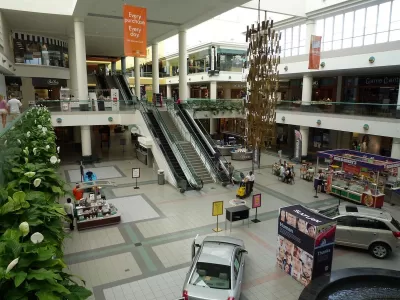
In a piece for Governing, Alan Ehrenhalt describes the history and potential future of U.S shopping malls through the lens of two books, Alexandra Lange’s Meet Me by the Fountain (one of Planetizen’s Top Planning Books of 2022) and Kate Black’s Big Mall.
Each book, in its way, responds to the original vision of Victor Gruen, known as the father of American malls. Gruen saw the mall as a place to bring people together.
But if modern shopping malls failed to achieve Gruen’s vision of rewarding community, it’s important to remember that they are profoundly social institutions. This has been true from the very beginning, in ways that Lange and Black document quite precisely. And the current plight of the mall points toward a more public future in which local governments will inevitably play a crucial role.
The decline of the mall in recent years may ironically be the key to getting closer to Gruen’s vision as mall owners and cities reimagine the properties to serve new needs. “In perhaps the most startling transformation, Gruen’s Southdale Center in Minnesota, the first of the fully enclosed malls of the 1950s, is being re-created as a multipurpose development that includes luxury hotel rooms and apartment complexes, a fitness center in place of a defunct J.C. Penney store, medical clinics and day care for children, and a variety of other public and private properties.”
FULL STORY: The Once and Future Shopping Mall

Can Mall Redevelopment 'Urbanize the Suburbs'?
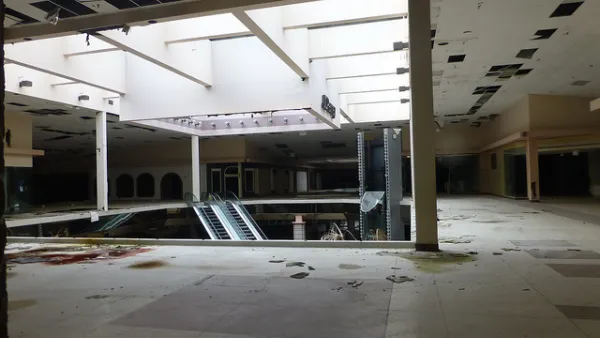
Local leaders in Virginia are banking on mall redevelopment projects to revive their tax bases and create more mixed-use neighborhoods.
Mall Makeovers Have a Mixed-Use Flavor
Malls in metropolitan Atlanta are thinking outside the (big) box to reposition in the age of the retail apocalypse.
Mall Redevelopment in Silicon Valley
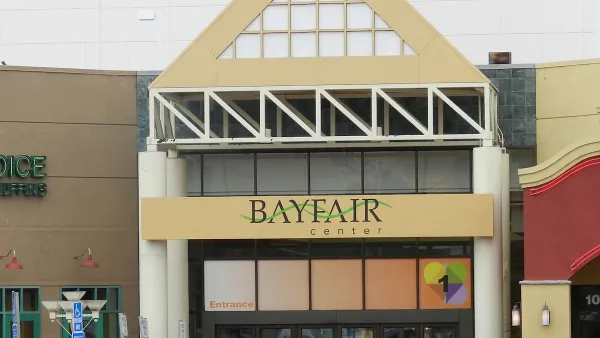
Dead malls across the Bay Area are being transformed into R&D centers, housing, and transportation hubs.

Planetizen Federal Action Tracker
A weekly monitor of how Trump’s orders and actions are impacting planners and planning in America.

The state-sanctioned urbicide of Austin
People don’t kill cities. Freeways do.

US to reduce Colorado River water deliveries to Mexico
A new Colorado Treaty amendment reduces Mexico’s Colorado River water allocation by 250,000 acre feet.

Mamdani overhauls NYC's Vision Zero plan with 100 new policy goals
The overhaul aims to reduce traffic deaths and make streets safer for pedestrians, cyclists and drivers through lower speed limits, new safety infrastructure and more.

Amtrak not solely to blame for New Jersey commuter rail's unreliability, report finds
A new study from the Garden State Initiative found that NJ Transit’s budget grew 20% across a 4 year period, but reliability declined significantly over the same period.

EPA erases limits on planet-warming pollution from power plants
Under Monday’s plan, power plants would still have some limits on how much mercury, arsenic and other contaminants they can emit.

FREE Course: Walkable City 1: Why Walkability?
After describing his path towards focusing on walkability as the essence of good planning, Jeff Speck marches through his five principal reasons for making more walkable places.
Reinventing Malls: Planning Alchemy—Turning Gray Fields Into Gold
The course focuses on the opportunities and imperatives that shape reinvention of mall sites.


Eagle County Government
Harvard University Graduate School of Design
Nashville Planning Department
The Architects Foundation
University of Cincinnati Online
The Pocatello Development Authority
The Urban Renewal Agency of the City of Pocatello
Journal of the American Planning Association