A new report says states are creating a “climate time bomb” by spending more than half of federal infrastructure dollars on highway resurfacing and expansion over transit and passenger rail.


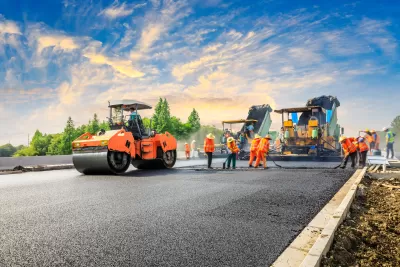
When it was passed in 2021, the $1.2 trillion Bipartisan Infrastructure Law was touted as a once-in-a-generation investment in the nation’s infrastructure, from ports, airports, rail, and roads to clean water, internet, and public transit — all with a focus on climate mitigation and resilience, equity, and safety.
However, of the reported funds disbursed to states, more than half (around $70 billion) has gone to resurfacing and expanding highways and just one-fifth has gone to public transit, reports Oliver Milman for the Guardian, citing a new analysis from transport policy group Transportation from America.
The Transportation from America report calls the spending a “climate time bomb” that it says will lead to greenhouse gas emissions of more than 178 million tons from planned highway expansions alone by 2040, only slightly offset by emissions-reducing measures funded by the bill.
“Nothing is fundamentally changing in terms of modes of transport. This much money going into highway expansion is, for one, a liability into the future, and two, it just doesn’t work. We’ve been expanding highways for decades on decades, and everyone consistently finds themselves stuck in traffic,” Corrigan Salerno, policy associate at Transportation for America told the Guardian.
Read the full story: US spends billions on roads rather than public transport in ‘climate time bomb’

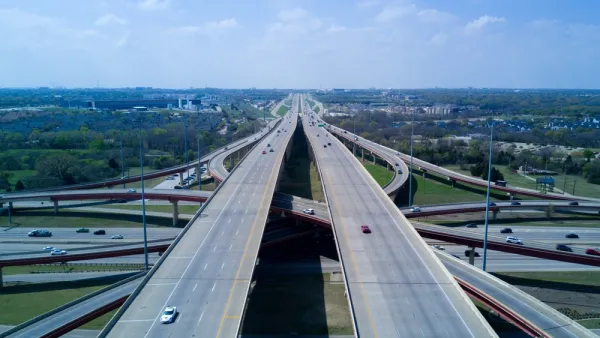
Federal Infrastructure Dollars Funding Road Expansions
Far from kickstarting a transformative change in transportation policy, the 2021 bipartisan infrastructure law continues to fund traditional road-building projects.
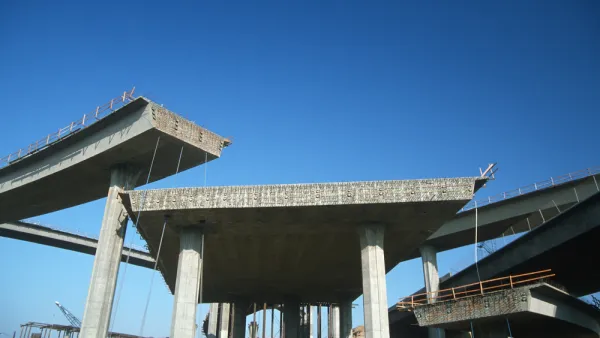
‘Highway Boondoggles’ Report Highlights Nation’s Most Wasteful Projects
The bipartisan infrastructure law, which directs massive investments to state transportation projects, could fast-track some of the most destructive highway expansion projects.
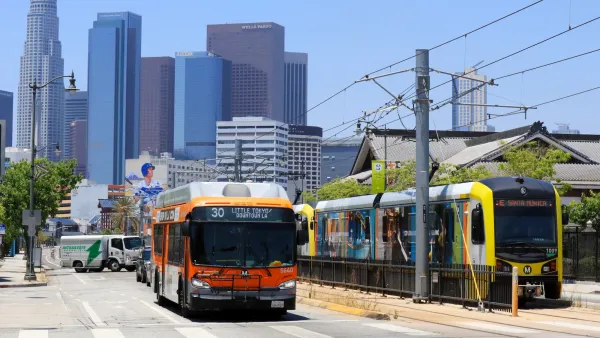
LA Metro Increases Highway Expansion Budget by 40%
Metro has plans to expand freeways including the 5, 105, and 405, among others.

Planetizen Federal Action Tracker
A weekly monitor of how Trump’s orders and actions are impacting planners and planning in America.

California plans to bury El Niño’s downpour
If the state plays its cards right, it may be able to store a billion acre-feet of El Niño’s water in aquifers.

Chicago breaks ground on $3 billion megadevelopment
The new neighborhood, titled Foundry Park, will one day host 3,700 residences.

Move over, LA: St. Louis gears up for Olympics, invests millions in downtown redevelopment
The Missouri city will host the 2028 Olympic soccer group stage and knockout matches.

Satanic place names
From streams and lakes to valleys and canyons, I mapped more than 1,000 places named after the Devil.

California High-Speed Rail Authority CEO resigns after $600,000 scandal
Under Ian Choudri, the authority used taxpayer dollars to fund first class flights and trips to nightclubs.

FREE Course: Walkable City 1: Why Walkability?
After describing his path towards focusing on walkability as the essence of good planning, Jeff Speck marches through his five principal reasons for making more walkable places.
Reinventing Malls: Planning Alchemy—Turning Gray Fields Into Gold
The course focuses on the opportunities and imperatives that shape reinvention of mall sites.

City of Rosemead
Rutgers University, Edward J. Bloustein School of Planning and Public Policy
One Hundred Miles
Hunter College, City University of New York (CUNY)
The Architects Foundation
University of Cincinnati Online
City of Cambridge
Montrose County
The Pocatello Development Authority