As ‘robotaxis’ and other autonomous vehicles make their way onto American streets, cities can take proactive steps to mitigate risks and balance the benefits and challenges of new technology.


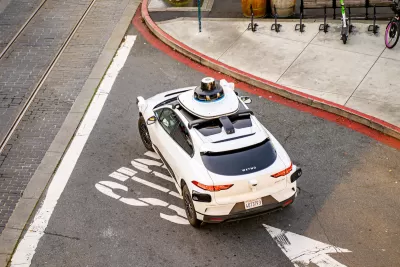
In an opinion piece in Governing, Hye Min Park and Fabian E. Villalobos describe a decision-making process utilized in industries such as water and energy that could simplify the complex process of regulating autonomous vehicles. “How can the sometimes-conflicting interests of all stakeholders be considered and balanced?”
The process, known as “decision-making under deep uncertainty” or DMDU, “focuses on actions that can be agreed upon, even if multiple stakeholders agree on little else. For instance, instead of speculating about what does or doesn’t make robotaxis unsafe, DMDU could help regulators and AV companies figure out which warning signs to monitor.” Other methods include measuring proxies for risk when better data is not available, such as “how rapidly the technology is adopted, whether an agency has the ability to manage the risk, or the size of the potentially affected population.”
According to the authors, “Cities and regulatory agencies can often feel that they’re left as bystanders when new technology is rolled out, yet they are responsible for the safety of whatever private entities develop and deploy.” This approach can help them proactively assess and mitigate risks as new technologies are introduced.
FULL STORY: Reining in the Risks of Robotaxis

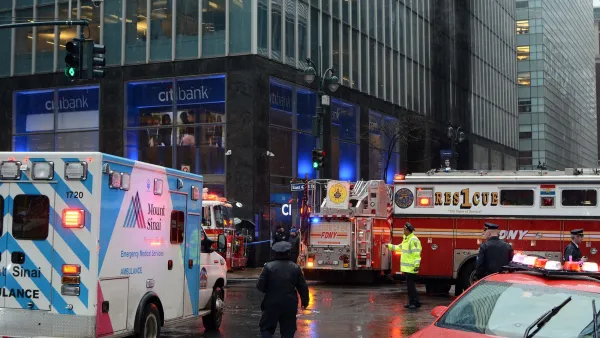
Waymo's troubles with emergency vehicles are getting worse
In one case, first responders waited 53 minutes to reach a Waymo support representative during an emergency.
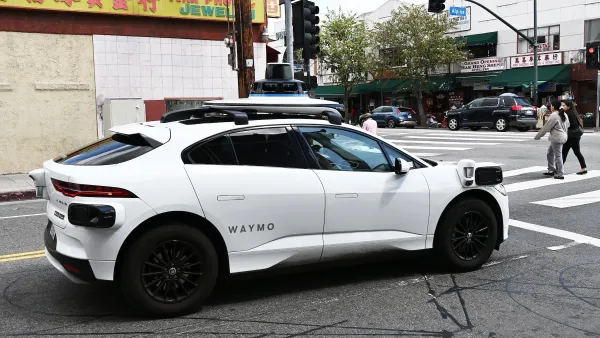
California cops will start ticketing robotaxis
The California DMV issued new guidance that allows law enforcement to give autonomous cars a "notice of noncompliance" when they break traffic laws.
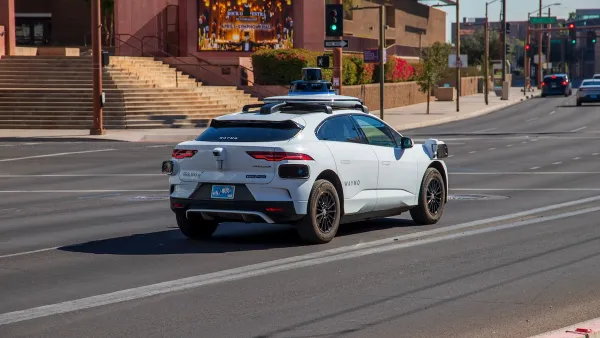
What Happens When a Robotaxi Gets Pulled Over?
In Phoenix, a police officer who pulled over a Waymo driving in the wrong lane was “unable to issue citation to computer.”

The state-sanctioned urbicide of Austin
People don’t kill cities. Freeways do.

US to reduce Colorado River water deliveries to Mexico
A new Colorado Treaty amendment reduces Mexico’s Colorado River water allocation by 250,000 acre feet.

New Jersey’s second-largest city bans standalone data centers
Jersey City will continue to allow co-location facilities, such as those meant for research institutions that store their own data.

Amtrak not solely to blame for New Jersey commuter rail's unreliability, report finds
A new study from the Garden State Initiative found that NJ Transit’s budget grew 20% across a 4 year period, but reliability declined significantly over the same period.

EPA erases limits on planet-warming pollution from power plants
Under Monday’s plan, power plants would still have some limits on how much mercury, arsenic and other contaminants they can emit.

Phoenix announces new on-demand transit service, more frequent RAPID buses
Both new services will launch in October, and are part of Phoenix's Project Effective Access Solutions for Easing Congestion.

FREE Course: Walkable City 1: Why Walkability?
After describing his path towards focusing on walkability as the essence of good planning, Jeff Speck marches through his five principal reasons for making more walkable places.
Reinventing Malls: Planning Alchemy—Turning Gray Fields Into Gold
The course focuses on the opportunities and imperatives that shape reinvention of mall sites.

Eagle County Government
Harvard University Graduate School of Design
Nashville Planning Department
The Architects Foundation
University of Cincinnati Online
The Pocatello Development Authority
The Urban Renewal Agency of the City of Pocatello
Journal of the American Planning Association