The Brightline West line will break ground this year.



The Brightline West high-speed rail project is moving along, well, speedily with the recent approval of another $2.5 billion in “private activity bonds” financing. As an article for KTNV explains, “The DOT previously approved a $1 billion bond in 2020 to Brightline, a $3 billion grant in December 2023 to Nevada DOT, and a $25 million grant to the San Bernardino County Transportation Authority.”
The 218-mile rail line will be fully electric and connect Las Vegas to a transit center in Rancho Cucamonga, California, where riders can connect to other Southern California train systems. According to Brightline Founder and Chairman Wes Edens, “Connecting Las Vegas and Southern California will provide wide-spread public benefits to both states, creating thousands of jobs and jumpstarting a new level of economic competitiveness for the region.”
The project is expected to break ground early this year, with much of the line using existing right-of-way on Interstate 15.
Read the full story: U.S. Department of Transportation announces $2.5 billion in private funding for Brightline West rail project

Brightline West Moves Forward With Finalized Federal Funding
The high-speed rail line will connect Southern California and Las Vegas via a two-hour trip along Interstate 15.
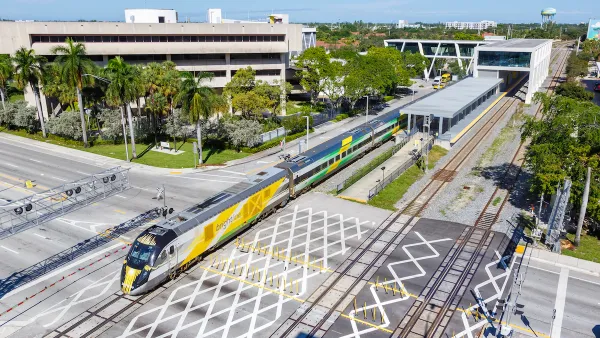
Brightline Founder Predicts a Passenger Rail Resurgence
The HSR operator wants to expand to more US regions.
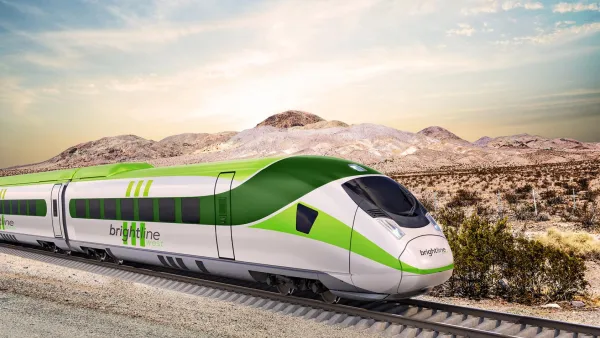
Brightline West Breaks Ground
The high-speed rail line will link Las Vegas and the Los Angeles area.

Desperate measures: Advocates weigh draining Lake Powell to fill Colorado River
Draining the reservoir could reduce evaporation losses by a couple hundred thousand acre-feet.

Eastern Nebraska is running out of electricity
Data centers and electrification are straining eastern Nebraska’s grid, throttling economic development.

Move over, LA: St. Louis gears up for Olympics, invests millions in downtown redevelopment
The Missouri city will host the 2028 Olympic soccer group stage and knockout matches.

San Diego’s Midway Rising project gets greenlight from city council
The project looks to become the largest affordable housing development in California's history.

Bill to overhaul energy permitting clears Senate
The Bipartisan American Affordability and Jobs Act of 2026 still needs to pass the House of Representatives.

MTA sends Dem leaders a wish list to mend Trump’s damages
Requests include exempting new train and bus components from tariffs and increasing transit security funding.

FREE Course: Walkable City 1: Why Walkability?
After describing his path towards focusing on walkability as the essence of good planning, Jeff Speck marches through his five principal reasons for making more walkable places.
Reinventing Malls: Planning Alchemy—Turning Gray Fields Into Gold
The course focuses on the opportunities and imperatives that shape reinvention of mall sites.

City of Rosemead
Rutgers University, Edward J. Bloustein School of Planning and Public Policy
One Hundred Miles
University of Michigan School for Environment and Sustainability (SEAS)
Hunter College, City University of New York (CUNY)
The Architects Foundation
City of Cambridge
The Pocatello Development Authority
The Urban Renewal Agency of the City of Pocatello