More work is necessary to make hydrogen fuel cost competitive with gasoline and diesel and ensure it delivers on its zero-emission promise, new report says.


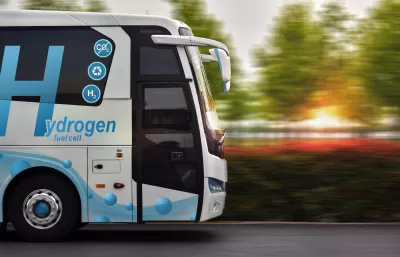
More work is necessary to make hydrogen fuel cost competitive with gasoline and diesel and ensure it delivers on its zero-emission promise.
A new report from Information Technology and Innovation Foundation (ITIF) concludes hydrogen fuel may not be as feasible as a fossil fuel replacement as previously hoped. Writer Skip Descant summarizes the report’s findings in a recent article for Government Technology.
“In recent years hydrogen has been explored and advocated in much the same fashion as battery-electric technology for cars, trucks, and host of other vehicles,” Descant writes. But its fossil fuel-heavy production methods and complicated storage and distribution network currently make it too expensive to replace gasoline and diesel–and counteract its carbon neutral claims.
Though hydrogen power produces no harmful greenhouse gases (GHG) when it’s used, 98 percent of hydrogen produced today relies on fossil-fuel heavy production methods, according to the ITIF report, titled A Realist Approach to Hydrogen.
“The economies of scaling this type of hydrogen production are currently not feasible, the report concluded,” writes Descant. For hydrogen fuel to reach its full green potential and become price competitive, wind and solar power generation will need to be expanded to the point that they are creating surplus that can be used for hydrogen production, experts say.
The report authors point out their findings should not be taken as a criticism of green energy or denial of climate change. They call for additional research and development of new technologies to make the cost of clean fuels like hydrogen competitive, which they say is crucial for a successful “green transition.”
Read the full story: Hydrogen Is Still a Heavy Lift for Clean Transportation


Road Funding Options: The Alternative to the Alternative
The inverse relationship between electric vehicle sales and gasoline tax revenues has caused the federal government and many states to investigate mileage fees as an alternative funding option to fuel taxes. Iowa is going a different route.
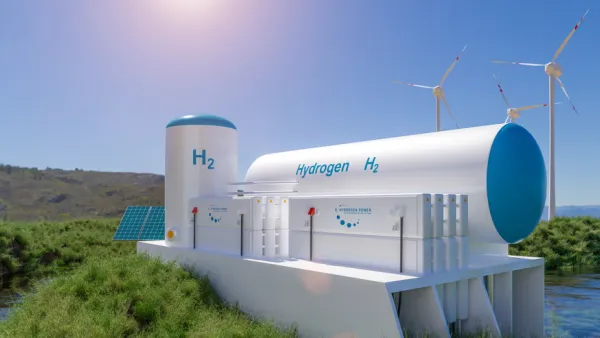
Energy Department Resumes Loan Program with Hydrogen Storage
The Energy Department's loan office, known for a bad loan to the solar panel startup Solyndra in 2011, will loan $504 million to a company that will use renewable energy to create 'green hydrogen' and store it in salt caverns in Utah.
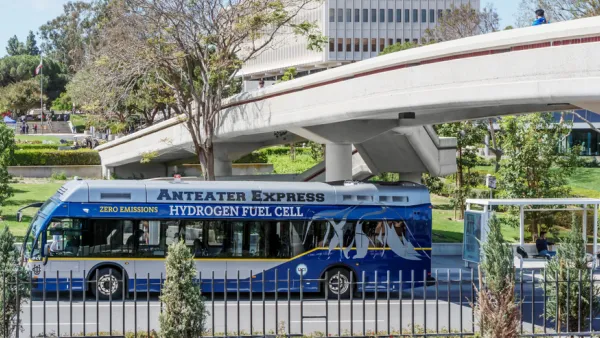
Can Hydrogen Make a Comeback?
While hydrogen fuel cell electric vehicles are much less popular than their battery-powered siblings, California remains committed to the zero-emission technology, with three state agencies investing in and monitoring its progress.

Planetizen Federal Action Tracker
A weekly monitor of how Trump’s orders and actions are impacting planners and planning in America.

Amtrak, CN end decades-long dispute with eight-year agreement
The new operating agreement establishes an updated framework for the companies to work together, including processes to resolve disputes.

Judges permit Denver to divert 77,000 acre feet from the Colorado River for reservoir expansion
Overuse and climate change have caused the Colorado River’s water levels to plummet.

Northwest rail fans eager for Sept. 30 debut of Amtrak’s Airo fleet
Get ready for that new train smell and more seats. But they won’t go faster or run more frequently on the Cascades route in Washington and Oregon.

NYC DOT wants faster, more permanent street upgrades
The city is examining ways to build more concrete infrastructure without getting entangled in 'decades-long' projects.

'Something we’ve never seen before:' rising utility rates could strain city finances nationwide
Data centers, climate change and other factors have caused utility rates in the United States to increase by 38% since 2020.

FREE Course: Walkable City 1: Why Walkability?
After describing his path towards focusing on walkability as the essence of good planning, Jeff Speck marches through his five principal reasons for making more walkable places.
Reinventing Malls: Planning Alchemy—Turning Gray Fields Into Gold
The course focuses on the opportunities and imperatives that shape reinvention of mall sites.

Harvard University Graduate School of Design
KFH Group Inc.
Greater Baltimore Committee
The Architects Foundation
University of Cincinnati Online
The Pocatello Development Authority
The Urban Renewal Agency of the City of Pocatello