In a bid to streamline housing permits, new state legislation limits public input to the land use planning stage.


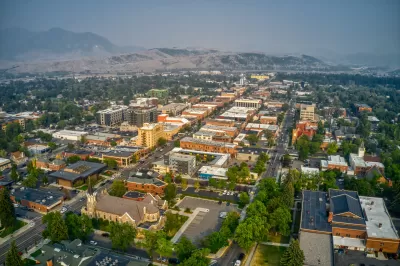
Sweeping land use reform measures passed by the 2023 Montana legislature last year include big changes to public participation rules in the state. The legislation was aimed at reforming the state's land-use codes to address the housing crisis and was a top priority for Gov. Greg Gianforte, who charged legislators with cutting so-called red tape that stymies new development, reports Daily Interlake.
“Among the sweeping reform measures was Senate Bill 382 and the Montana Land Use Planning Act. The measure takes aim at not-in-my-backyard type public uprisings that frequently challenge proposals for new subdivisions or multi-family developments.”
The new law, which requires cities with 5,000 or more residents in counties exceeding 70,000 people to create a new land-use plan and map, marks a major departure from traditional public participation rules. Under these new rules, public stakeholders will have the opportunity to give input during the creation of the land-use plan. Once it is finalized, city staff will be able to sign off on projects without bringing it before a planning commission or city council for final approval.
“The whole idea behind this is to flip that, so that we do the planning and the public participation up front, we front-load it, then as we get to the permitting and the platting that becomes a very administrative process,” Montana League of Cities and Towns Executive Director Kelly Lynch told the Montana Free Press last year.
The law is facing legal challenges on constitutional grounds, but if upheld, it will reshape public participation in Montana’s larger cities. Then the question will be, will other states follow suit?
Read the full story: Don't get caught off guard by new public participation rules

Where Pro-Development Groups Are Gaining Traction
The YIMBY movement seems to be gaining steam as more the country deals with growing housing prices and increasing numbers of people experiencing homelessness. Recent research reveals where pro-development forces are most likely to call home.

Silver Spring Downtown Plan Expanding to Make Room for the Missing Middle
Planners are hoping that by expanding the boundaries of the Silver Spring Downtown Plan in Montgomery County, Maryland, new opportunities for missing middle housing will create new opportunities for housing affordability.

Transit Oriented Upzoning Can't Win Local Support in San Diego
Residents are shooting down plans that propose increased density and height in San Diego. The city had planned to cut its carbon footprint by encouraging transit oriented development.

Planetizen Federal Action Tracker
A weekly monitor of how Trump’s orders and actions are impacting planners and planning in America.

California plans to bury El Niño’s downpour
If the state plays its cards right, it may be able to store a billion acre-feet of El Niño’s water in aquifers.

Desperate measures: Advocates weigh draining Lake Powell to fill Colorado River
Draining the reservoir could reduce evaporation losses by a couple hundred thousand acre-feet.

In Texas, data centers are swallowing promised parkland
Residents who moved to Taylor, Texas for a rural community now have to contend with three data centers in their backyard.

How a Chicago-sized wind farm beat the odds and powered on
The project spanned five presidential administrations and a standoff with a U.S. military base.

MTA gives itself 30 days to transform pit into basketball court
The site has been under construction since 2022; the city originally estimated it would finish the court in 2024.

FREE Course: Walkable City 1: Why Walkability?
After describing his path towards focusing on walkability as the essence of good planning, Jeff Speck marches through his five principal reasons for making more walkable places.
Reinventing Malls: Planning Alchemy—Turning Gray Fields Into Gold
The course focuses on the opportunities and imperatives that shape reinvention of mall sites.

City of Rosemead
Rutgers University, Edward J. Bloustein School of Planning and Public Policy
One Hundred Miles
Hunter College, City University of New York (CUNY)
The Architects Foundation
University of Cincinnati Online
City of Cambridge
Montrose County
The Pocatello Development Authority