As the number of unhoused Americans grows, some jurisdictions are going against the advice of advocates and imposing harsh penalties for sleeping in public spaces.


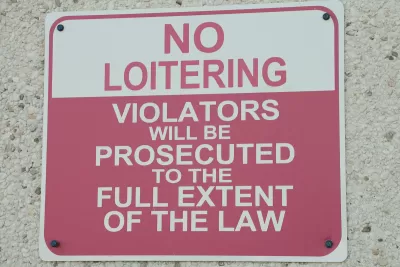
Cities and states are starting to take harsher measures against unhoused residents, reports Robbie Sequeira in Stateline, in part as a response to more complaints by local businesses and housed residents. However, homeless advocates warn that punitive measures that criminalize unhoused people and only address visible homelessness rarely succeed in getting people into supportive services and housing.
Yet states and cities around the country including Missouri, Tennessee, Texas, San Diego, and Portland, Oregon have passed camping bans that prevent homeless people from sleeping in public areas and performed violent sweeps to clear encampments. “The new Georgia law is the most far-reaching. It goes beyond a camping ban by steering the state away from the ‘housing first’ strategy embraced by many advocates.”
Meanwhile, homelessness rose by 12 percent in 2023 over the previous year, and the end of pandemic-era assistance programs could lead to even more evictions.
FULL STORY: As homeless people become more visible, some cities and states take a tougher line

Milwaukee Homelessness Dropped in 2024
Bucking national trends, Milwaukee reduced homelessness in 2024 through Housing First policies and supportive services, but local advocates warn high housing costs will likely lead to an increase in the unhoused population in the coming year.

Local Governments Sue HUD Over Funding Cuts
A new lawsuit alleges that the Trump administration’s revised guidelines for housing and homelessness assistance funds will decimate key programs.
A Decade of Progress on Homelessness in Milwaukee County
Unlike most U.S. communities, Milwaukee County has managed to make significant progress toward assisting unhoused residents through a Housing First approach.

The state-sanctioned urbicide of Austin
People don’t kill cities. Freeways do.

US to reduce Colorado River water deliveries to Mexico
A new Colorado Treaty amendment reduces Mexico’s Colorado River water allocation by 250,000 acre feet.

New Jersey’s second-largest city bans standalone data centers
Jersey City will continue to allow co-location facilities, such as those meant for research institutions that store their own data.

Amtrak not solely to blame for New Jersey commuter rail's unreliability, report finds
A new study from the Garden State Initiative found that NJ Transit’s budget grew 20% across a 4 year period, but reliability declined significantly over the same period.

EPA erases limits on planet-warming pollution from power plants
Under Monday’s plan, power plants would still have some limits on how much mercury, arsenic and other contaminants they can emit.

Phoenix announces new on-demand transit service, more frequent RAPID buses
Both new services will launch in October, and are part of Phoenix's Project Effective Access Solutions for Easing Congestion.

FREE Course: Walkable City 1: Why Walkability?
After describing his path towards focusing on walkability as the essence of good planning, Jeff Speck marches through his five principal reasons for making more walkable places.
Reinventing Malls: Planning Alchemy—Turning Gray Fields Into Gold
The course focuses on the opportunities and imperatives that shape reinvention of mall sites.

Eagle County Government
Harvard University Graduate School of Design
Nashville Planning Department
The Architects Foundation
University of Cincinnati Online
The Pocatello Development Authority
The Urban Renewal Agency of the City of Pocatello
Journal of the American Planning Association