Are some cities using historic designations disingenuously?



Are California property owners using historic preservation as a way to prevent new development? “It turns out, even a parking lot can be deemed historic — if your city’s local historic preservation committee is amenable to it,” writes Kate Talerico in The Mercury News.
As Talerico explains, cities can apply for national or state designations. “Cities also have the power to create their own historic preservation ordinances, which allow them to create custom standards for what can be designated as historic, and how those historic districts or sites should be regulated.”
Since the state cracked down on its housing production mandates, some California cities have come up with novel ways to block development. “Berkeley’s Landmarks Preservation Commission, for example, declared a parking lot historic because it might contain Native American artifacts beneath its surface, which stalled a developer’s plans to build an apartment on the site.”
Talerico adds, “More recently, in San Francisco, possible historic designation of an empty 1970s movie theatre may determine whether a proposed 2,900-unit housing development can move forward.”
Read the full story: What makes a Bay Area property ‘historic’? The answer is anything but straightforward


The Trouble With QUIMBY
The idea of “quality urbanism in my back yard” has its uses, but should not be used to limit housing supply.
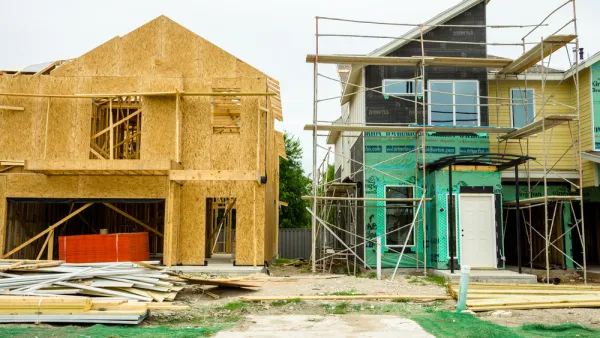
Texas Bills Aim to Tackle Housing Affordability
One proposed bill would raise the threshold for neighbor opposition to new development.

Commentary: A New ‘Grand Bargain’ for American Housing
For decades, many U,S, neighborhoods successfully resisted change at the expense of a few neighborhoods sacrificed to mass development. Is there a better way?

Planetizen Federal Action Tracker
A weekly monitor of how Trump’s orders and actions are impacting planners and planning in America.

California plans to bury El Niño’s downpour
If the state plays its cards right, it may be able to store a billion acre-feet of El Niño’s water in aquifers.

Chicago breaks ground on $3 billion megadevelopment
The new neighborhood, titled Foundry Park, will one day host 3,700 residences.

Satanic Place Names
From streams and lakes to valleys and canyons, I mapped more than 1,000 places named after the Devil.

California High-Speed Rail Authority CEO resigns after $600,000 scandal
Under Ian Choudri, the authority used taxpayer dollars to fund first class flights and trips to nightclubs.

Want to study the Missouri River? Soon, you may need unanimous approval from 10 states
Legislation would require 10 governors’ permission to study or build projects moving water outside the basin.

FREE Course: Walkable City 1: Why Walkability?
After describing his path towards focusing on walkability as the essence of good planning, Jeff Speck marches through his five principal reasons for making more walkable places.
Reinventing Malls: Planning Alchemy—Turning Gray Fields Into Gold
The course focuses on the opportunities and imperatives that shape reinvention of mall sites.

City of Rosemead
Rutgers University, Edward J. Bloustein School of Planning and Public Policy
One Hundred Miles
Hunter College, City University of New York (CUNY)
The Architects Foundation
University of Cincinnati Online
City of Cambridge
Montrose County
The Pocatello Development Authority