Limiting light pollution can have beneficial effects for humans, animals, and the local economy.


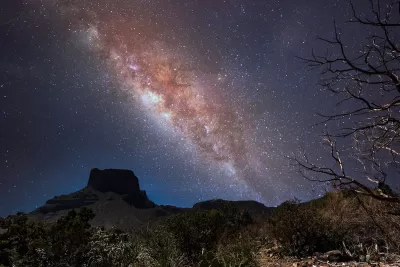
Writing in Smart Cities Dive, Kalena Thomhave describes the efforts being made by three communities to protect their night skies and become certified Dark Sky Communities.
Earning the certification from DarkSky International can take years. Cities dedicated to the process, however, say it comes with a slew of benefits: They see not only the stars but also reduced energy consumption, lower electricity bills, healthier residents, improved environmental protection, increased ecotourism and even safer streets.
The certification program offers resources and information on the types of retrofits cities and towns can make to reduce light pollution while maintaining safety and security. Limiting glare can have benefits for people on the road, too. “Pedestrians and drivers on the road are less likely to be temporarily blinded by a bright light if it’s directed toward the ground properly.”
The three communities profiled in the article range from Bee Cave in the Texas Hill Country to a lakeside Indiana town and a Nevada city that hopes to boost ‘astrotourism’ to the area by keeping its nighttime conditions optimal for stargazing.
Read the full story: 3 communities turning to the dark side with dark-sky retrofits

The Importance of Dark Skies
Why light pollution harms humans and the environment.
Pittsburgh Becomes First 'Dark Sky' City in Eastern U.S.
As evidence showing the benefits of dark skies builds, Pittsburgh becomes the first eastern American city to enact a dark sky policy.
Turning off the Lights to See the Stars
A movement to shed light on the worldwide loss of dark skies aims to minimize light pollution in order to increase public opportunities for stargazing, while also serving as a money-saving measure for cities, reports Kate Galbraith.

Planetizen Federal Action Tracker
A weekly monitor of how Trump’s orders and actions are impacting planners and planning in America.

California plans to bury El Niño’s downpour
If the state plays its cards right, it may be able to store a billion acre-feet of El Niño’s water in aquifers.

Chicago breaks ground on $3 billion megadevelopment
The new neighborhood, titled Foundry Park, will one day host 3,700 residences.

Satanic place names
From streams and lakes to valleys and canyons, I mapped more than 1,000 places named after the Devil.

California High-Speed Rail Authority CEO resigns after $600,000 scandal
Under Ian Choudri, the authority used taxpayer dollars to fund first class flights and trips to nightclubs.

Want to study the Missouri River? Soon, you may need unanimous approval from 10 states
Legislation would require 10 governors’ permission to study or build projects moving water outside the basin.

FREE Course: Walkable City 1: Why Walkability?
After describing his path towards focusing on walkability as the essence of good planning, Jeff Speck marches through his five principal reasons for making more walkable places.
Reinventing Malls: Planning Alchemy—Turning Gray Fields Into Gold
The course focuses on the opportunities and imperatives that shape reinvention of mall sites.

City of Rosemead
Rutgers University, Edward J. Bloustein School of Planning and Public Policy
One Hundred Miles
Hunter College, City University of New York (CUNY)
The Architects Foundation
University of Cincinnati Online
City of Cambridge
Montrose County
The Pocatello Development Authority