The allocation from the state legislature is aimed at assisting transit agencies as they work to move away from an overreliance on fare revenue.


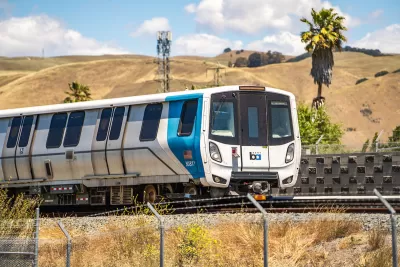
In an article for CALmatters, Sameea Kamal outlines how transit agencies around California are planning to spend the $5 billion in transit funding approved by the state legislature in June.
The funding is meant in part to help agencies reduce their dependence on fare revenue and diversify their funding sources. “By Dec. 31, regional planning groups have to submit an application detailing how they plan to use the money to improve ridership and how they will divvy up funds between the transit operators they oversee.”
According to the article, “The other key part of the budget deal requires the state transportation agency to set up a transit “transformation” task force by Jan. 1 — with representatives from the department, local agencies, academic institutions, nongovernmental organizations and other stakeholders — to develop policy recommendations to grow ridership and improve the experience for passengers.”
Kamal notes that “the state ‘bridge’ funding is just that — a bridge” to give agencies time to figure out their next steps.
Read the full story: How will California public transit agencies spend $5 billion?

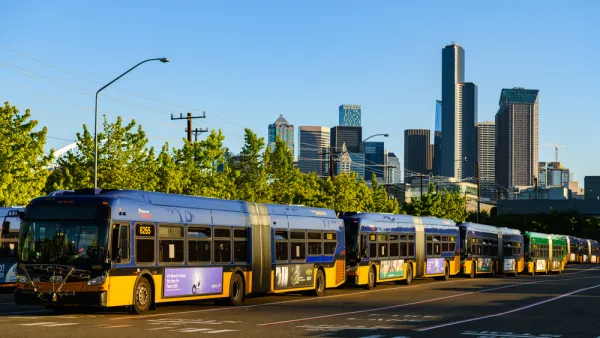
Seattle to Reinstate Bus Fare Enforcement
After a COVID-era move to eliminate fare inspections on city buses, King County Metro is reinstating checks for fare evasion.

Chicago Transit Report Calls for Income-Based Fares, Paratransit Funding
An RTA report highlights a need for state funding to bridge an imminent $730 budget shortfall, calling for an approach that relies less heavily on fare revenue.
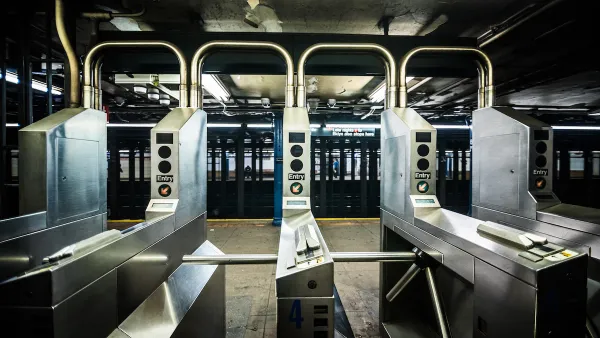
Opinion: Fare Evasion Is a Red Herring
The loss of revenue from fare evasion is a drop in the bucket compared to the fiscal cliff facing major U.S. transit agencies.

Planetizen Federal Action Tracker
A weekly monitor of how Trump’s orders and actions are impacting planners and planning in America.

The state-sanctioned urbicide of Austin
People don’t kill cities. Freeways do.

US to reduce Colorado River water deliveries to Mexico
A new Colorado Treaty amendment reduces Mexico’s Colorado River water allocation by 250,000 acre feet.

Brightline West’s future may rely on $6 billion federal loan
The company has until Nov. 2 to make a $400 million equity investment into its proposed high-speed rail line.

LA Metro’s ultimatum: no extra buses for LA28 if federal funding isn’t imminently secured
If Metro does not provide additional buses, LA28 organizers will have to find a new way to manage Olympic traffic. LA28’s budget does not include a line item for transit.

Colorado’s Largest Data Center Could Rise Next to Homes — Without a Public Hearing
The proposed campus would consume 11 times the power of Denver International Airport; as it has across the country, opposition mounts.

FREE Course: Walkable City 1: Why Walkability?
After describing his path towards focusing on walkability as the essence of good planning, Jeff Speck marches through his five principal reasons for making more walkable places.
Reinventing Malls: Planning Alchemy—Turning Gray Fields Into Gold
The course focuses on the opportunities and imperatives that shape reinvention of mall sites.

Eagle County Government
Harvard University Graduate School of Design
Nashville Planning Department
The Architects Foundation
University of Cincinnati Online
The Pocatello Development Authority
The Urban Renewal Agency of the City of Pocatello
Journal of the American Planning Association