Once the world’s largest dump, Freshkills Park now offers new city park space and powers local households with biofuel.


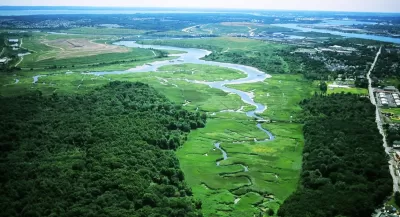
Last weekend marked a key moment in the transformation of “the world’s largest dump” into a public park with the opening of North Park in Staten Island’s Freshkills Park, writes Leslie Kaufman in Bloomberg Green.
The former landfill, which at its high point received 29,000 tons of trash daily, has been undergoing restoration since it was shut down by the city in 2001.
As Kaufman explains, the process of making a landfill site safe is complex. “Garbage compacts, creating shifting surface conditions. In North Park, the trash has been sculpted into four hills arranged around a tidal creek open for kayaking. There are roughly six layers of soil, sand and plastic lining on top of the garbage to prevent toxic leaks, including a vent layer, which moves any escaping landfill gas—a combination of carbon dioxide and methane—into pipes.”
Around the United States, over 500 landfills have been converted to energy projects that convert methane and other gases to fuel, and Freshkills is one of them. “The city sells 1.5 million cubic feet of this treated biogas to the local utility, which distributes it to Staten Island homes for cooking and heating.”
Read the full story: How New York City Turned the World’s Biggest Garbage Dump Into a Park

Op-Ed Supports Staten Island Rezoning for its Green Benefits
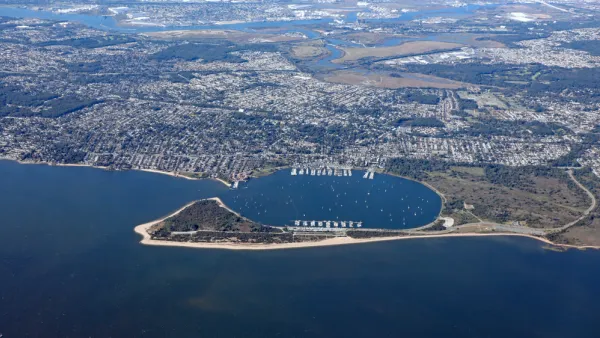
A rezoning proposal for Staten Island in New York City gets support from a local resident with deep involvement in the community.
Landfill Gas To Fuel Garbage Trucks
In an incredible recycling operation that reduces global warming, a waste hauler is building a facility to produce Liquefied Natural Gas from methane emitted from its California landfill to fuel its garbage trucks.
Connecticut is turning landfills into green infrastructure
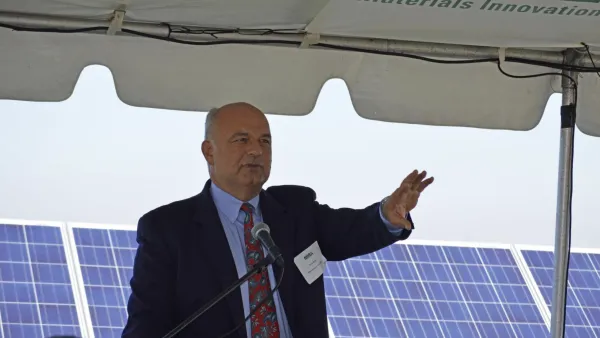
Twenty-nine solar arrays have been built, or approved to be built, on top of Connecticut landfills.

Planetizen Federal Action Tracker
A weekly monitor of how Trump’s orders and actions are impacting planners and planning in America.

California plans to bury El Niño’s downpour
If the state plays its cards right, it may be able to store a billion acre-feet of El Niño’s water in aquifers.

Desperate measures: Advocates weigh draining Lake Powell to fill Colorado River
Draining the reservoir could reduce evaporation losses by a couple hundred thousand acre-feet.

Chicago Avenue bridge construction delays enrages city leaders
The bridge has been closed since 2025. The city originally aimed to re-open it in December, and now expects to finish construction in 2027.

NYC bus network redesign speeds up Queens buses
Rush routes have seen a 4.6% speed increase after the redesign.

California High-Speed Rail Authority picks trainset manufacturer
The California High-Speed Rail Authority aims to start servicing passengers by 2033.

FREE Course: Walkable City 1: Why Walkability?
After describing his path towards focusing on walkability as the essence of good planning, Jeff Speck marches through his five principal reasons for making more walkable places.
Reinventing Malls: Planning Alchemy—Turning Gray Fields Into Gold
The course focuses on the opportunities and imperatives that shape reinvention of mall sites.

City of Rosemead
Rutgers University, Edward J. Bloustein School of Planning and Public Policy
One Hundred Miles
Hunter College, City University of New York (CUNY)
The Architects Foundation
University of Cincinnati Online
City of Cambridge
Montrose County
The Pocatello Development Authority