Houston’s iconic signature parks mask a major underinvestment in green spaces for most of the city’s neighborhoods, according to a new report.


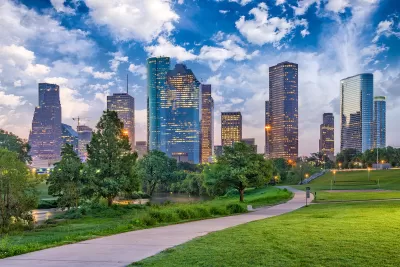
“Of the 13 U.S. cities with populations over one million, Houston ranks last in city spending for its parks department,” write Guy Hagstette and Elizabeth Love in the Houston Chronicle, quoting a report from the Kinder Institute for Urban Research.
“Neighborhood parks are the workhorses of our parks system, providing Houstonians with close-to-home access to all the benefits that parks provide – a place to play, exercise, enjoy nature and socialize, as well as to cool our neighborhoods and help mitigate flooding.” Although redevelopment funds and philanthropic support have made significant contributions to Houston park spaces, the report notes that “They are not a substitute for the kind of sustained, equitable funding that our neighborhood parks deserve.”
Parks expert Ernest Cook suggests that parks departments can’t rely on cities for their funding, and points to cities where a dedicated funding mechanism has been created for parks. “For example, Minneapolis operates its park system in a separate unit of government with its own taxing authority. Seattle has created a “park district” that provides revenue dedicated to managing the city’s greenspaces, similar in some ways to how our local flood control and hospital districts work.”
The report suggests a few options for Houston, including “exempting park and recreation spending from the tax cap approved by city voters in 2004,” “passing a charter amendment requiring the city to establish a dedicated fund for its parks,” and creating a parks district.
“Houston can be proud of its signature parks. However, this progress masks the poor condition of hundreds of parks, pools and community centers in neighborhoods throughout Houston that only an adequately funded city parks department can equitably address.”
Read the full story: Houston deserves better parks. Here's how to pay for them. (Opinion)

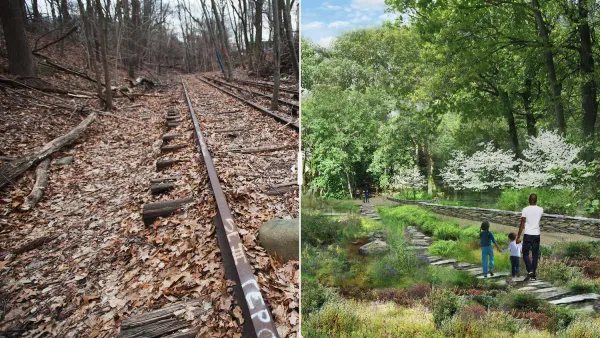
From Queens to Chattanooga, Federal Funding Cuts are Killing Park Projects
Cuts to grants from the Department of Transportation to the EPA are impacting small and large park projects across the country.
How Local Parks Promote Equitable Outdoor Access
Targeted investments in local parks, improved infrastructure, and enhanced transit connectivity are essential strategies to close the nature gap and ensure equitable outdoor access for underserved communities.
Healing Neighborhoods Through Park Equity
Learn more about ways to improve park equity with Norma García-González, the director of the Los Angeles County Department of Parks and Recreation, and Catherine Nagel, the executive director of the City Parks Alliance.

Planetizen Federal Action Tracker
A weekly monitor of how Trump’s orders and actions are impacting planners and planning in America.

California plans to bury El Niño’s downpour
If the state plays its cards right, it may be able to store a billion acre-feet of El Niño’s water in aquifers.

Desperate measures: Advocates weigh draining Lake Powell to fill Colorado River
Draining the reservoir could reduce evaporation losses by a couple hundred thousand acre-feet.

Chicago Avenue bridge construction delays enrages city leaders
The bridge has been closed since 2025. The city originally aimed to re-open it in December, and now expects to finish construction in 2027.

NYC bus network redesign speeds up Queens buses
Rush routes have seen a 4.6% speed increase after the redesign.

California High-Speed Rail Authority picks trainset manufacturer
The California High-Speed Rail Authority aims to start servicing passengers by 2033.

FREE Course: Walkable City 1: Why Walkability?
After describing his path towards focusing on walkability as the essence of good planning, Jeff Speck marches through his five principal reasons for making more walkable places.
Reinventing Malls: Planning Alchemy—Turning Gray Fields Into Gold
The course focuses on the opportunities and imperatives that shape reinvention of mall sites.

City of Rosemead
Rutgers University, Edward J. Bloustein School of Planning and Public Policy
One Hundred Miles
Hunter College, City University of New York (CUNY)
The Architects Foundation
University of Cincinnati Online
City of Cambridge
Montrose County
The Pocatello Development Authority