A new project aims to understand the unseen impact of ultraviolet radiation beyond extreme heat and mitigate its effects on people.


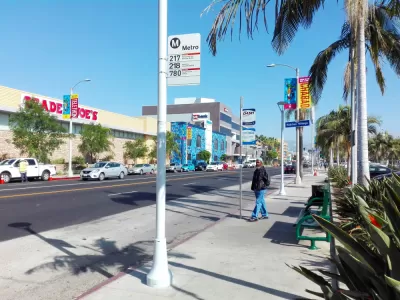
Writing in The Architect’s Newspaper, Ersela Kripa and Stephen Mueller analyze the need for shade in urban areas as extreme weather and heat waves become more common and more deadly.
As part of a study by the Project for Operative Spatial Technologies (POST) at the Texas Tech University Huckabee College of Architecture regional site in El Paso, the authors are beginning to assess the way exposure to ultraviolet radiation affects people, and how the built environment can mitigate these impacts in the cross-border community of El Paso, Texas. “A vertical design studio will endeavor to visualize innovative and effective designs for safe public shade. Student design research projects will provide positive health impacts to borderland communities through architectural and urban design of computationally informed, radiation-aware public shade structures, designing models, and prototypes to enact regional transformations at scale.”
The Irradiated Shade initiative “develops computational mapping, drawing, and modeling tools to enable designers to uncover, represent, and protect against the unseen dangers of ultraviolet radiation in public shade.” The project aims to understand the impacts of UV radiation, quantify exposure in a given area, and contextualize disparities in different communities.
As a test, the initiative is developing a “safely shaded outdoor classroom for school-age children at the trailhead of a regionally significant archaeological site” focusing on “an innovative yet low-cost structural shading assembly: Custom shading modules are designed to interlock as a reciprocal frame, using minimal material to achieve the required long span.”
The authors write that “By creating a design workflow that visualizes and spatializes the effects of the built environment on UV exposure, we can produce and assess a taxonomy of locally adapted, protective shading geometries, enabling safer outdoor environments amid this emerging and escalating threat.”
FULL STORY: Unpacking what it means to design safe shade

How Extreme Heat Impacts Heart Health
A higher number of high heat days correlates with more cardiovascular deaths, according to new research.
Copenhagen is losing its cool
In a city long designed to maximize light during dark Scandinavian winters, climate change is forcing the Danish capital to rethink its relationship with the sun.
Cool Routes app plots shady walks in arid Arizona
Alternate routes provided by the app reduced the heat experienced during the walk by an average of 4.5 degrees.

Planetizen Federal Action Tracker
A weekly monitor of how Trump’s orders and actions are impacting planners and planning in America.

The state-sanctioned urbicide of Austin
People don’t kill cities. Freeways do.

US to reduce Colorado River water deliveries to Mexico
A new Colorado Treaty amendment reduces Mexico’s Colorado River water allocation by 250,000 acre feet.

Colorado’s Largest Data Center Could Rise Next to Homes — Without a Public Hearing
The proposed campus would consume 11 times the power of Denver International Airport; as it has across the country, opposition mounts.

5 New England states march closer to 800 megawatt wind energy project
Securing federal approval for the project may be complicated under the Trump administration, which has historically been hostile towards domestic wind power.

Baltimore to break ground on $50 million Transit Priority Project
The project will bring faster bus trips, safer streets and better bike connections to Baltimore.

FREE Course: Walkable City 1: Why Walkability?
After describing his path towards focusing on walkability as the essence of good planning, Jeff Speck marches through his five principal reasons for making more walkable places.
Reinventing Malls: Planning Alchemy—Turning Gray Fields Into Gold
The course focuses on the opportunities and imperatives that shape reinvention of mall sites.

Eagle County Government
Harvard University Graduate School of Design
Nashville Planning Department
The Architects Foundation
University of Cincinnati Online
The Pocatello Development Authority
The Urban Renewal Agency of the City of Pocatello
Journal of the American Planning Association