The plan limits motorized recreation to protect natural and cultural resources.


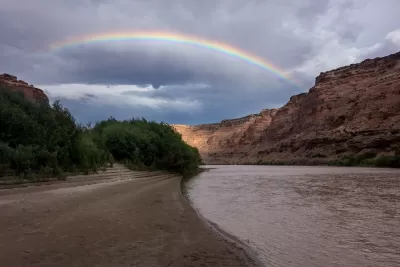
“On Thursday, the Bureau of Land Management released a new travel management plan for the Labyrinth Rims/Gemini Bridges area near Moab, Utah.” As Brooke Larsen writes in High Country News, the plan will affect over 300,000 acres of land that has seen a growing influx of recreational users, causing concern among environmental groups.
According to Laura Peterson, staff attorney with the Southern Utah Wilderness Alliance (SUWA), “The Labyrinth Canyon plan represents an important step forward to guide the management of Utah’s public lands and reduce the impacts of off-road vehicle routes in this area.” The plan restricts motorized recreation to just over 800 miles of routes, less than the previously available 1,200 miles, to protect sensitive riparian areas and wildlife, canyon rims, and cultural resources. “Georgie Pongyesva, a member of the Hopi Tribe and current tribal liaison for Grand Staircase Escalante Partners, told High Country News that the need to protect culturally important places in the Labyrinth Canyon area is connected to similar efforts across the Colorado Plateau.”
Larsen adds that “River runners have been especially concerned about ORV travel, citing its impact on the ecosystem as well as on their own recreation experience.” Living Rivers director John Weisheit says ORV users should be held responsible for protecting the environment, just as river runners are. The BlueRibbon Coalition, a motorized recreation advocacy group, plans to appeal the plan.
FULL STORY: Public-land recreation management near Moab gets an overhaul

Monument Review: Recreation a Larger Economic Benefit Than Ranching and Timber Combined
Why is the Department of Interior considering a reduction of the size of the Cascade-Siskiyou National Monument?
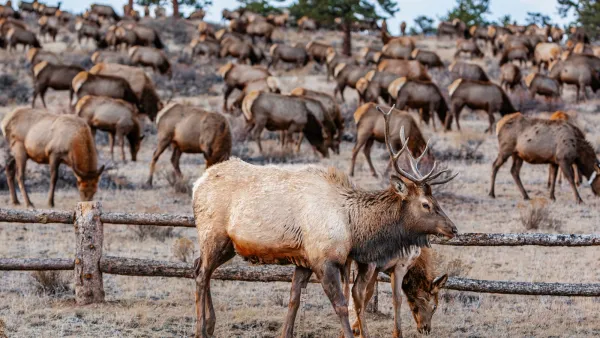
Colorado oil and gas land lease on public land could imperil nation's largest elk herd
The federal government approved the largest land lease to oil and gas interests in Colorado history.

Most Public Lands Are Safe — For Now
A proposal to sell off federally owned lands was removed from the Republican spending bill on procedural grounds.

The state-sanctioned urbicide of Austin
People don’t kill cities. Freeways do.

US to reduce Colorado River water deliveries to Mexico
A new Colorado Treaty amendment reduces Mexico’s Colorado River water allocation by 250,000 acre feet.

New Jersey’s second-largest city bans standalone data centers
Jersey City will continue to allow co-location facilities, such as those meant for research institutions that store their own data.

Amtrak not solely to blame for New Jersey commuter rail's unreliability, report finds
A new study from the Garden State Initiative found that NJ Transit’s budget grew 20% across a 4 year period, but reliability declined significantly over the same period.

EPA erases limits on planet-warming pollution from power plants
Under Monday’s plan, power plants would still have some limits on how much mercury, arsenic and other contaminants they can emit.

Phoenix announces new on-demand transit service, more frequent RAPID buses
Both new services will launch in October, and are part of Phoenix's Project Effective Access Solutions for Easing Congestion.

FREE Course: Walkable City 1: Why Walkability?
After describing his path towards focusing on walkability as the essence of good planning, Jeff Speck marches through his five principal reasons for making more walkable places.
Reinventing Malls: Planning Alchemy—Turning Gray Fields Into Gold
The course focuses on the opportunities and imperatives that shape reinvention of mall sites.

Eagle County Government
Harvard University Graduate School of Design
Nashville Planning Department
The Architects Foundation
University of Cincinnati Online
The Pocatello Development Authority
The Urban Renewal Agency of the City of Pocatello
Journal of the American Planning Association