Connections with neighbors and local institutions can play an important role in how a community responds to disaster.


When Hurricane Ian hit North Port, Florida last year, residents were trapped in flooded neighborhoods. Rather than waiting for emergency crews, boat owners used their personal craft to rescue stranded neighbors and bring in supplies for those who stayed behind. Last month, when the Gray Fire blocked roads in Washington state, one resident loaded his neighbors onto his pontoon boat and sailed them to safety.
Neighbors who know one another are more likely to help each other before, during, and after a disaster strikes. Most will call this being a good neighbor, but there’s a formal name for it: social capital. Defined as networks that enable collective action, social capital can mean the difference between life and death in a disaster. Fostering social capital is a necessary element of resilience planning because it increases the capacity of residents to respond to and more quickly recover from a disaster.
Innumerable stories have been written about the loss of community, the lack of neighborliness, and the growing atomization of society and culture. These stories decry the impact on crime, quality of life, and economics, but we should also discuss the effect on natural disaster response and recovery.
Low social capital is correlated with lower access to information, such as evacuation orders, as well as reduced access to resources to respond to and recover from a disaster, exacerbating the impacts. As we continue to see population growth in vulnerable areas, conventional approaches to hazard mitigation are insufficient for the challenges our communities face. Planners and emergency responders are recognizing that building social capital must be part of the holistic response to growing threats from natural hazards.
Social capital is grounded in networks, relationships, and trust. In high social capital neighborhoods, people are more likely to receive communication and information that enables them to respond more effectively to a disaster. Additionally, residents will be more likely to return and reinvest in their neighborhoods.
For example, West Street Recovery began as an informal effort to recover from Hurricane Harvey in a Houston neighborhood. Committed residents helped during the immediate aftermath to clean up homes and, over the long term, invested in rebuilding. The informal group became a non-profit that has contributed to response efforts during the COVID-19 pandemic, urban unrest, and Winter Storm Uri.
Finally, the networks and relationships that define social capital can create access to resources that can benefit recovery as well. Connections to civic organizations, local businesses, and local politicians can all create opportunities for investment and assistance in the recovery process. After a disaster, there are enormous demands on these entities. Having connections can make a difference in how much attention a community may receive. It may be an unfortunate fact to acknowledge, but it is sometimes who you know that can make a difference.
If we recognize the importance of social capital in building resilient communities, what is the role of planners in this effort? Social capital cannot be created through top-down initiatives; it must be created at the grassroots level. However, there are practices for creating an environment within which social capital can develop.
One approach is to build more walkable communities. This contributes not just to neighbors knowing one another, which increases the likelihood of assisting one another during a disaster, it also fosters more trust and connection, which means people are more likely to get important news and information to respond to a disaster more effectively.
Too often, the low-income and marginalized communities most impacted by disasters are those least engaged in community decision-making. This also contributes to lower responsiveness to official communication and outreach, leaving these populations less informed about potential disasters. Planners have a responsibility to engage those communities, making every effort to connect and build meaningful relationships. The first step is identifying individuals who can help introduce us to those communities and establish the necessary trust to begin building connections.
It can be done. In Paris, local officials are working to create ‘super neighbors’ through a grassroots effort to build connections at the neighborhood level. The idea is that these informal connections create capacity within the neighborhood to respond during crises such as urban unrest, heat waves, and other disasters. This is especially important in marginalized communities where connections are often lacking and can become the foundation for improving trust and communication.
When we think of preparing for natural disasters, it is easy to overlook the role of community in effective resilience planning. We tend to focus on things like infrastructure, emergency services, and government capacity while overlooking the enormous resources of family, friends, and neighbors. By strengthening neighborhoods, we can create safer, more resilient communities with greater capacity to respond to, and recover from, the growing threat of natural disasters.
About the author
Christopher Holtkamp has been a certified planner since 2006. In 2018, he earned his Ph.D. and became an Assistant Professor of Environmental Planning at the University of Wisconsin River Falls. He brings his professional experience into the classroom, focused on preparing students for successful careers. His courses revolve around issues of sustainability and the role planners play in building sustainable and resilient communities.
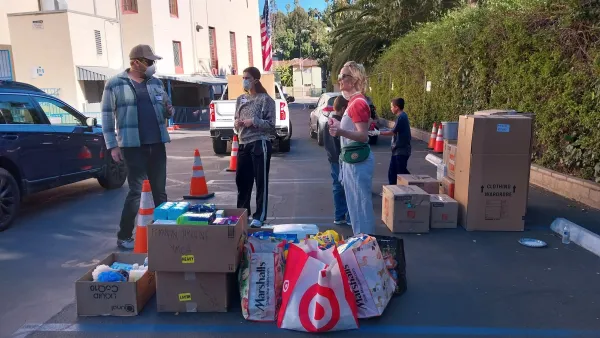
AirBnb Commits Empty Los Angeles Listings for Emergency Housing Within 24 Hours of Future Disasters
The company’s nonprofit arm formalized an agreement to offer free housing to residents after disasters.
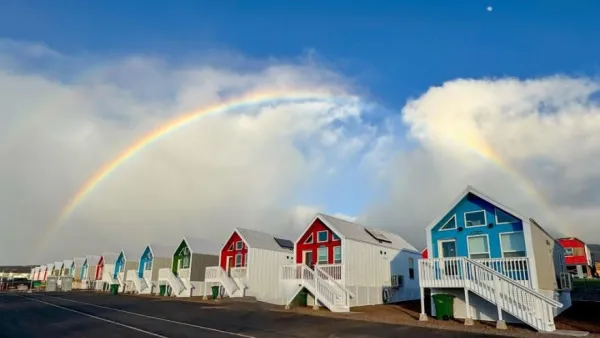
Modular Homes Offer ‘Dignified’ Shelter for Maui Wildfire Survivors
FEMA is replacing traditional trailers, which quickly deteriorate and are unfit for long-term habitation, with modular, fire-resistant homes designed to last.
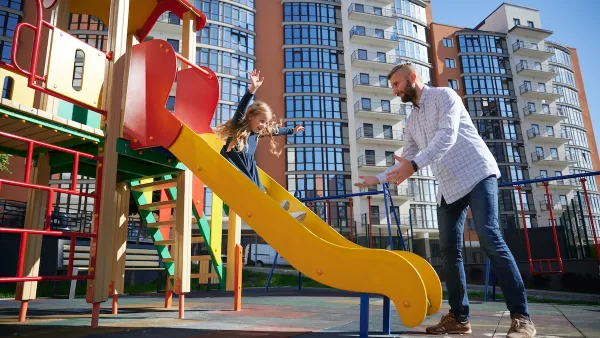
Quantifying Social Infrastructure
New developments have clear rules for ensuring surrounding roads, water, and sewers can handle new users. Why not do the same for community amenities?

Planetizen Federal Action Tracker
A weekly monitor of how Trump’s orders and actions are impacting planners and planning in America.

California plans to bury El Niño’s downpour
If the state plays its cards right, it may be able to store a billion acre-feet of El Niño’s water in aquifers.

Desperate measures: Advocates weigh draining Lake Powell to fill Colorado River
Draining the reservoir could reduce evaporation losses by a couple hundred thousand acre-feet.

Mamdani’s pied-à-terre tax survives legal challenge
A panel of judges found that the plaintiffs failed to demonstrate injury as a result of New York City's implementation of the tax.

Eastern Nebraska is running out of electricity
Data centers and electrification are straining eastern Nebraska’s grid, throttling economic development.

Seattle passes record-breaking transit services expansion
Proposition 1 will double the city’s transit tax to add 95,000 more bus trips and preserve 180,000 bus trips annually.

FREE Course: Walkable City 1: Why Walkability?
After describing his path towards focusing on walkability as the essence of good planning, Jeff Speck marches through his five principal reasons for making more walkable places.
Reinventing Malls: Planning Alchemy—Turning Gray Fields Into Gold
The course focuses on the opportunities and imperatives that shape reinvention of mall sites.

City of Rosemead
Rutgers University, Edward J. Bloustein School of Planning and Public Policy
One Hundred Miles
Hunter College, City University of New York (CUNY)
The Architects Foundation
University of Cincinnati Online
City of Cambridge
Montrose County
The Pocatello Development Authority

