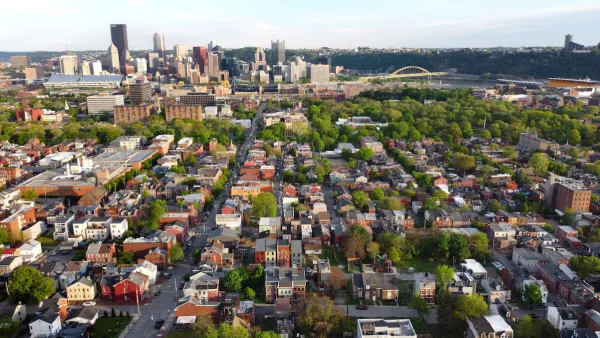
Under a proposed standard, developing neighborhoods in Edmonton would be required to fully build out infrastructure and community facilities, like retail and amenities, before the city approves additional development.



The Edmonton, Alberta City Council is considering a “substantial completion standard,” which would limit development approvals in 91 developing neighborhoods around the city.
“The substantial completion standard would require all developing areas to be built-out with appropriate amenities like retail stores, parks, and in some areas schools, libraries and recreation centres, before the city approves further developments,” reports Natasha Riebe in an article for the CBC. The city’s urban planning and economy department recently presented the standards to a council committee.
“Of the 295 residential neighbourhoods in Edmonton, 91 are in the developing areas such as Ellerslie, the southwest, west Henday and the far northeast, the report says. Those neighbourhoods need to be completed before future growth areas, should council agree to the new standard,” explains Riebe.
Edmonton city councilors say that controlling sprawl “is crucial to keep the budget in line as the city struggles to provide basic services,” according to Riebe.
More on the political debate about the new rules, including references to 15-minute city concepts and density, are include in the source article, linked below.
FULL STORY: Edmonton considers new standard to control urban sprawl

A Better Understanding of Smart Growth Benefits
Smart Growth creates compact, multimodal communities where residents consume less land, drive less, and rely more on non-auto modes. Planners have important stories to tell about the benefits of Smart Growth.
Young Candidates Ride Anti-Sprawl Rhetoric to Mayoral Victories in Alberta
On Monday, Calgary elected anti-sprawl crusader Naheed Nenshi to a second term as Mayor. And in Edmonton, 34-year-old Don Iveson, "an up-and-coming hot shot of the same vein of progressive politics", was elected to replace the city's retiring mayor.

Nearly a third of US housing is in the wildland-urban interface — and at growing risk of wildfire
As suburbs increasingly mingle with undeveloped land, homes face a higher risk from destructive fires.

The state-sanctioned urbicide of Austin
People don’t kill cities. Freeways do.

US to reduce Colorado River water deliveries to Mexico
A new Colorado Treaty amendment reduces Mexico’s Colorado River water allocation by 250,000 acre feet.

New Jersey’s second-largest city bans standalone data centers
Jersey City will continue to allow co-location facilities, such as those meant for research institutions that store their own data.

Amtrak not solely to blame for New Jersey commuter rail's unreliability, report finds
A new study from the Garden State Initiative found that NJ Transit’s budget grew 20% across a 4 year period, but reliability declined significantly over the same period.

EPA erases limits on planet-warming pollution from power plants
Under Monday’s plan, power plants would still have some limits on how much mercury, arsenic and other contaminants they can emit.

Phoenix announces new on-demand transit service, more frequent RAPID buses
Both new services will launch in October, and are part of Phoenix's Project Effective Access Solutions for Easing Congestion.

FREE Course: Walkable City 1: Why Walkability?
After describing his path towards focusing on walkability as the essence of good planning, Jeff Speck marches through his five principal reasons for making more walkable places.
Reinventing Malls: Planning Alchemy—Turning Gray Fields Into Gold
The course focuses on the opportunities and imperatives that shape reinvention of mall sites.

Eagle County Government
Harvard University Graduate School of Design
Nashville Planning Department
The Architects Foundation
University of Cincinnati Online
The Pocatello Development Authority
The Urban Renewal Agency of the City of Pocatello
Journal of the American Planning Association