Apartment-to-house conversions are contributing to a net loss of housing in some of the city’s historic neighborhoods.



According to an article by Rachel Holliday Smith in The City, “over the last 70-plus years, mergers of flats and rooming houses into bigger residences have taken a steady toll on [New York City’s] housing stock, a new study finds.”
The study from historic preservationist Adam Brodheim found that in Manhattan, where conversions have been most aggressive, “each conversion accounted for the loss of between six or seven units on average.” Based on Brodheim’s estimate, the city lost 104,000 housing units to conversions since the 1950s.
“In the past decade, such apartment combinations have nearly erased gains made by the construction of new housing units in the wealthiest parts of the city, particularly in the Upper East and Upper West sides of Manhattan.” The city’s historic districts also experienced a net loss of housing between 2010 and 2022.
The answer, for Brodheim and others, is not to limit conversions, but to make up for them.“Trying to restrict that activity is not necessarily beneficial because there is a demand for it. What this illustrates is that you just have to build a lot more housing.”
FULL STORY: NYC Lost 100K Homes in Apartment-to-House Conversions

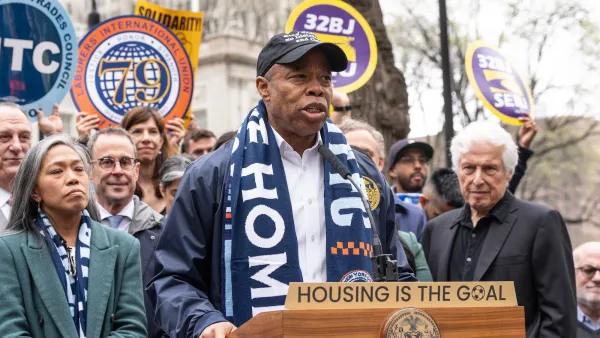
What Actually Got Built Under Eric Adams’ ‘Pro-Housing’ Administration
The outgoing mayor claims credit for hundreds of thousands of new homes. The truth is more complicated.
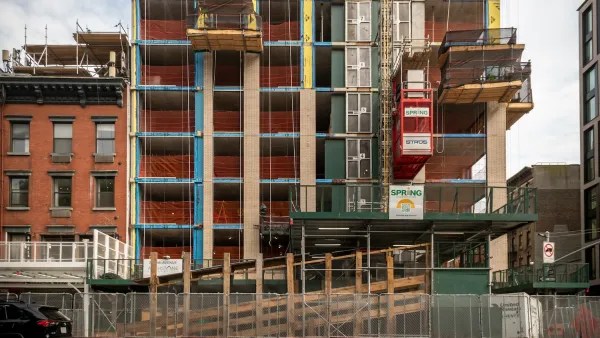
NYC Voters Reject ‘Unofficial’ City Council Vetos of Housing Projects
Voters approves multiple housing measures that streamline development permitting and shift approval to the City Planning Commission.

NYC to Gain 50K New Housing Units by Year’s End
Thanks to a now-expired tax incentive, the city is seeing a record number of new homes being built.

Planetizen Federal Action Tracker
A weekly monitor of how Trump’s orders and actions are impacting planners and planning in America.

The state-sanctioned urbicide of Austin
People don’t kill cities. Freeways do.

US to reduce Colorado River water deliveries to Mexico
A new Colorado Treaty amendment reduces Mexico’s Colorado River water allocation by 250,000 acre feet.

Brightline West’s future may rely on $6 billion federal loan
The company has until Nov. 2 to make a $400 million equity investment into its proposed high-speed rail line.

LA Metro’s ultimatum: no extra buses for LA28 if federal funding isn’t imminently secured
If Metro does not provide additional buses, LA28 organizers will have to find a new way to manage Olympic traffic. LA28’s budget does not include a line item for transit.

Colorado’s Largest Data Center Could Rise Next to Homes — Without a Public Hearing
The proposed campus would consume 11 times the power of Denver International Airport; as it has across the country, opposition mounts.

FREE Course: Walkable City 1: Why Walkability?
After describing his path towards focusing on walkability as the essence of good planning, Jeff Speck marches through his five principal reasons for making more walkable places.
Reinventing Malls: Planning Alchemy—Turning Gray Fields Into Gold
The course focuses on the opportunities and imperatives that shape reinvention of mall sites.

Eagle County Government
Harvard University Graduate School of Design
Nashville Planning Department
The Architects Foundation
University of Cincinnati Online
The Pocatello Development Authority
The Urban Renewal Agency of the City of Pocatello
Journal of the American Planning Association