Data shows cities lose millions in potential property taxes when highways displace homes and businesses.


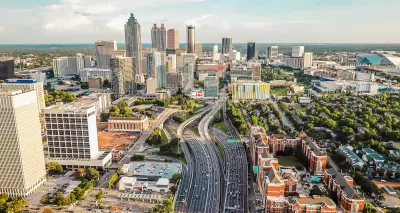
For the first time, Smart Growth America’s Divided by Design report quantifies the financial losses brought on by freeway construction and the demolition of homes.
As María Paula Mijares Torres explains in Bloomberg CityLab, “The report uses data from the US census, the Federal Highway Administration and local highway archives to analyze the land physically occupied by a small number of highways and the surrounding buffer zones in DC and Atlanta and compare it to the current tax rate of that area.” The report estimates that D.C. loses at least $7.6 million in annual property taxes on at least $1.4 billion in never-built housing.
“These numbers don’t take into account the commercial property taxes that could have been generated by the thousands of businesses that were destroyed for these freeways, according to Megan Wright, an economic development associate at Smart Growth America who worked on the report.”
Currently, the U.S. Department of Transportation uses ‘value of travel time savings’ to estimate the economic benefit of new highways, but doesn’t address the negative impacts. And while the federal government has expressed a commitment to tearing down and redeveloping highways, “Smart Growth America’s researchers called the $4 billion reconnecting communities initiative a ‘pittance’ compared to the rest of the infrastructure law, which gives localities wide discretion to build and expand highways.”
FULL STORY: Urban Highways Cost Billions in Lost Home Value, Property Taxes

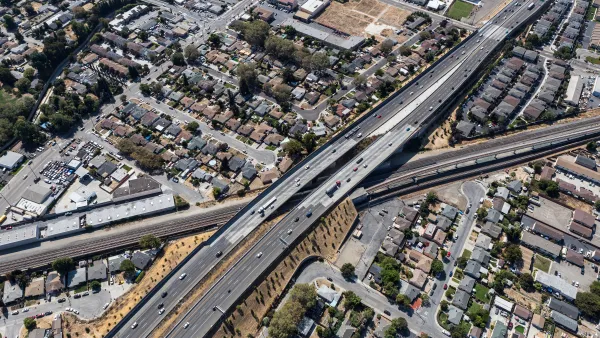
The Limitations of ‘Reconnecting Communities’
The Biden administration has pledged to correct the damage imposed on communities by highways and infrastructure, but many projects are only committing to minor improvements, not transformative changes.
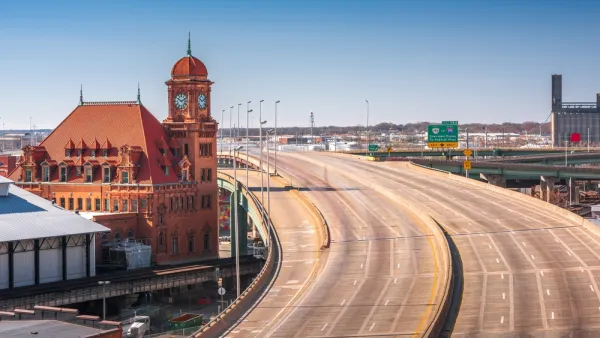
Virginia Receives Nearly $3 Million Reconnecting Communities Grant
Two Virginia cities were awarded federal funding aimed at improving connections between neighborhoods cut apart by freeway construction.
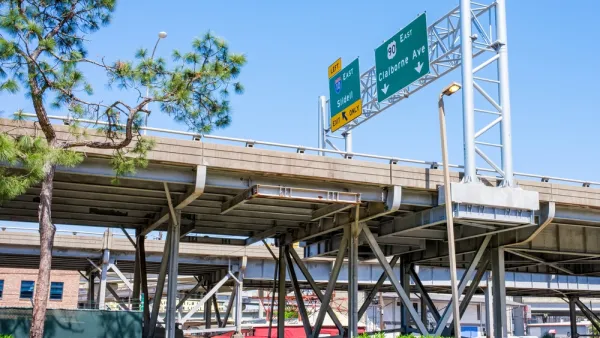
‘Reconnecting Communities’ Could Fund Highway Expansions
Applications to the program reveal a pattern of state agencies requesting funds for projects that perpetuate car-centric development with only nominal equity components.

The state-sanctioned urbicide of Austin
People don’t kill cities. Freeways do.

US to reduce Colorado River water deliveries to Mexico
A new Colorado Treaty amendment reduces Mexico’s Colorado River water allocation by 250,000 acre feet.

New Jersey’s second-largest city bans standalone data centers
Jersey City will continue to allow co-location facilities, such as those meant for research institutions that store their own data.

Amtrak not solely to blame for New Jersey commuter rail's unreliability, report finds
A new study from the Garden State Initiative found that NJ Transit’s budget grew 20% across a 4 year period, but reliability declined significantly over the same period.

EPA erases limits on planet-warming pollution from power plants
Under Monday’s plan, power plants would still have some limits on how much mercury, arsenic and other contaminants they can emit.

Phoenix announces new on-demand transit service, more frequent RAPID buses
Both new services will launch in October, and are part of Phoenix's Project Effective Access Solutions for Easing Congestion.

FREE Course: Walkable City 1: Why Walkability?
After describing his path towards focusing on walkability as the essence of good planning, Jeff Speck marches through his five principal reasons for making more walkable places.
Reinventing Malls: Planning Alchemy—Turning Gray Fields Into Gold
The course focuses on the opportunities and imperatives that shape reinvention of mall sites.

Eagle County Government
Harvard University Graduate School of Design
Nashville Planning Department
The Architects Foundation
University of Cincinnati Online
The Pocatello Development Authority
The Urban Renewal Agency of the City of Pocatello
Journal of the American Planning Association