As New York City’s congestion pricing program gets closer to implementation, a proposed pricing scheme would charge $15 at peak traffic hours.


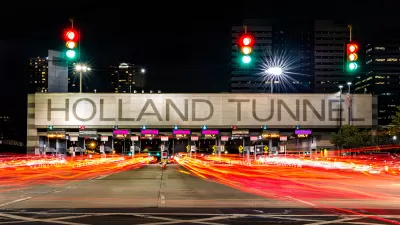
A proposed pricing scheme for New York City’s congestion pricing program could put peak-hour tolls at $15, weekend tolls at $9, and off-peak tolls at $3, writes Dave Colon in Streetsblog NYC.
The plan was developed by Charles Komanoff and Gernot Wagner, who say “A $15 peak toll to enter the Central Business District would be more politically palatable than the $23 maximum fee floated in the MTA's official environmental review of the program.”
“The Komanoff/Wagner plan doesn't conform to any of the scenarios that the MTA modeled for the federal government in its environmental assessment, but seeks to charge drivers based on the impact of their trips on traffic — hence the lower toll at night when traffic is negligible, the pair said.” The study authors also recommend rejecting all requests for exemptions, but support rebates for certain tunnels, which drop drivers directly into the congestion zone.
In a statement emailed to Planetizen before the pricing plan was announced, Samara Karasyk, president of the Hudson Square Business Improvement District, said her organization supports congestion pricing. According to Karasyk, “Traffic headed to the Holland Tunnel is a part of daily life in Hudson Square, but the creative use of public spaces and temporary solutions, like open streets, have made our neighborhood safer and more enjoyable for pedestrians. Implementing a permanent congestion pricing program that will reduce traffic in Hudson Square and other parts of our downtown is key to creating neighborhoods where people want to live, work, and visit.”
FULL STORY: Is A $15 Toll The ‘Political Sweet Spot’ for Congestion Pricing?

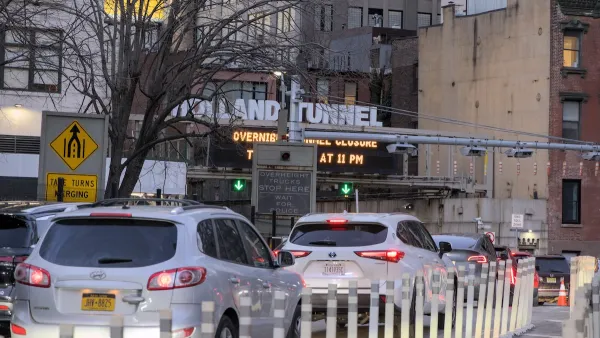
NYC Congestion Pricing Continues to Show Positive Results
While the Trump administration attempts to revoke the program’s federal approval, congestion pricing continues to reduce traffic, speed up bus travel times, and improve air quality in Manhattan.
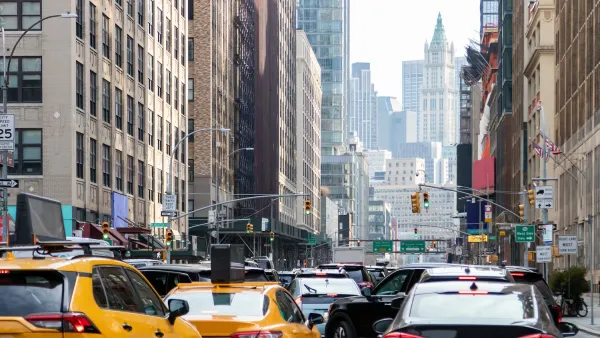
Agreement Keeps NYC Congestion Pricing Alive Through Summer
The tolling program will continue while a court considers the city’s lawsuit against the Trump administration.

Tri-State Economies to Lose Billions From Congestion Pricing Pause
New York City’s congestion pricing program, suspended by Governor Hochul earlier this year, would have pumped $12 billion into local projects and jobs.

Planetizen Federal Action Tracker
A weekly monitor of how Trump’s orders and actions are impacting planners and planning in America.

The state-sanctioned urbicide of Austin
People don’t kill cities. Freeways do.

US to reduce Colorado River water deliveries to Mexico
A new Colorado Treaty amendment reduces Mexico’s Colorado River water allocation by 250,000 acre feet.

5 New England states march closer to 800 megawatt wind energy project
Securing federal approval for the project may be complicated under the Trump administration, which has historically been hostile towards domestic wind power.

Baltimore to break ground on $50 million Transit Priority Project
The project will bring faster bus trips, safer streets and better bike connections to Baltimore.

Airbnb launches $250 million 'last-dollar financing' housing accelerator, makes first investment in Austin
The company will put $6.4 million towards affordable housing development in Texas’ capital.

FREE Course: Walkable City 1: Why Walkability?
After describing his path towards focusing on walkability as the essence of good planning, Jeff Speck marches through his five principal reasons for making more walkable places.
Reinventing Malls: Planning Alchemy—Turning Gray Fields Into Gold
The course focuses on the opportunities and imperatives that shape reinvention of mall sites.

Eagle County Government
Harvard University Graduate School of Design
Nashville Planning Department
The Architects Foundation
University of Cincinnati Online
The Pocatello Development Authority
The Urban Renewal Agency of the City of Pocatello
Journal of the American Planning Association