A new assessment from the city’s housing agency calls for $60 billion in needed repairs over the next five years.


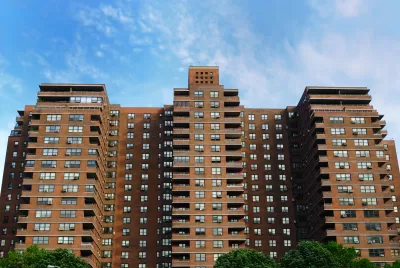
Repairing and renovating New York City’s aging public housing stock will cost more than $78 billion, reports Mihir Zaveri in The New York Times, an estimate 70 percent higher than in 2017.
According to Zaveri, the high cost “largely reflects inflation and growing construction costs, and underscores the staggering challenge facing city officials and the New York City Housing Authority, which runs the system of more than 2,100 buildings.” The agency says roughly $60 billion will be required in the next five years to repair things like boilers and heating systems. As Zaveri explains, “After a federal investigation, the city reached a settlement in 2019 that led to the appointment of a federal monitor to scrutinize NYCHA’s progress on dealing with some of its most serious problems, including lead, mold and heating failures.”
“Unique pockets of affordability” in a notoriously expensive city, NYCHA developments house over 330,000 New Yorkers, with almost 275,000 families on the agency’s waiting list.
During his administration, Mayor Adams has focused on shifting NYCHA developments to private management, which “could allow the agency to tap into billions of dollars in loans and subsidies, and could also lead to the demolition of some buildings.”
FULL STORY: New York City’s Public Housing System Now Needs Almost $80 Billion

Private Developers to Renovate NYC Public Housing
A consortium of developers have secured a $600-million loan to renovate more than 1,600 units in the New York City Housing Authority's portfolio.
NYC mayor announces plan to repair, restore and build new public housing
Roughly 300,000 New Yorkers live in the city's public housing system.
Report: Hundreds of Vacant NYC Public Housing Units ‘Taken Over’ by Squatters
The city’s housing authority says it often takes months to renovate apartments for new tenants, leading to hundreds of empty units that pose safety risks to neighbors.

Planetizen Federal Action Tracker
A weekly monitor of how Trump’s orders and actions are impacting planners and planning in America.

The state-sanctioned urbicide of Austin
People don’t kill cities. Freeways do.

US to reduce Colorado River water deliveries to Mexico
A new Colorado Treaty amendment reduces Mexico’s Colorado River water allocation by 250,000 acre feet.

5 New England states march closer to 800 megawatt wind energy project
Securing federal approval for the project may be complicated under the Trump administration, which has historically been hostile towards domestic wind power.

Baltimore to break ground on $50 million Transit Priority Project
The project will bring faster bus trips, safer streets and better bike connections to Baltimore.

Airbnb launches $250 million 'last-dollar financing' housing accelerator, makes first investment in Austin
The company will put $6.4 million towards affordable housing development in Texas’ capital.

FREE Course: Walkable City 1: Why Walkability?
After describing his path towards focusing on walkability as the essence of good planning, Jeff Speck marches through his five principal reasons for making more walkable places.
Reinventing Malls: Planning Alchemy—Turning Gray Fields Into Gold
The course focuses on the opportunities and imperatives that shape reinvention of mall sites.

Eagle County Government
Harvard University Graduate School of Design
Nashville Planning Department
The Architects Foundation
University of Cincinnati Online
The Pocatello Development Authority
The Urban Renewal Agency of the City of Pocatello
Journal of the American Planning Association