Ridership on the region’s rail systems is rebounding faster than other major transit systems.


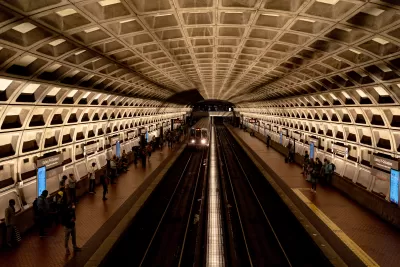
Transit ridership in the D.C. region is growing faster than in any other part of the country, reports Dan Malouff in Greater Greater Washington, with a 67 percent increase in ridership in the last year.
As Malouff explains, “Riding a 67% ridership increase over the past year, Metro grew faster than any other heavy rail public transportation in the United States during that time. DC Streetcar led all nationwide light rail systems, up 140%. And VRE led all US commuter rail systems, up 114%.”
The regional commuter rail agency, MARC, also saw a 69 percent increase in ridership, but didn’t lead the nation. Similarly, Metrobus ridership was up 41 percent. The figures come from a American Public Transit Association (APTA) ridership report. New York City’s subway system remains, by far, the nation’s most popular, with a ridership of six million in the first quarter of 2023.
Malouff notes that bus systems show less impressive ridership rebound numbers in part because buses lost fewer riders during the pandemic, when the transit-dependent workers who largely rely on buses to get to jobs deemed ‘essential’ continued to use public transit more than white-collar office workers who switched to remote work and who make up a higher proportion of rail riders.
FULL STORY: With soaring Metro, DC Streetcar, and VRE ridership, Washington region leads transit recovery in US

Big Transit Projects To Look Forward to in 2022
An exhaustive list of all fixed-guideway projects scheduled to open or break ground in the U.S. in 2022.
What Transit Systems Can Learn From D.C. Metro
The nation's second-largest transit system—and one of its newest—persists in the face of a host of challenges exacerbated by the pandemic.
D.C. Transit Agencies Ready to Serve Returning Commuters
The region's transit providers are gearing up to provide enhanced service, shorter headways, and reduced or free fares as more people return to public transportation.

Planetizen Federal Action Tracker
A weekly monitor of how Trump’s orders and actions are impacting planners and planning in America.

The state-sanctioned urbicide of Austin
People don’t kill cities. Freeways do.

US to reduce Colorado River water deliveries to Mexico
A new Colorado Treaty amendment reduces Mexico’s Colorado River water allocation by 250,000 acre feet.

5 New England states march closer to 800 megawatt wind energy project
Securing federal approval for the project may be complicated under the Trump administration, which has historically been hostile towards domestic wind power.

Baltimore to break ground on $50 million Transit Priority Project
The project will bring faster bus trips, safer streets and better bike connections to Baltimore.

Airbnb launches $250 million 'last-dollar financing' housing accelerator, makes first investment in Austin
The company will put $6.4 million towards affordable housing development in Texas’ capital.

FREE Course: Walkable City 1: Why Walkability?
After describing his path towards focusing on walkability as the essence of good planning, Jeff Speck marches through his five principal reasons for making more walkable places.
Reinventing Malls: Planning Alchemy—Turning Gray Fields Into Gold
The course focuses on the opportunities and imperatives that shape reinvention of mall sites.

Eagle County Government
Harvard University Graduate School of Design
Nashville Planning Department
The Architects Foundation
University of Cincinnati Online
The Pocatello Development Authority
The Urban Renewal Agency of the City of Pocatello
Journal of the American Planning Association