The state’s Supreme Court ruled the non-profit ERCOT can’t be sued for damages caused during blackouts in the 2021 winter storm.


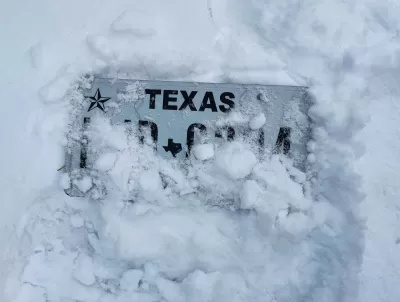
The Electric Reliability Council of Texas (ERCOT), which manages the Texas electric grid that failed during the 2021 winter storm, qualifies for ‘sovereign immunity’ from lawsuits as an “essential government service” despite being a private entity, ruled the Texas Supreme Court last week.
As Emily Foxhall explains in the Texas Tribune, Chief Justice Nathan Hecht wrote in the majority opinion that “If anyone is going to hold ERCOT accountable for its actions … it should be state regulators or the Legislature, not the courts.”
The Court’s 5-4 ruling comes after two cases were filed against ERCOT by San Antonio’s utility company and Panda Power Funds, a private equity firm that specializes in clean energy investments. “Justices Jeff Boyd and John Devine, along with two others, disagreed that ERCOT has sovereign immunity. Purely private entities are clearly not sovereign, and making them so undermines the public trust, they wrote.”
During the storm, ECOT cut power to millions of customers to prevent a wholesale collapse of the Texas electric grid, which, unlike other states, operates independently. “More than 200 people died. Experts estimated afterward that financial losses totaled between $80 billion and $130 billion, including physical damage and missed economic opportunity.”
FULL STORY: ERCOT can’t be sued over power grid failures during 2021 winter storm, Texas Supreme Court rules

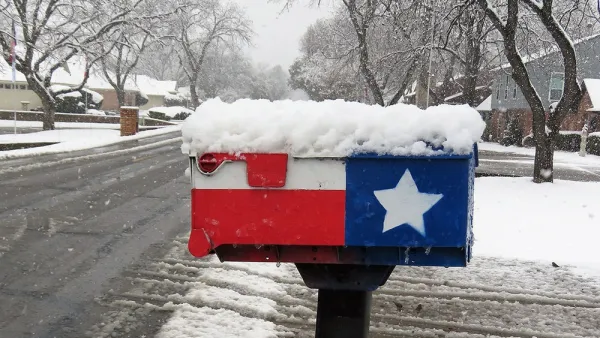
California-Style Rolling Blackouts Come to Texas
As bad as the power outages are in Texas, they would be much worse if the independent energy grid operator hadn't initiated rolling blackouts. In an extensive interview with CBS Austin, Bill Magness, the head of ERCOT, explains what went wrong.
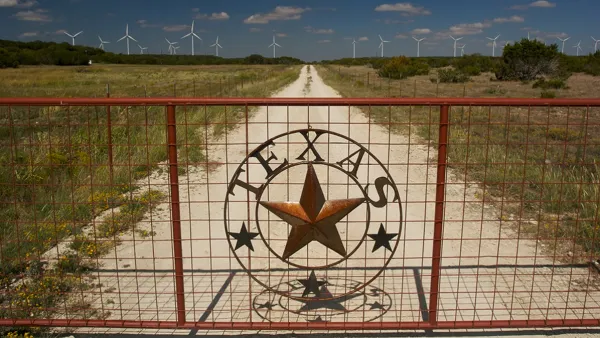
Lone Star Grid
The Arctic blast that shut down power to millions of Texas households last week has brought renewed attention to the isolated Texas power grid that prevented the operator from importing out-of-state electricity.
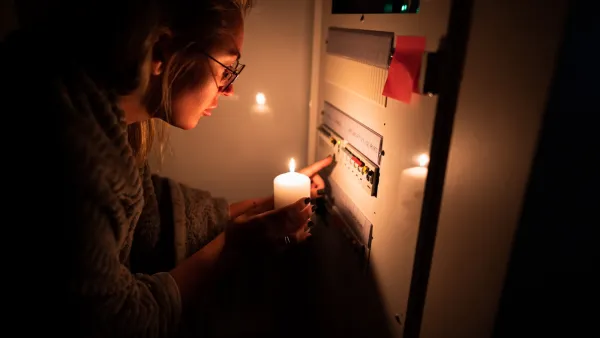
US May Have 100 Times More Blackouts by 2030
Rising demand driven by AI data centers and uncertain energy sources could lead to a surge in power outages by the end of the decade.

Planetizen Federal Action Tracker
A weekly monitor of how Trump’s orders and actions are impacting planners and planning in America.

The state-sanctioned urbicide of Austin
People don’t kill cities. Freeways do.

US to reduce Colorado River water deliveries to Mexico
A new Colorado Treaty amendment reduces Mexico’s Colorado River water allocation by 250,000 acre feet.

Mamdani overhauls NYC's Vision Zero plan with 100 new policy goals
The overhaul aims to reduce traffic deaths and make streets safer for pedestrians, cyclists and drivers through lower speed limits, new safety infrastructure and more.

Amtrak not solely to blame for New Jersey commuter rail's unreliability, report finds
A new study from the Garden State Initiative found that NJ Transit’s budget grew 20% across a 4 year period, but reliability declined significantly over the same period.

EPA erases limits on planet-warming pollution from power plants
Under Monday’s plan, power plants would still have some limits on how much mercury, arsenic and other contaminants they can emit.

FREE Course: Walkable City 1: Why Walkability?
After describing his path towards focusing on walkability as the essence of good planning, Jeff Speck marches through his five principal reasons for making more walkable places.
Reinventing Malls: Planning Alchemy—Turning Gray Fields Into Gold
The course focuses on the opportunities and imperatives that shape reinvention of mall sites.

Eagle County Government
Harvard University Graduate School of Design
Nashville Planning Department
The Architects Foundation
University of Cincinnati Online
The Pocatello Development Authority
The Urban Renewal Agency of the City of Pocatello
Journal of the American Planning Association