The ‘housing wage’ needed to afford housing in most communities is well above minimum wage.


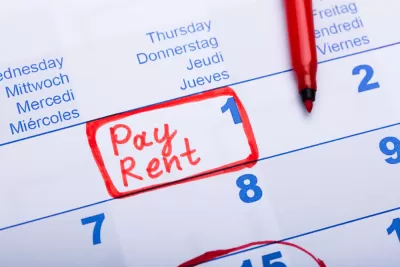
“Nearly half of all workers in the U.S. are not making enough to comfortably afford a one-bedroom apartment, according to a new report.” Writing in Route Fifty, Molly Bolan outlines the report’s findings, which indicate that housing affordability is an urgent problem in almost every U.S. community.
On average, a person working full time needs to make $23.67 an hour to afford a one-bedroom apartment or $28.58 an hour for a two-bedroom apartment, according to the National Low Income Housing Coalition’s annual Out of Reach report.
A full-time minimum wage worker can only afford a market-rate one-bedroom apartment in seven U.S. counties—all located in states with higher-than-federal minimum wage. Bolan adds that “The gap between income and housing costs is especially large for renters of color. The study found that nationally the median wage for a full-time white worker is enough to cover the costs of a one-bedroom apartment, but the same can’t be said for Black and Latino workers.”
Bolan notes that the report comes on the heels of a congressional budget deal that is widely expected to lead to reductions in funding for housing programs.
Read the full story: Housing Still Isn't Affordable for Minimum-Wage Workers, Report Says

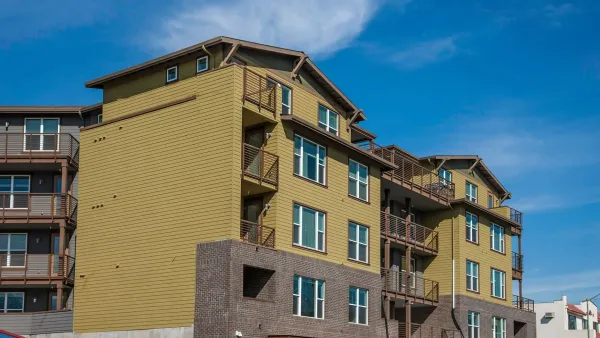
Oakland opens first affordable housing for teachers
The school district says 70% of its teachers can't afford to live in Oakland.

Santa Monica Modular Project Offers Hope for Affordable Housing in Pricy California Cities
The Berkeley Station development used modular construction to build the project on a nine-month timeline.

Report: Dallas Has Just 6 Affordable Homes for Every 10 Middle-income Households
The city’s affordable housing stock is rapidly disappearing.

Planetizen Federal Action Tracker
A weekly monitor of how Trump’s orders and actions are impacting planners and planning in America.

California plans to bury El Niño’s downpour
If the state plays its cards right, it may be able to store a billion acre-feet of El Niño’s water in aquifers.

Desperate measures: Advocates weigh draining Lake Powell to fill Colorado River
Draining the reservoir could reduce evaporation losses by a couple hundred thousand acre-feet.

After public outcry, Massachusetts city releases housing development tracker
Cambridge’s tracker currently shows 250 housing projects in various stages of development.

40 years after approval, Chicago breaks ground on new park
The park honors Jean Baptiste Point du Sable, the city’s first permanent non-native settler.

‘Hoodwinked:’ New Mexico bill aimed at microgrids paves way for data center development
In an interview with High Country News, Padilla said the legislation “ignited” New Mexico's economy.

FREE Course: Walkable City 1: Why Walkability?
After describing his path towards focusing on walkability as the essence of good planning, Jeff Speck marches through his five principal reasons for making more walkable places.
Reinventing Malls: Planning Alchemy—Turning Gray Fields Into Gold
The course focuses on the opportunities and imperatives that shape reinvention of mall sites.

City of Rosemead
Rutgers University, Edward J. Bloustein School of Planning and Public Policy
One Hundred Miles
Hunter College, City University of New York (CUNY)
The Architects Foundation
University of Cincinnati Online
City of Cambridge
Montrose County
The Pocatello Development Authority