More cities are acknowledging the unique role of nighttime activities in urban life and the need for special ‘night governance.’


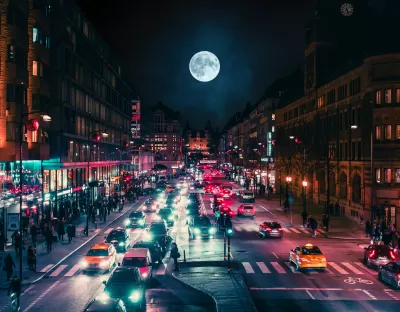
Writing in Governing, Jess Reia explains why more U.s. cities are hiring ‘night mayors’ to oversee urban nightlife as a “separate, habitable world.”
Reia, who researches nocturnal life, writes that “There’s fear of the dark, safety concerns and noise disturbances. It’s a period that’s ripe for partying, illicit activities and recklessness. And then there are the traditional notions of night: silence, sleep and rejuvenation.” Cities “alleviate some of these fears and facilitate quietude, such as building out a public lighting infrastructure and passing noise codes with special hotlines for noise complaints.”
But nightlife is more complicated. “There have been studies on light pollution and its effects on humans and wildlife, how the shuttering of LGBTQ nightclubs has weakened communities and how late-night venues and businesses spur higher rents.”
Amsterdam became the first city to formally appoint a ‘night mayor’ in 2014, “which set the stage for a bureaucracy of councils, departments and commissions dedicated to governing the city after dark.” New York City followed suit in 2017.
Reia raises concerns about surveillance and privacy as night governance becomes more popular with city governments. “With responsible, careful deployment, however, certain data can be a useful tool for night governance. For example, responsibly tracking movement at night can help cities understand where more nighttime public transit might be useful.”
Read the full story: Why More Cities Are Hiring ‘Night Mayors’

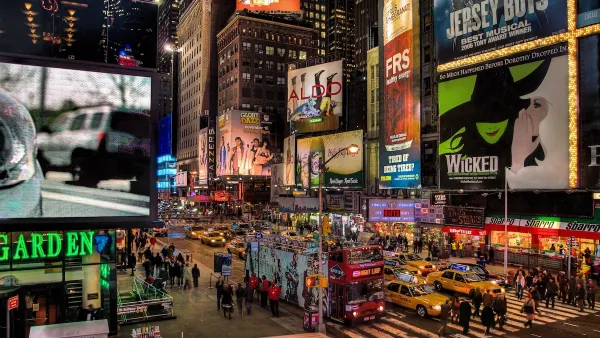
Nightlife and the 15-Minute City
Plans for compact, walkable cities often don’t address nighttime concerns like transportation and lighting, which can make neighborhoods more vibrant and safe around the clock.
Flock cameras misread license plates in 71% of cases in California study
An analysis of 1,500 reports showed a shockingly high rate of error when reading license plates.
Commentary: Legitimate privacy fears undermine legitimate, life-saving speed camera programs
Automated traffic enforcement works — but excessive surveillance threatens to derail this key safety initiative.

Planetizen Federal Action Tracker
A weekly monitor of how Trump’s orders and actions are impacting planners and planning in America.

Amtrak, CN end decades-long dispute with eight-year agreement
The new operating agreement establishes an updated framework for the companies to work together, including processes to resolve disputes.

Northwest rail fans eager for Sept. 30 debut of Amtrak’s Airo fleet
Get ready for that new train smell and more seats. But they won’t go faster or run more frequently on the Cascades route in Washington and Oregon.

Brightline Florida files for bankruptcy
The transit company is over $5 billion in debt.

St. Louis Metro to test if single-car trains can reduce operating costs, maintain rider satisfaction
The pilot program will run from October to spring 2027, and begin with one single-car train operating on Metrolink’s Red and Blue lines.

Pennsylvania is building data centers in abandoned mines
Housing data centers in mines provides an alternative to destroying local forests and may spare residents from data centers’ noise and air pollution.

FREE Course: Walkable City 1: Why Walkability?
After describing his path towards focusing on walkability as the essence of good planning, Jeff Speck marches through his five principal reasons for making more walkable places.
Reinventing Malls: Planning Alchemy—Turning Gray Fields Into Gold
The course focuses on the opportunities and imperatives that shape reinvention of mall sites.

City of Thousand Oaks
City of Wisconsin Rapids
Harvard University Graduate School of Design
The Architects Foundation
University of Cincinnati Online
The Pocatello Development Authority
The Urban Renewal Agency of the City of Pocatello