New LED lighting has raised concerns about the health and environmental impacts of excessive or harsh lighting.


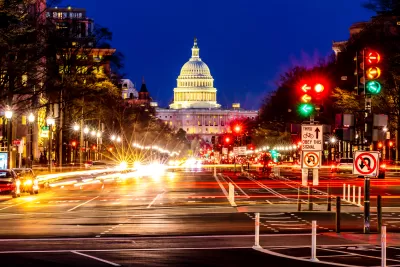
According to an article by Kirsten Errick in Route Fifty, “Washington, D.C.’s decision to install new energy-efficient LED streetlights to reduce greenhouse gas emissions and costs is garnering attention from environmentalists who are concerned about the bright lights’ impact on people and wildlife.” As Errick points out, “The district is part of the 80% of North Americans that cannot see the Milky Way.”
The D.C. case highlights the conflict between energy efficiency and the practical benefits of urban lighting and the negative impacts of light pollution. The project will save the District an estimated $2.5 million per year in energy costs, and LEDs can last five times as long as incandescent bulbs. But residents are already noticing the harsher lights, which can affect sleep and disturb human and animal circadian rhythms.
“Even before the district’s LED project, the city was already excessively lighting its streets, s. It is unclear why the district overlights, but the city is currently not considering making changes to this practice, according to city officials.” Errick notes that “Current non-LED lights in the district are approximately seven times the national lighting standard, recommended by the American Association of State Highway and Transportation Officials, while the new LED lights will only be two to three times as bright as the standard.”
Dark sky experts like Jim Dougherty of the International Dark Sky Association say cities can accomplish safe street lighting without overlighting, comparing lighting to music: “Music is supposed to be kind of loud, but then cranking up the volume by three more notches doesn’t help you, so you should put it on spec,” Dougherty said.
Read the full story: LEDs Bring Energy Savings—and Light Pollution

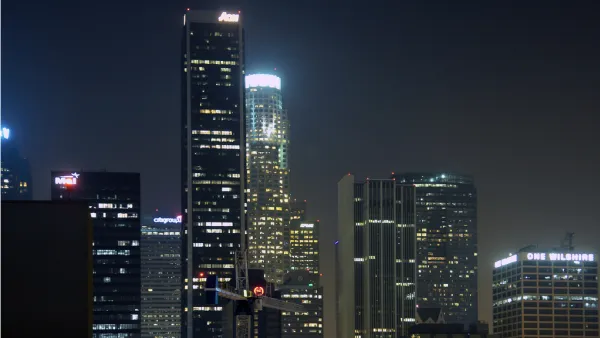
How the Lights in Our Cities Became Too Bright
“Why are lighting designers and experts nearly unified in their belief that outdoor lighting in past years has been excessive?”
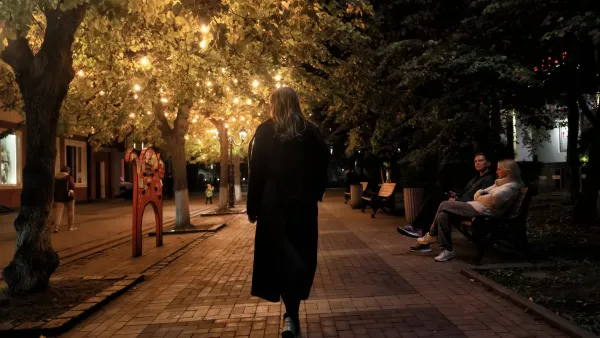
How urban design can deter crime
Well-designed public spaces and good lighting can prevent crime and make residents feel safer.
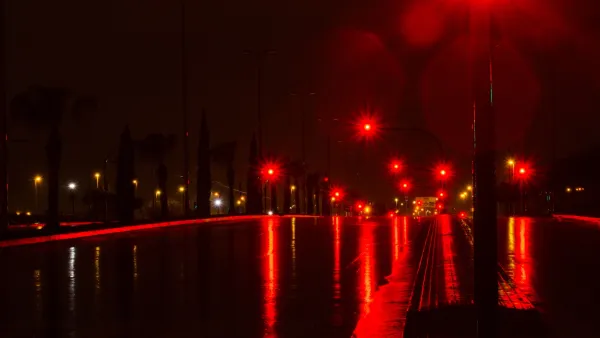
Danish Suburb Introduces Red Streetlights to Protect Nocturnal Species
The town of Gladsaxe is using red-spectrum LEDs to illuminate streets where bat species congregate.

Planetizen Federal Action Tracker
A weekly monitor of how Trump’s orders and actions are impacting planners and planning in America.

California plans to bury El Niño’s downpour
If the state plays its cards right, it may be able to store a billion acre-feet of El Niño’s water in aquifers.

Chicago breaks ground on $3 billion megadevelopment
The new neighborhood, titled Foundry Park, will one day host 3,700 residences.

Satanic place names
From streams and lakes to valleys and canyons, I mapped more than 1,000 places named after the Devil.

California High-Speed Rail Authority CEO resigns after $600,000 scandal
Under Ian Choudri, the authority used taxpayer dollars to fund first class flights and trips to nightclubs.

Want to study the Missouri River? Soon, you may need unanimous approval from 10 states
Legislation would require 10 governors’ permission to study or build projects moving water outside the basin.

FREE Course: Walkable City 1: Why Walkability?
After describing his path towards focusing on walkability as the essence of good planning, Jeff Speck marches through his five principal reasons for making more walkable places.
Reinventing Malls: Planning Alchemy—Turning Gray Fields Into Gold
The course focuses on the opportunities and imperatives that shape reinvention of mall sites.

City of Rosemead
Rutgers University, Edward J. Bloustein School of Planning and Public Policy
One Hundred Miles
Hunter College, City University of New York (CUNY)
The Architects Foundation
University of Cincinnati Online
City of Cambridge
Montrose County
The Pocatello Development Authority