Rising housing costs and the growth of more urbanized, amenity-rich small metros are driving college-educated workers away from “superstar cities.”


Increasingly expensive coastal cities are bleeding both low-income workers and college-educated workers, according to an article by Emily Badger, Robert Gebeloff, and Josh Katz in The New York Times. “This pattern, visible in an Upshot analysis of census microdata, is startling in retrospect. Major coastal metros have been hubs of the kind of educated workers coveted most by high-powered employers and economic development officials.”
Even before the pandemic, college-educated working-age adults were leaving cities like San Francisco and New York at higher rates every year. “A chart showing net domestic migration of college-educated working-age adults in the San Francisco metro area, going from an average annual gain of roughly 10,000 people before the pandemic to a loss of 25,000 people in 2021.”
Now, “affordability has broadly been eroding up the income spectrum in the country’s most expensive metros. As these regions have become richer, that has, among other things, helped fuel the rise in their housing prices.” The workers leaving these cities are migrating to other, less expensive but still thriving metro areas such as Phoenix, Atlanta, and Houston.
Read the source article for an in-depth analysis of domestic migration trends, the shifting needs and expectations of Americans, and the changes in smaller towns that have made them more attractive in recent years.
FULL STORY: Coastal Cities Priced Out Low-Wage Workers. Now College Graduates Are Leaving, Too.

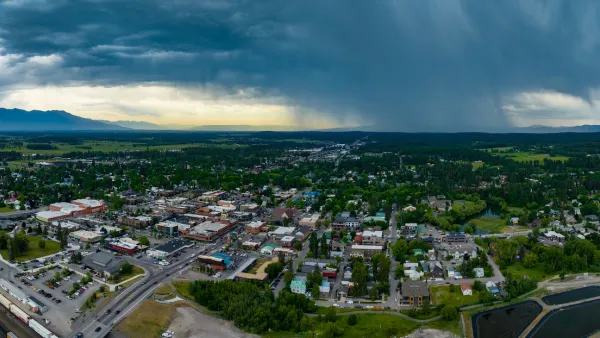
As Rural Areas Grow, So Do Tensions
The influx of new households to rural communities is driving up housing costs for existing residents and straining local infrastructure, sparking difficult conversations about future growth.
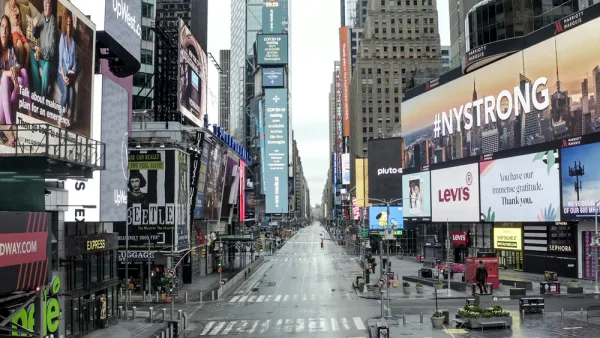
Pandemic-Era Big City Population Loss More Dramatic Than We Thought
A new analysis indicates that many big cities saw their biggest population declines in at least a decade, with suburbs also showing a slowdown in growth.
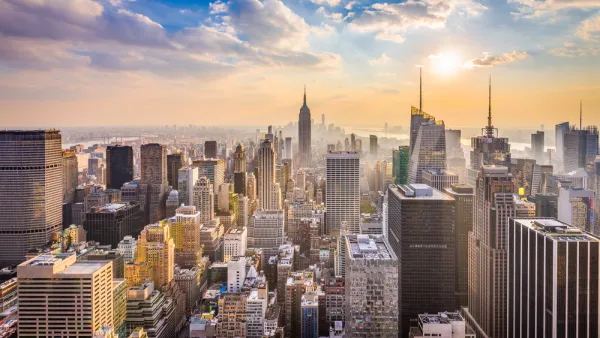
Manhattan’s Population Is on the Rebound
After the ‘urban exodus’ brought on by the pandemic, most of New York City’s boroughs are regaining their population.

Planetizen Federal Action Tracker
A weekly monitor of how Trump’s orders and actions are impacting planners and planning in America.

The state-sanctioned urbicide of Austin
People don’t kill cities. Freeways do.

US to reduce Colorado River water deliveries to Mexico
A new Colorado Treaty amendment reduces Mexico’s Colorado River water allocation by 250,000 acre feet.

5 New England states march closer to 800 megawatt wind energy project
Securing federal approval for the project may be complicated under the Trump administration, which has historically been hostile towards domestic wind power.

Baltimore to break ground on $50 million Transit Priority Project
The project will bring faster bus trips, safer streets and better bike connections to Baltimore.

Airbnb launches $250 million 'last-dollar financing' housing accelerator, makes first investment in Austin
The company will put $6.4 million towards affordable housing development in Texas’ capital.

FREE Course: Walkable City 1: Why Walkability?
After describing his path towards focusing on walkability as the essence of good planning, Jeff Speck marches through his five principal reasons for making more walkable places.
Reinventing Malls: Planning Alchemy—Turning Gray Fields Into Gold
The course focuses on the opportunities and imperatives that shape reinvention of mall sites.

Eagle County Government
Harvard University Graduate School of Design
Nashville Planning Department
The Architects Foundation
University of Cincinnati Online
The Pocatello Development Authority
The Urban Renewal Agency of the City of Pocatello
Journal of the American Planning Association