A proposal to bury part of Interstate 345 in a 65-foot trench is the latest in a debate that has lasted more than ten years as the freeway reaches the end of its useful life.


The transportation director of the North Central Texas Council of Governments is asking the Dallas City Council to support a plan to bury a segment of Interstate 345 in what Strong Towns recently called an ‘infrastructure grave,’ “which would allow traffic to flow and development to come on decks over the roadway and on surplus right of way.” Critics of the plan say removing the freeway altogether is the best way to begin redressing the damage that the roadway originally caused to surrounding neighborhoods.
As Matt Goodman explains in D Magazine, “The trench would maintain the highway’s present ties to Central Expressway, Woodall Rodgers, and interstates 30 and 45. But it would also create a huge chasm between downtown and Deep Ellum, which makes some on the City Council nervous,” particularly as neither TxDOT nor the city have a plan for funding decking over the trench that could hold future development such as parks or housing. TxDOT insists a proposed plan to replace the freeway with a boulevard would create too much congestion and does not plan to continue studying the boulevard proposal.
The article details the city’s recent growth patterns and the role of I-345 in connecting the southern and northern parts of Dallas, as well as the decade-long debate over how to redesign the aging freeway. According to Goodman, the city council will vote on a resolution to support the trenching project on May 24, which could speed up or delay the project depending on the outcome.
Read the full story: Transportation Officials Make Public Plea to Support I-345 Trenching Plan

Opinion: Hit the Brakes on Dallas Freeway Plan
A proposal to bury a Dallas freeway may not be the best way forward for the area’s residents.
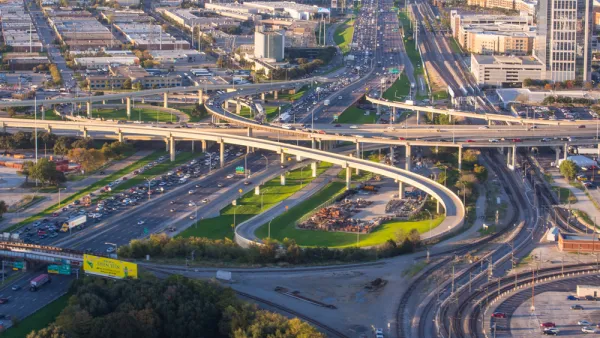
TxDOT Recommends a 10-Lane ‘Infrastructure Grave’ in Dallas
Rather than removing the freeway altogether, which the Texas Department of Transportation calls ‘unfeasible,’ the agency recommends burying the road in a billion-dollar, ten-lane trench through the city’s downtown.
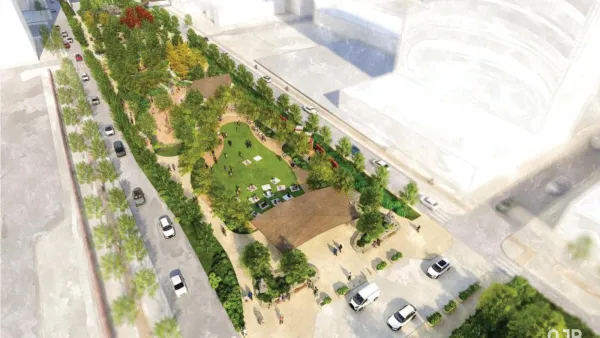
Philadelphia lawmakers fight to save 'Chinatown Stitch' from Trump cuts
The freeway cap project, approved and funded under the Biden administration, is now in jeopardy after the federal government rescinded all but $8 million in funding.

Planetizen Federal Action Tracker
A weekly monitor of how Trump’s orders and actions are impacting planners and planning in America.

California plans to bury El Niño’s downpour
If the state plays its cards right, it may be able to store a billion acre-feet of El Niño’s water in aquifers.

Desperate measures: Advocates weigh draining Lake Powell to fill Colorado River
Draining the reservoir could reduce evaporation losses by a couple hundred thousand acre-feet.

California city breaks ground on transit connector
The project includes three mobility hubs and a pedestrian bridge.

After public outcry, Massachusetts city releases housing development tracker
Cambridge’s tracker currently shows 250 housing projects in various stages of development.

40 years after approval, Chicago breaks ground on new park
The park honors Jean Baptiste Point du Sable, the city’s first permanent non-native settler.

FREE Course: Walkable City 1: Why Walkability?
After describing his path towards focusing on walkability as the essence of good planning, Jeff Speck marches through his five principal reasons for making more walkable places.
Reinventing Malls: Planning Alchemy—Turning Gray Fields Into Gold
The course focuses on the opportunities and imperatives that shape reinvention of mall sites.

City of Rosemead
Rutgers University, Edward J. Bloustein School of Planning and Public Policy
One Hundred Miles
Hunter College, City University of New York (CUNY)
The Architects Foundation
University of Cincinnati Online
City of Cambridge
Montrose County
The Pocatello Development Authority