Apartment permits declined by 48 percent in the past year in St. Paul. The city’s voters approved one of the nation’s most aggressive rent stabilization ordinances in November 2021.



[Updated June 14, 2023 to accurately reflect the state of Minneapolis’ rent control ordinance.] Apartment construction is quickly declining in St. Paul, bucking national trends and raising questions about the effects of the aggressive rent control policies adopted by voters in 2021.
Frederick Melo reports on new data from the U.S. Department of Housing and Urban Development that show a 48 percent decline in apartment permits in just a year.
“The numbers of permitted units ended the year roughly on par with the city’s 10-year average, which was weighed down coming out of the Great Recession a decade ago. That’s fair, bad or really bad, depending upon how you slice it,” writes Melo.
For local perspective on the decline in construction, Melo notes that neighboring Minneapolis, which advanced its own rent control ordinance in 2021, increased multi-family residential permitting by 16 percent in the same time period. Minneapolis city staff is still drafting that ordinance. Crystal King, a spokesperson for St. Paul’s Department of Planning and Economic Development, is quoted in the article saying that it’s too soon to say why the city’s multi-family development markets are headed in such different directions. As noted by Melo, St. Paul historically has lagged behind Minneapolis’ multi-family construction rates.
And there are significant differences between the rent stabilization ordinances approved in either city. “Opponents of rent control have been quick to point out a key policy difference between the two cities. St. Paul voters approved the city’s first-ever rent-control policy at the ballot box in November 2021, a strict 3% rent cap that was later loosened by the city council last September, with the mayor’s blessing, to exempt new development for 20 years,” writes Melo.
Melo reports more on the fallout from the permitting data, including responses from rent control advocates, in the source article below.
Read the full story: By HUD counts, St. Paul’s apartment construction permits fell 48% after rent control. Was it temporary?

First Steps Toward Rent Control in Minneapolis
The state of Minnesota requires local rent control law to be approved by general election, so the city of Minneapolis is forced to take several preemptory steps to get a rent stabilization ordinance on the ballot.

Minneapolis as a Model for Housing Affordability
Through a combination of policies, the city has managed to limit the severity of the nationwide housing crisis.

Rising Rental Costs in Texas Prompt Rent Control Discussion
Rent control is a political non-starter in the Lone Star State, but as rental prices continue to increase dramatically, advocates are looking for solutions.

Planetizen Federal Action Tracker
A weekly monitor of how Trump’s orders and actions are impacting planners and planning in America.

Data reveals that NYC’s bet on congestion pricing has paid off
After almost two years of the program, reports show positive impacts on traffic and air quality and no disruptions to parking.
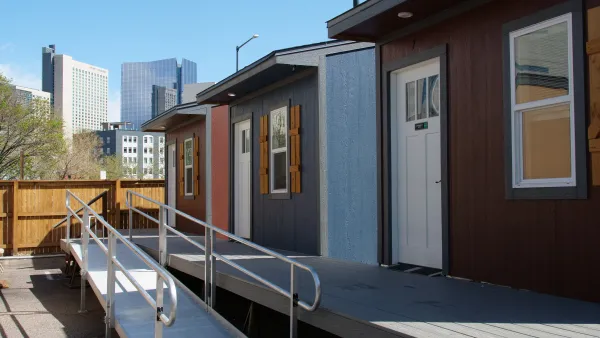
Denver is solving homelessness. Why aren't the rest of us?
Since 2023, Denver's street homeless population has decreased by 64%, proving that effective tools exist to support those in need of housing.

In California, electric school buses are powering 1,000 homes — and turning a profit
Tellus Power, the charging equipment manufacturer behind the project, is also helping school buses connect to the power grid in Vermont, Illinois and San Francisco.

‘No state has sacrificed more:’ Arizona joins Nevada, sues feds over Colorado River plan
The Arizona Department of Water Resources' motion claims that the state's cities, tribes and farmers can't survive without sufficient water from the Colorado River.

Permits for single-family homes have nosedived, along with investor confidence
Permits to build new single-family homes also hit a 3.5 year low in September.

FREE Course: Walkable City 1: Why Walkability?
After describing his path towards focusing on walkability as the essence of good planning, Jeff Speck marches through his five principal reasons for making more walkable places.
Reinventing Malls: Planning Alchemy—Turning Gray Fields Into Gold
The course focuses on the opportunities and imperatives that shape reinvention of mall sites.

City of Rosemead
Rutgers University, Edward J. Bloustein School of Planning and Public Policy
One Hundred Miles
The Architects Foundation
University of Cincinnati Online
Montrose County
Northern Illinois Transit Authority (NITA)
The Pocatello Development Authority