Permits to build new single-family homes also hit a 3.5 year low in September.



Permits to build single-family homes in the United States hit a 3.5-year-low in September, according to an Oct. 20 report from the U.S. Department of Commerce. The market sentiment among single-family developers has also plummeted, hitting its lowest level since June 2012.
“The deterioration in sentiment was blamed on rising material costs and mortgage rates as well as more expensive diesel and ‘worsening’ labor conditions amid an immigration crackdown. Expensive mortgages have combined with still-elevated home prices to create what economists have called an affordability crisis, which is dominating campaign messaging ahead of the crucial November 3 midterm elections,” Lucia Mutikani writes for Reuters.
Single-family housing starts dropped 4.6% in September, the lowest since September 2025. Homebuilding rose in the Northeast, but fell in the South, West and Midwest.
Read the full story: US single-family housing starts plunge; building permits hit 3-1/2-year low


Novel study finds extreme state-by-state disparity in housing construction timelines
The first comprehensive working paper on U.S. construction timelines also found that the permitting process for multi-family projects has slowed nationwide.

Pittsburg launches 'EZ permits,' aims for one-day turnaround for low-risk permits
The pilot ‘fast lane’ for permits is part of a bundle of modernization efforts for Pittsburg’s permitting process.

Is AI really the Panacea to our permitting woes?
Let’s have a look at what’s happening on the ground.

Planetizen Federal Action Tracker
A weekly monitor of how Trump’s orders and actions are impacting planners and planning in America.

Data reveals that NYC’s bet on congestion pricing has paid off
After almost two years of the program, reports show positive impacts on traffic and air quality and no disruptions to parking.
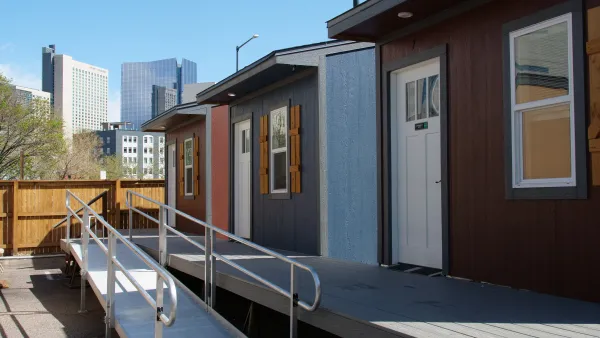
Denver is solving homelessness. Why aren't the rest of us?
Since 2023, Denver's street homeless population has decreased by 64%, proving that effective tools exist to support those in need of housing.

LA begins work on $4 billion light rail through San Fernando Valley
The project will be the areas first light rail service since the termination of the Pacific Electric Railway in the 1950s.

Cheaper manufactured homes could be having a moment, if only states can catch up
A new law could make manufactured homes cheaper, but old zoning barriers could slow their expansion.

Will sprawl save California?
California residents will vote on Proposition 45 in November, which would make it easier to build large housing developments on the outskirts of the state’s cities.

FREE Course: Walkable City 1: Why Walkability?
After describing his path towards focusing on walkability as the essence of good planning, Jeff Speck marches through his five principal reasons for making more walkable places.
Reinventing Malls: Planning Alchemy—Turning Gray Fields Into Gold
The course focuses on the opportunities and imperatives that shape reinvention of mall sites.

Rutgers University, Edward J. Bloustein School of Planning and Public Policy
One Hundred Miles
County of Mendocino
The Architects Foundation
University of Cincinnati Online
Montrose County
Northern Illinois Transit Authority (NITA)
The Pocatello Development Authority