More investments in high-quality transit service coupled with income-based discounts could offer a better way to boost ridership and help low-income riders.


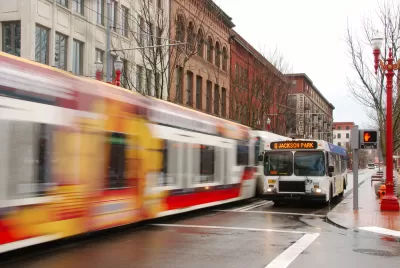
In an article from The Conversation republished on Route Fifty, Nicholas Dagen Bloom, author of The Great American Transit Disaster, argues against eliminating transit fares at the expense of improving service.
“Despite flashing warning signs, political support for public transit remains weak, especially among conservatives. So it’s not clear that relying on government to make up for free fares is sustainable or a priority.” Meanwhile, “Free public transit that doesn’t bankrupt agencies would require a revolution in transit funding.” Dagen Bloom points out, “Studies also show that transit riders are likely to prefer better, low-cost service to free rides on the substandard options that exist in much of the U.S.”
For Dagen Bloom, income-based discounts such as ‘fair fare’ programs and fare integration offer better models. “As ridership grows under Fair Fares and fare integration, I expect that additional revenue will help build better service, attracting more riders. Increasing ridership while supporting agency budgets will help make the political case for deeper public investments in service and equipment. A virtuous circle could develop.”
Read the full story: Low-Cost, High-Quality Public Transportation Will Serve the Public Better Than Free Rides

Fisticuffs: The argument AGAINST fare-free transit
If a terrible bus becomes free, will it truly free you?
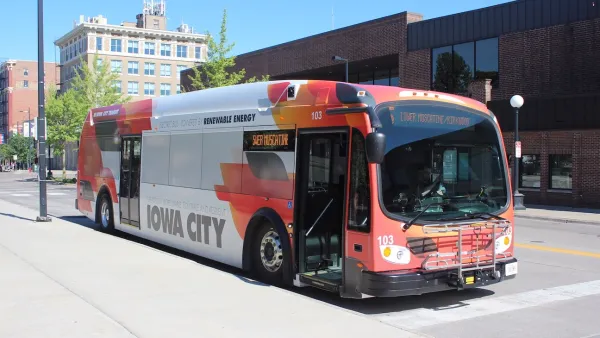
Iowa City's free bus program made ridership spike by 68%. Now, it could go away.
The bus system gained roughly 700,000 new riders since it launched free service in 2023.
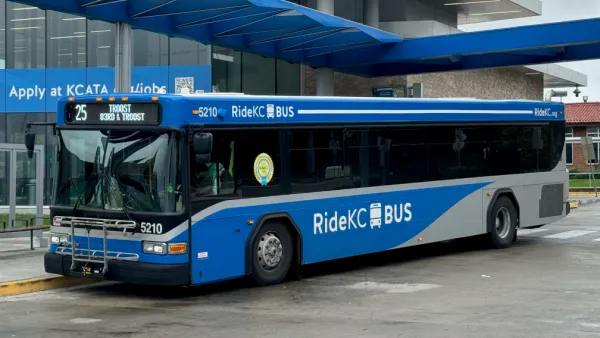
Kansas City Will Start Charging Bus Fares in June — With no Plan in Place for Low-income Riders
Service providers say they haven’t been told how their clients can access free or reduced fares after the agency starts charging again this summer.

Planetizen Federal Action Tracker
A weekly monitor of how Trump’s orders and actions are impacting planners and planning in America.

California plans to bury El Niño’s downpour
If the state plays its cards right, it may be able to store a billion acre-feet of El Niño’s water in aquifers.

Desperate measures: Advocates weigh draining Lake Powell to fill Colorado River
Draining the reservoir could reduce evaporation losses by a couple hundred thousand acre-feet.

Chicago voters approve permanent festival grounds, penalty for vacant property owners
Currently, major summer and fall festivals take over public parks for weeks at a time, drawing criticism from nearby residents

NYC votes to cut outdoor dining red tape, speed up permitting
New York City also voted to allow the Department of Transportation to begin work on urgent projects before notifying elected officials.

California appears to reject Prop. 45
The proposition would have expanded the projects that qualify for a streamlined environmental review, effectively paring down the California Environmental Quality Act.

FREE Course: Walkable City 1: Why Walkability?
After describing his path towards focusing on walkability as the essence of good planning, Jeff Speck marches through his five principal reasons for making more walkable places.
Reinventing Malls: Planning Alchemy—Turning Gray Fields Into Gold
The course focuses on the opportunities and imperatives that shape reinvention of mall sites.

City of Rosemead
Rutgers University, Edward J. Bloustein School of Planning and Public Policy
One Hundred Miles
Hunter College, City University of New York (CUNY)
The Architects Foundation
University of Cincinnati Online
City of Cambridge
Montrose County
The Pocatello Development Authority