If a terrible bus becomes free, will it truly free you?



This is the first in a new Planetizen series called Fisticuffs, where planners go head to head and make their case for or against the most polarizing topics in planning. This month, Chicago-based transit planner Joshua Woods and Vancouver-based planner and transit riders advocate Denis Agar face off on fare-free transit. Check out the FOR side of this debate on Friday. Have an idea for a future Fisticuffs topic? Email us at [email protected].
In Tucson, Arizona, 20 of the city’s 26 local bus routes run once an hour on weekends. If you miss a bus, or one is cancelled, you have to wait at least 60 more minutes. And most of these routes don’t run beyond 8 o’clock at night.
For those reliant on Tucson’s SunTran buses, a simple outing to the store could take three hours, and working the night shift is simply not an option. For all but the most desperate, car ownership is a required expense to access any of the joy and opportunity that Tucson offers. And yet we know that roughly one-third of the population doesn’t have a driver’s license due to age, ability, cost or preference.
Tucson, like most American and Canadian cities, has an extreme shortage of public transit. I’m not talking about subways or SkyTrains. I’m talking about a local bus that stops near your house. There should be many, many more such buses on the road. I cannot overstate how transformative it is to have frequent bus service on your street. Even in car-oriented suburban communities, frequent transit transforms lives. This is the number one way that transit can address inequity.
Brampton Transit and York Region Transit serve adjacent suburbs on the fringes of Toronto, Canada. They have similar income levels, similar rates of immigration and similar urban form. About 20 years ago, Brampton decided to start boosting frequency levels, while York Region kept frequencies low but built some shiny new infrastructure. Over the last two decades, Brampton’s ridership grew by 430% while York’s grew by 60%.
What is the lesson here? Simply put, if there are more buses on the road, people will use them. The one-third of people who do not have a drivers’ license deserve to be able to get where they’re going — and hourly bus service does not count. Alleviate overcrowding, reduce wait times, add night service and expand the network to new neighbourhoods: Again and again, this is what riders say they want. A survey of nondrivers in Washington state indicated that a lack of transit was a barrier for 65% of them, whereas the cost of transit was a barrier to just 3%.
Adding buses is not a luxury meant to gentrify transit. It is liberatory. Without frequent transit, nondrivers are systematically excluded from employment, education, democratic processes and all of the things that constitute society. The authors of the Washington State study were surprised to find that some nondrivers felt their friends were avoiding them because they often needed rides, or that they simply weren’t invited to events because everyone knew they wouldn’t be able to get there.
Free vs. frequent
I have a lot of common ground with my fellow transit advocates who prioritize the push for free transit, and I think most of them agree that we need more transit. The key disagreement is which one is the top priority.
Tucson, the example at the top of this article, eliminated bus fares in 2020. But what good is free transit if the bus only comes once an hour? If transit becomes free but remains bad, does it meaningfully address inequality?
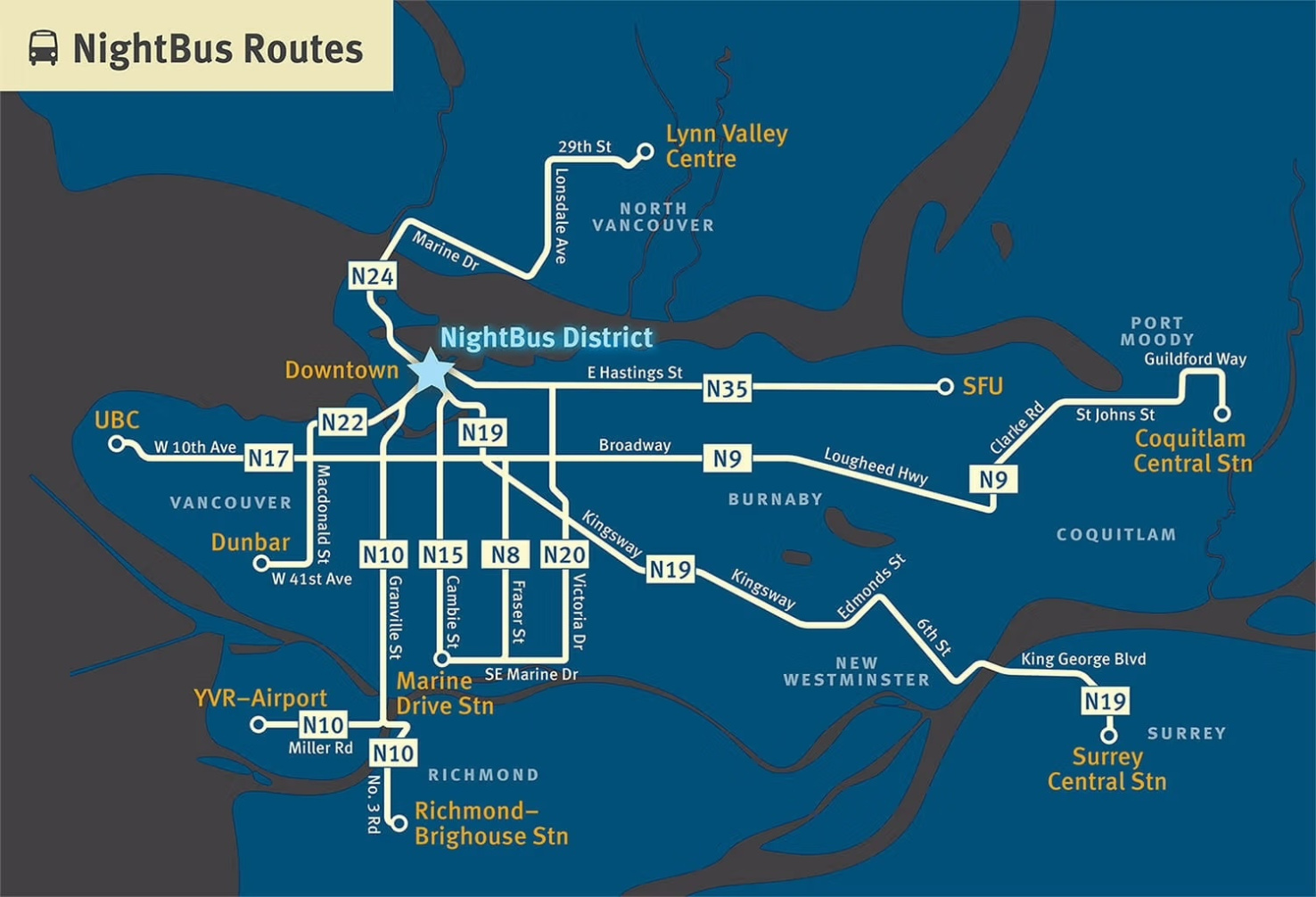
Vancouver, British Columbia, where I live, is considered to have one of the best transit networks on the continent, but enormous gaps remain. The NightBus network only serves one-quarter of the region, forcing shift workers to be reliant on Uber or forcing them to spend $15,000 per year on car ownership. Half of Metro Vancouver’s residents do not have access to all-day, frequent transit. We essentially have no long-distance regional transit like Toronto’s GO Transit or Chicago’s Metra. And we have no public intercity transit, like most of Europe or Asia. Users of paratransit service are forced to book trips 24 hours in advance, and bookings are sometimes denied.
I fully agree with free transit advocates that everyone should be able to use transit regardless of what they have in their wallet. Most cities deal with this by offering a discount to low-income residents. Los Angeles offers one of the strongest examples, offering 20 free trips per month to anyone earning less than $58,000 USD per year. Oddly, Vancouver is one of the few cities that does not offer any such discount. We need one — and we need to make sure it’s designed to be issued automatically, so that paperwork isn’t a barrier to participation.
The difference in cost to provide free transit to everyone ($700m per year) vs. progressive transit fares ($70m per year) in our region matters enormously, because $630m in operating funding is not easy to get.
Free transit advocates will say that we can do both — we can expand transit AND make it free. They may be right. No one can truly know where the Overton Window is until we go out and try to jam it open. But I take issue with the idea that free transit should be the top issue, the one on the marquee.
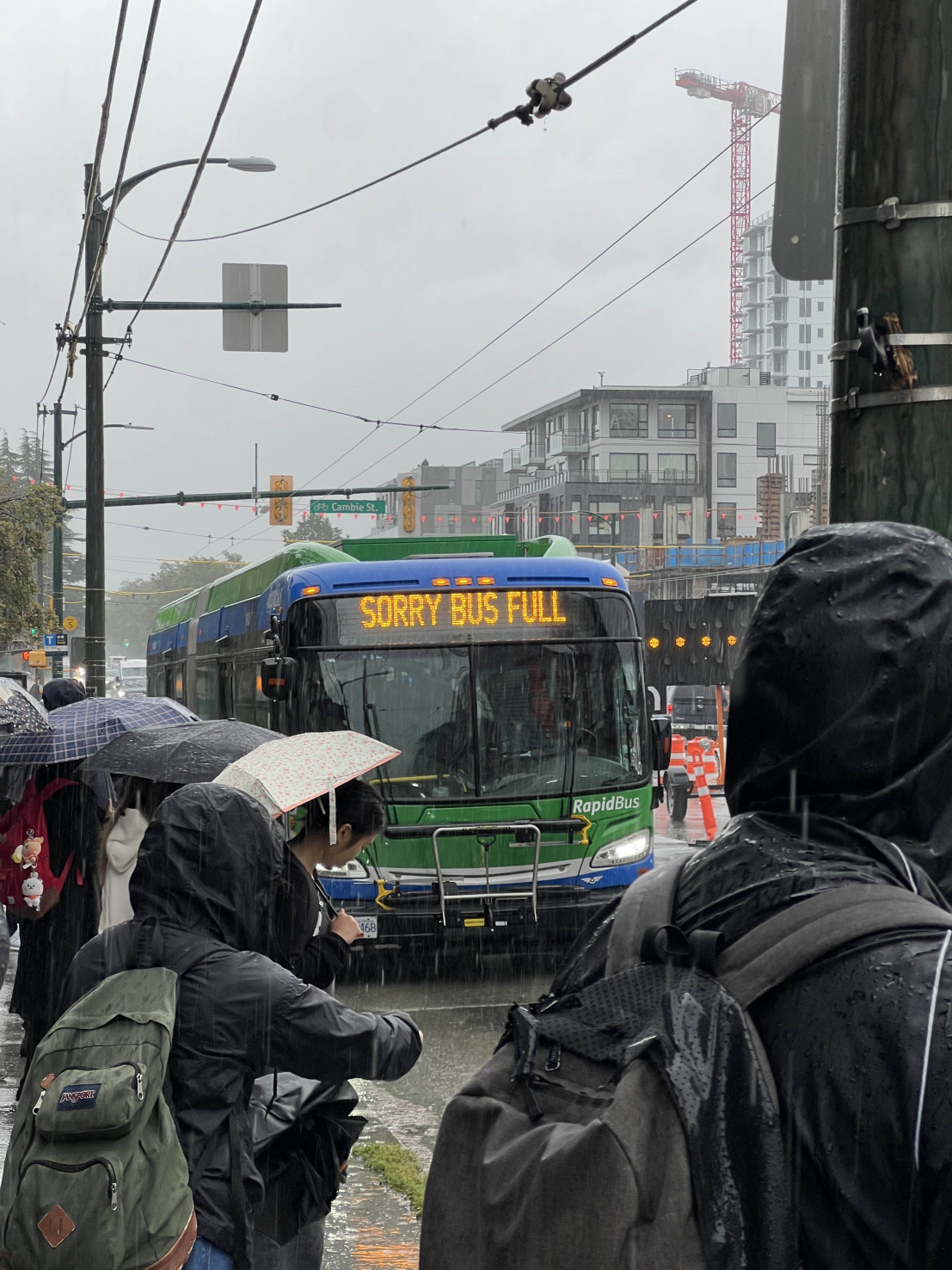
SORRY BUS FULL
I’ve heard people say that "free transit" is a simple, catchy concept that can appeal to anyone, even those whose only experience with transit is going to the airport or to a football game. By comparison, the concept of "good transit" might feel wonky or luxurious. But spend 40 minutes waiting for a bus on the gravel shoulder of a highway with no bench and you will fully grasp the appeal of "good transit." There is a perception that the median voter cannot understand this, but in my experience, they can. A 2024 poll of Canadians showed that 81% supported transit expansion.
Metro Vancouver’s bus network will cost $1.22 billion to operate this year. The cost of free transit (minus the cost of progressive fare discounts) would be enough to boost bus service by an unimaginable 50%, putting an additional 850 buses on the road. This would be enough to completely eliminate overcrowding, extend frequent service to almost everyone and introduce a whole new layer of regional express routes. Paratransit service could be made available on demand, region-wide, 24 hours a day.
To those who think we can have it all, that we don’t have to prioritize our funding asks based on what does the most good: I hope you’re right. We need people that push the boundaries of what’s possible. As for me, I’m going to keep prioritizing the transit rider who lives near Bolivar Park, in one of Surrey’s most affordable neighborhoods, where buses come every 60 minutes on Sunday. And the residents of Douglas, also in Surrey, whose nearest bus stop is a 40 minute walk away. And the riders of my region’s six most overcrowded routes, all in Surrey, who often see "SORRY BUS FULL" as the bus passes them by.
—
Denis Agar is the Executive Director of Movement: Metro Vancouver Transit Riders, a group that pushes for faster, more reliable, more abundant, more affordable transit. Before that, he did transit network planning for 10 years — and still dabbles in it from time to time. He studied planning at Toronto Metropolitan University and sustainable transportation at the University of Washington. Reach him at https://denisagar.com.

Fisticuffs: The argument FOR fare-free transit
When the barrier to entry drops to zero, magic can happen.

Rhode Island Ends Free Transit Program
The state’s public transit agency cited cost overruns and a looming ‘fiscal cliff.’
Free Transit Pass Program Extended in Columbus
According to Columbus officials, transit ridership to and from downtown doubled in the years since the city implemented a free transit pass program.

Planetizen Federal Action Tracker
A weekly monitor of how Trump’s orders and actions are impacting planners and planning in America.

Northwest rail fans eager for Sept. 30 debut of Amtrak’s Airo fleet
Get ready for that new train smell and more seats. But they won’t go faster or run more frequently on the Cascades route in Washington and Oregon.

Trump is considering data centers on 6 states' public land — some state officials say they had no idea
If the administration approves the proposed projects, data center and data center-related developments will cover 17,600 acres of public land.

After decades of planning, Sacramento gains new light rail station
Trains will arrive every 15 minutes during peak hours and every 30 minutes during non-peak hours.

Massive tunnel-boring machine breaks ground on Gateway Project
The Trump administration revoked funding for the project in October 2025, and then restored it earlier this year.

Airo trainsets begin service on Amtrak Cascades route
The trains feature panoramic windows, complementary wifi and over 300 seats per train set.

FREE Course: Walkable City 1: Why Walkability?
After describing his path towards focusing on walkability as the essence of good planning, Jeff Speck marches through his five principal reasons for making more walkable places.
Reinventing Malls: Planning Alchemy—Turning Gray Fields Into Gold
The course focuses on the opportunities and imperatives that shape reinvention of mall sites.

City of Thousand Oaks
City of Wisconsin Rapids
Harvard University Graduate School of Design
The Architects Foundation
University of Cincinnati Online
Northern Illinois Transit Authority (NITA)
The Pocatello Development Authority
The Urban Renewal Agency of the City of Pocatello

