Communities in Colorado are using a do-it-yourself process known as “Call Yourself Creative” to establish new neighborhoods that leverage the arts for community and economic development goals.



Many communities today are embracing the arts as an economic development strategy, as shown by data on the economic impact of arts and culture shared by the National Assembly of State Arts Agencies (NASAA) from the Arts and Cultural Production Satellite Account (ACPSA).
According to the ACPSA, the arts and culture industry added $876.7 billion to the U.S. gross domestic product in 2020. Also in 2020, arts and cultural commodities produced a $28 billion trade surplus. These are amazing numbers. And these are only the national data. If you’re curious about how arts and culture are impacting any state economically, you can view NASAA’s interactive dashboard.
The Local Initiative Support Corporation (LISC) defines creative placemaking as a method for communities to achieve physical, social, and economic change through arts and culture. With more communities embracing their unique arts and culture, the presence of creative placemaking is on the rise.
One way that communities are embracing creative placemaking, for example, is through establishing Arts Districts. Today, there are 29 Arts and Entertainment Districts in Maryland, nine Cultural Districts in South Carolina, 13 Creative Districts in Washington, and 12 Arts and Cultural Districts in New Mexico.
A Colorado example
With Arts Districts becoming more prevalent nationwide, communities may wonder how they can get started with creating an Arts District for themselves. The good news: communities can get started on their Arts District journey as soon as they are ready.
An existing do-it-yourself (DIY) process in Colorado, titled Call Yourself Creative, supports communities in their journeys to becoming a Creative Arts District. Today, Colorado has 30 Creative Districts. Individuals who follow Call Yourself Creative’s three-stage process are guided through the foundational elements of organizing a Creative District in Colorado. Here’s a brief summary of each stage:
Stage One: Identify
Determine the stakeholders and supporters in your creative community. One of the outcomes of this step is to establish a type of committee or working group to take this community-based initiative to the next level.
Stage Two: Engage
Take inventory of what makes your community creative, unique, and valuable. Having a record of these characteristics and values will help produce a vision statement, or statements, that the community can get behind.
Stage Three: Formalize
Discuss implementation, including current and future programming, and an action plan for moving forward. The Colorado Creative Industries created a DIY checklist to help guide communities through this last stage.
This three-stage DIY approach can assist any community at the beginning stages of forming its Arts District or for communities that are just thinking about what it means to become an Arts District. If this brief summary sparks any interest, I encourage you to visit this webpage for more details and to learn about success stories from communities who have followed this DIY approach.
Resources to help you start today
Call Yourself Creative reveals a grassroots process that centers relationships and creative placemaking as a foundation. Although this model is used for communities in Colorado, the elements from this framework may be replicated by those who reside in other states.
Here are a few other organizations that share data, how-tos, and technical assistance on creative placemaking and community revitalization:
How many Arts Districts are in your state? Have you thought about proposing the idea of your community becoming an Arts District?
If so, here are a couple of questions to consider:
- How do we preserve an area’s art and culture while keeping people and residents in place?
- How do we continue to build upon an area’s existing art and culture to ensure that the community remains viable, affordable, and accessible?
Also, keep in mind potential tourism impacts, perceivable fears of displacement, and future community needs as time changes such as the tools to support and sustain local businesses, and live/work co-spaces. Funding is the other half of the equation and this public resources guide is a good place to begin a search. There are federal funding programs that support creative placemaking efforts and communities can tap into local and State funding programs too.
Creating an Arts District will amplify the distinct characteristics that your community has no matter if your community is in an urban, suburban, or rural setting. In addition to revitalizing a community’s economy, Arts Districts also create a sense of belonging and ownership among residents. This is a great opportunity for people to collaborate together and create what they desire to see in their neighborhoods and cities. Arts Districts are certainly not one size fits all, but that’s the beauty of it.

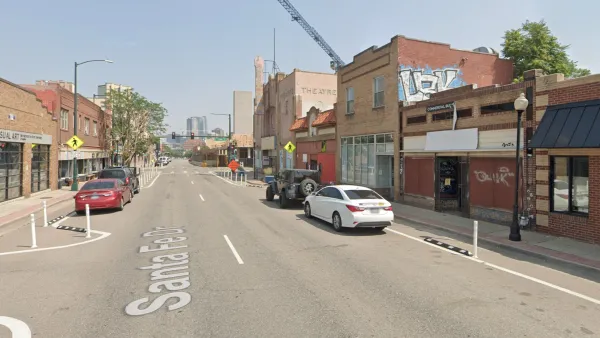
Denver Wants Ground Floor Retail, Sidewalk Extensions to Achieve Main Street 'Vibe'
The Arts District on Santa Fe Drive is considered one of Denver's final frontiers for revitalization. Local stakeholders are targeting zoning changes as a potential solution.
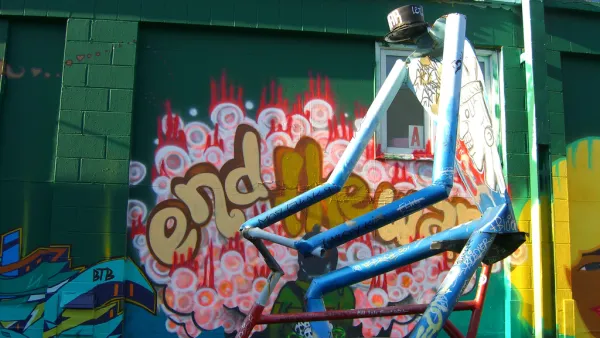
A Tale of Arts-Driven Gentrification in Northeast Minneapolis
It's a familiar story: artists who flocked to an underused district for the low prices and plentiful space now find themselves inundated by new money, newcomers, and lots of craft beer.
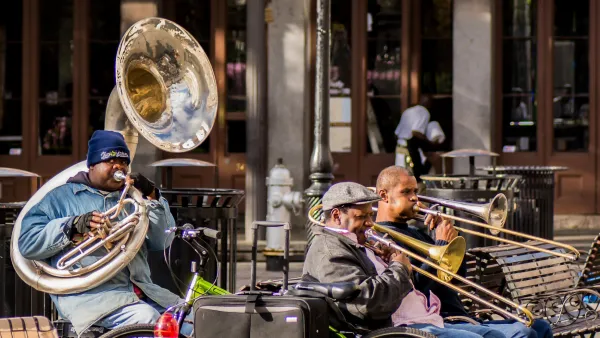
How Will Pricey Cities House Their Artists?
With rents on the rise even in "inexpensive" cities like New Orleans, artists and musicians are getting priced out. Affordable housing designated for artists is one way to help them stay.

The state-sanctioned urbicide of Austin
People don’t kill cities. Freeways do.

US to reduce Colorado River water deliveries to Mexico
A new Colorado Treaty amendment reduces Mexico’s Colorado River water allocation by 250,000 acre feet.

New Jersey’s second-largest city bans standalone data centers
Jersey City will continue to allow co-location facilities, such as those meant for research institutions that store their own data.

Amtrak not solely to blame for New Jersey commuter rail's unreliability, report finds
A new study from the Garden State Initiative found that NJ Transit’s budget grew 20% across a 4 year period, but reliability declined significantly over the same period.

EPA erases limits on planet-warming pollution from power plants
Under Monday’s plan, power plants would still have some limits on how much mercury, arsenic and other contaminants they can emit.

Phoenix announces new on-demand transit service, more frequent RAPID buses
Both new services will launch in October, and are part of Phoenix's Project Effective Access Solutions for Easing Congestion.

FREE Course: Walkable City 1: Why Walkability?
After describing his path towards focusing on walkability as the essence of good planning, Jeff Speck marches through his five principal reasons for making more walkable places.
Reinventing Malls: Planning Alchemy—Turning Gray Fields Into Gold
The course focuses on the opportunities and imperatives that shape reinvention of mall sites.

Eagle County Government
Harvard University Graduate School of Design
Nashville Planning Department
The Architects Foundation
University of Cincinnati Online
The Pocatello Development Authority
The Urban Renewal Agency of the City of Pocatello
Journal of the American Planning Association

