The Lego brick is 65 years old this year. Learn more about its history and impacts on both children and adults.



Did you know that Lego is derived from the Danish phrase leg godt which means "play well"? Lego has certainly been well-played by many generations and is well-known for its multicolored, interlocking plastic bricks accompanying an array of gears, figurines, and other parts. Lego pieces may be assembled and connected in a variety of ways to build objects, including buildings, vehicles, and working robots; anything constructed can be taken apart again and the pieces reused to create new things.
As it exists today, the Lego brick is 65 years old, with the Billund, Denmark-based company patenting its iconic design back on January 28, 1958. In this fascinating article by Jason Aten, we learn more about the history and appeal of this “thoughtful toy.” While the brick has not changed for over six decades, it is as popular as ever and continues to promote “learning through play.” As Aten explains, the toy has a multi-generational dimension: “Every time a parent passes along a set of bricks to their child, they pass along all of the imagination and memories. They pass along something more than just empty-minded distractions.”
To learn more, please read the source article.
Read the full story: 65 Years Ago, Lego Patented Its Iconic Brick. This Vintage Ad Is a Reminder of Why the Brand Is So Beloved


LEGO Building Carbon-Neutral Factory in Virginia
The Denmark-based toy company just broke ground on a new carbon-neutral run factory in Chesterfield County near Richmond, Virginia.
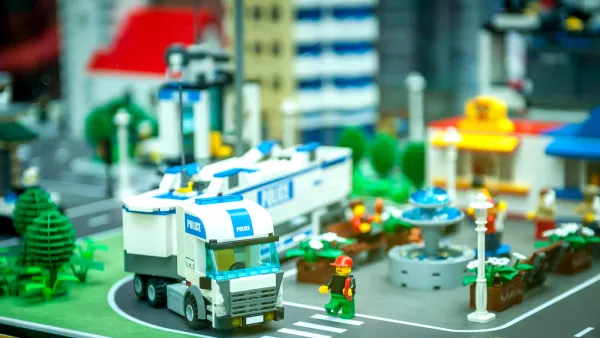
Lego Neglects Space for Bike Lanes
A Dutch advocate believes Lego's city sets should reflect streets that prioritize all users. Including bike lanes would be one way for the toy manufacturer to start accomplishing that goal.

Urban Planning Insights From Your Inner Child (or Your Actual Child)
Los Angeles County park planner and parent Clement Lau writes about how 'playing' and parenting has given him insight into the urban environment that he applies in his profession.

Planetizen Federal Action Tracker
A weekly monitor of how Trump’s orders and actions are impacting planners and planning in America.

The state-sanctioned urbicide of Austin
People don’t kill cities. Freeways do.

Colorado’s Largest Data Center Could Rise Next to Homes — Without a Public Hearing
The proposed campus would consume 11 times the power of Denver International Airport; as it has across the country, opposition mounts.

Judges permit Denver to divert 77,000 acre feet from the Colorado River for reservoir expansion
Overuse and climate change have caused the Colorado River’s water levels to plummet.

Amtrak, CN end decades-long dispute with eight-year agreement
The new operating agreement establishes an updated framework for the companies to work together, including processes to resolve disputes.

Raised interest rates may kill financially vulnerable construction projects
The chief economist at ConstructConnect warns that if construction project owners are negatively impacted by the raised rates, it could result in delayed payments to contractors.

FREE Course: Walkable City 1: Why Walkability?
After describing his path towards focusing on walkability as the essence of good planning, Jeff Speck marches through his five principal reasons for making more walkable places.
Reinventing Malls: Planning Alchemy—Turning Gray Fields Into Gold
The course focuses on the opportunities and imperatives that shape reinvention of mall sites.

Greater Baltimore Committee
Eagle County Government
Harvard University Graduate School of Design
The Architects Foundation
University of Cincinnati Online
The Pocatello Development Authority
The Urban Renewal Agency of the City of Pocatello
Journal of the American Planning Association