Despite the powerful impact of local land use and zoning policies on housing costs and supply, many U.S. mayors believe they have little control over homelessness in their cities.


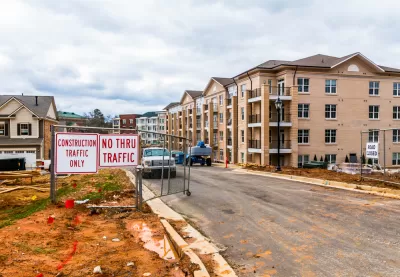
“According to a report released in December by the U.S. Department of Housing and Urban Development (HUD), nearly 600,000 Americans were homeless at this time last year,” writes Carl Smith for Governing. But according to the 2021 Menino Survey of Mayors, “only 1 in 5 mayors felt they had more than ‘moderate’ control over homelessness in their cities,” and almost seven out of 10 did not see zoning as a significant barrier to reducing homelessness.
As Smith points out, “Improving social services won’t be enough if housing is in short supply, or too expensive,” but only 30 percent of homelessness plans from the nation’s 100 largest cities mention zoning and land use. Yet “It’s important to recognize that one of the basic reasons people don’t have housing is because the housing is not being built in the first place, says architect and attorney Sara Bronin.”
Bronin points out that “Although restrictions on housing density have a well-recognized impact on housing development, code requirements regarding such things as lot size, parking spaces, building height or public hearings can also present barriers.”
Resource-strapped mayors can now look to federal “Yes In My Backyard” grants from the Department of Housing and Urban Development (HUD) to advance zoning reform. The grant program was allocated $85 million in the 2022 omnibus spending bill.
Read the full story: Few Mayors Connect the Dots Between Zoning and Homelessness


Data: Rent Dropping in ‘Pro-Housing’ Cities
Zoning deregulation seems to be having a strong impact on rent prices in some of the nation’s largest cities.

How Houston Can Be a Model for Housing Reform
The city builds more new housing than almost any other and has dramatically reduced homelessness, yet low-income families struggle to find affordable housing.
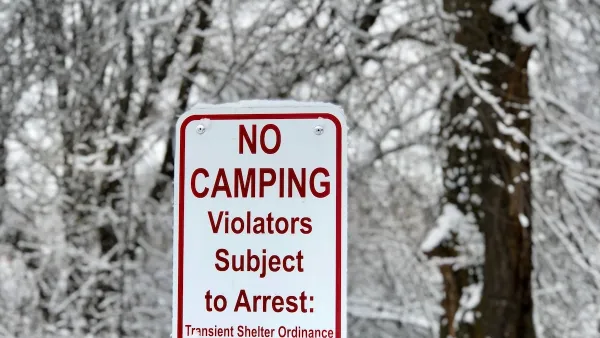
Opinion: Unhoused People Need Housing, Not Law Enforcement
The sharp increase in the unhoused population calls for urgent action, not criminalization.

Planetizen Federal Action Tracker
A weekly monitor of how Trump’s orders and actions are impacting planners and planning in America.

California plans to bury El Niño’s downpour
If the state plays its cards right, it may be able to store a billion acre-feet of El Niño’s water in aquifers.

Desperate measures: Advocates weigh draining Lake Powell to fill Colorado River
Draining the reservoir could reduce evaporation losses by a couple hundred thousand acre-feet.

California city breaks ground on transit connector
The project includes three mobility hubs and a pedestrian bridge.

After public outcry, Massachusetts city releases housing development tracker
Cambridge’s tracker currently shows 250 housing projects in various stages of development.

40 years after approval, Chicago breaks ground on new park
The park honors Jean Baptiste Point du Sable, the city’s first permanent non-native settler.

FREE Course: Walkable City 1: Why Walkability?
After describing his path towards focusing on walkability as the essence of good planning, Jeff Speck marches through his five principal reasons for making more walkable places.
Reinventing Malls: Planning Alchemy—Turning Gray Fields Into Gold
The course focuses on the opportunities and imperatives that shape reinvention of mall sites.

City of Rosemead
Rutgers University, Edward J. Bloustein School of Planning and Public Policy
One Hundred Miles
Hunter College, City University of New York (CUNY)
The Architects Foundation
University of Cincinnati Online
City of Cambridge
Montrose County
The Pocatello Development Authority