The plan to extend a Caltrain line to the Salesforce Transit Center is now expected to cost $6.7 billion as the agency faces a budget shortfall for its electrification project.


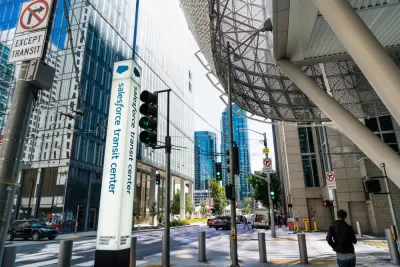
A new cost projection for a 1.3 mile section of tunnel in San Francisco is 34 percent higher than a 2015 estimate, reports Dan Zukowski in Smart Cities Dive. The $6.7 billion project would extend the Caltrain commuter train to the downtown Salesforce Transit Center, which opened in 2018 to much anticipation and serves as the city’s primary bus hub.
According to Zukowski, “The Caltrain rail line is also designated as the future route of the California high-speed rail project to San Francisco. But the cost of connecting the high-speed line being built in the Central Valley to the Caltrain line was estimated last year at $19 billion, and there is no funding currently available.” Meanwhile, Governor Newsom’s proposed 2023-2024 budget cuts $2 billion from transit and rail spending, and Caltrain’s plan to shift away from fossil fuel-powered to electrified trains is facing funding challenges.
Read the full story: Cost of proposed San Francisco commuter, high-speed rail tunnel grows to $6.7B

Despite 47% growth in ridership, Caltrain could close a third of its stations
Riders can currently travel up to 79 miles between San Francisco and Gilroy, California.
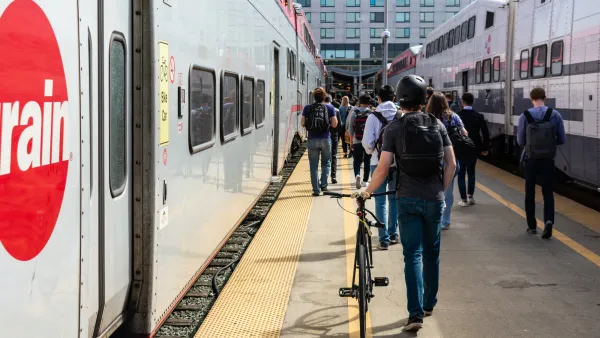
Caltrain Outlaws Cargo Bikes, Child Seats as Demand Overwhelms Bike Cars
Around 20 percent of Caltrain passengers use a bike to get to or from stations.
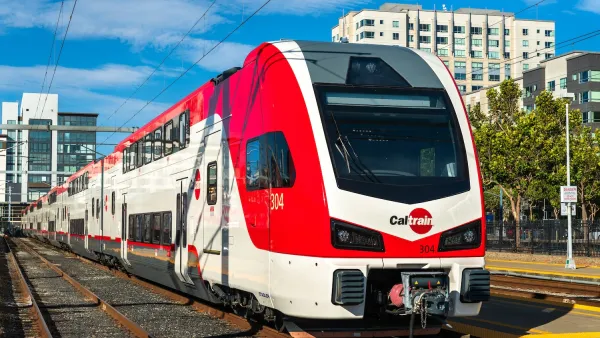
Passengers Flock to Caltrain After Electrification
The new electric trains are running faster and more reliably, leading to strong ridership growth on the Bay Area rail system.

Planetizen Federal Action Tracker
A weekly monitor of how Trump’s orders and actions are impacting planners and planning in America.

California plans to bury El Niño’s downpour
If the state plays its cards right, it may be able to store a billion acre-feet of El Niño’s water in aquifers.

Desperate measures: Advocates weigh draining Lake Powell to fill Colorado River
Draining the reservoir could reduce evaporation losses by a couple hundred thousand acre-feet.

Housing is the top priority of Seattle’s sole new councilmember
Jenks campaigned on building 1,000 new units of affordable housing.

New tax cuts may slash $1.5 billion in funding for Miami transit, public parks
Amendment 3 will save Miami-Dade homeowners $2,700 in 2028.

Arizona, Wisconsin, Pennsylvania hope to finally advance climate goals post-midterms
The three states have spent years under Republican or divided control.

FREE Course: Walkable City 1: Why Walkability?
After describing his path towards focusing on walkability as the essence of good planning, Jeff Speck marches through his five principal reasons for making more walkable places.
Reinventing Malls: Planning Alchemy—Turning Gray Fields Into Gold
The course focuses on the opportunities and imperatives that shape reinvention of mall sites.

City of Rosemead
Rutgers University, Edward J. Bloustein School of Planning and Public Policy
One Hundred Miles
University of Michigan School for Environment and Sustainability (SEAS)
Hunter College, City University of New York (CUNY)
The Architects Foundation
City of Cambridge
Montrose County
The Pocatello Development Authority