If you’ve ever looked closely at the elevator panel of a high-rise hotel or residential building, you’ve likely noticed something missing: a button for the 13th floor.



Editor's Note: This article was updated on October 29, 2025 with new images.
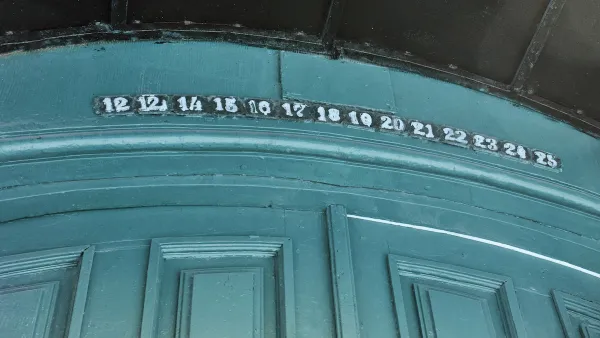
Have you boarded an elevator in a high-rise apartment building or hotel and noticed that the buttons skip directly from 12 to 14? Perhaps there’s a button labeled 12A between them instead. Obviously, buildings over 12 stories tall have a physical 13th floor. But thanks to widespread fear and superstition surrounding the number 13, known as triskaidekaphobia, in American and Western European culture, many architects still opt to omit the number, skipping straight to the 14th floor or renaming the 13th floor instead. While the exact origins of 13 as an unlucky number is lost to time, the superstition continues to affect modern building customs.
Like other phobias, triskaidekaphobia can trigger severe anxiety in its sufferers. In a 2007 Gallup poll, 13 percent of respondents (an eerie coincidence, evidently) admitted they would “feel uneasy” staying on the 13th floor, making the decision to omit the feared floor a logical economic decision for hoteliers and developers. According to a study by Realting.com, apartments located on the 13th floor of their building sold 18 percent less frequently. In the early days of high-rise construction, building height was a constant concern. In the early 20th century, New York architects were advised to build below 13 floors to avoid casting too much shade on surrounding buildings.
A 2002 estimate from Otis Elevators estimates that 85 percent of the company’s elevators do not have 13th floor buttons. In New York, a study of residential condominium buildings found that only 5 percent have a 13th floor. Many buildings use the floor for mechanical or administrative purposes, sometimes labeling it "M" for "Mechanical" or "Mezzanine," while others incorporate it into two-story units that only require an entrance on the floor above or below.
Sometimes, in buildings that originally labeled the 13th floor, such as Chicago’s Hotel Burnham, built in 1895, later owners removed the 13th floor and went to presumably considerable expense to change the room numbers on every floor above the 12th to fall in line with the superstition. Some famous buildings buck the trend, however: New York City’s Flatiron Building, Empire State Building, Waldorf Astoria Hotel, and all Hilton International hotels all have 13th floors. A similar belief impacts construction in China, where the fourth floor is commonly omitted because of the association of the word for ‘four’ with the word for ‘death.’
Naturally, conspiracy theories about nefarious goings-on on the ‘hidden’ 13th floor flourish, both in real conspiracist circles and in popular culture. Films, TV shows, and video games from The X-Files to Tomb Raider have featured the 13th floor as the site of secretive government experiments, portals to alternate realities, or sinister murder lairs. In an episode of the Nickelodeon horror anthology Are You Afraid of the Dark?, a young girl stumbles onto a mysterious toy testing facility on the vacant 13th floor of her apartment building, only to discover that it’s actually the portal through which her extraterrestrial parents can land on Earth to take her home.

Critics of the practice say the odd labeling can lead to confusion and misunderstandings by first responders and emergency personnel. Consequently, the city of Vancouver banned the practice of omitting floor numbers in 2015.
The missing 13th floor isn’t the only superstition common to architecture. During construction, when buildings reach their maximum height, builders still place “topping trees” or wreaths at the top of the structure. The evergreen tree can be traced back to Northern European traditions meant to honor tree-dwelling spirits, either expressing gratitude for the lumber used or acknowledging the sacrifice of the land. Today, construction crews around the world still hold “topping out” parties and sign structural pieces to celebrate the occasion. A tradition in the American South holds that a particular shade of blue, known as ‘haint paint,’ applied to porch ceilings wards off malevolent spirits, and the color can still be seen on many Southern houses. The gargoyles common on medieval European churches and buildings, in addition to draining rainwater away from the buildings, are reputed to ward off evil spirits, as are China’s curved roof lines. In a morbid twist, dead cats are frequently discovered embedded in the walls of newly constructed homes and buildings in the United Kingdom, France, the United States, and various other countries as good luck charms.
The next time you’re in a tall building, take notice of the elevator buttons. Chances are you’ll likely notice the lasting result of this ancient superstition. Happy Halloween!

The Mystique of the 13th Floor: Superstitions, Sustainability, and the Future of Electrical Building Design
How engineers adapt a common superstition to maximize the utility of a stigmatized space.
Feature Doc on Urban Design Out Soon (Trailer)
Urbanized is a feature-length documentary about the design of cities, which looks at the issues and strategies behind urban design and features some of the world’s foremost architects, planners, policymakers, builders, and thinkers.
Don't demolish a Mies van der Rohe building in Chicago
See the building and the walls in the lower left? They're designed by Ludwig Mies van der Rohe. They're part of the ensemble he designed at the Illinois Institute of Technology (IIT). Mies and his office designed this corner around the same time they were designing the masterpiece on campus - Crown Hall.

The state-sanctioned urbicide of Austin
People don’t kill cities. Freeways do.

US to reduce Colorado River water deliveries to Mexico
A new Colorado Treaty amendment reduces Mexico’s Colorado River water allocation by 250,000 acre feet.

New Jersey’s second-largest city bans standalone data centers
Jersey City will continue to allow co-location facilities, such as those meant for research institutions that store their own data.

Amtrak not solely to blame for New Jersey commuter rail's unreliability, report finds
A new study from the Garden State Initiative found that NJ Transit’s budget grew 20% across a 4 year period, but reliability declined significantly over the same period.

EPA erases limits on planet-warming pollution from power plants
Under Monday’s plan, power plants would still have some limits on how much mercury, arsenic and other contaminants they can emit.

Phoenix announces new on-demand transit service, more frequent RAPID buses
Both new services will launch in October, and are part of Phoenix's Project Effective Access Solutions for Easing Congestion.

FREE Course: Walkable City 1: Why Walkability?
After describing his path towards focusing on walkability as the essence of good planning, Jeff Speck marches through his five principal reasons for making more walkable places.
Reinventing Malls: Planning Alchemy—Turning Gray Fields Into Gold
The course focuses on the opportunities and imperatives that shape reinvention of mall sites.

Eagle County Government
Harvard University Graduate School of Design
Nashville Planning Department
The Architects Foundation
University of Cincinnati Online
The Pocatello Development Authority
The Urban Renewal Agency of the City of Pocatello
Journal of the American Planning Association

