The company formerly known as Facebook’s once planned to revive the Dumbarton Rail Bridge across the San Francisco Bay. Those plans are as derelict as the bridge.


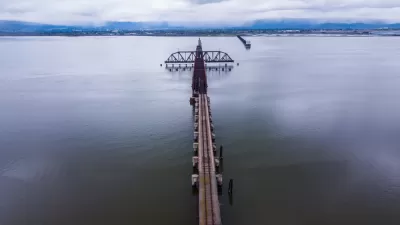
Starting in 2017, Facebook explored a rebirth of the Dumbarton Rail Bridge, the portion of the 18-mile Dumbarton Rail Corridor that passes over the San Francisco Bay, connecting Menlo Park and Redwood City on the west side of the bay to Newark and Union City to the east. Between 2017 and 2020, Facebook spent $20 million on plans to revive the corridor. An estimate published in 2020 targeted the corridor for operation in 2028.
The pandemic changed the equation of explosive growth that defined the San Francisco Peninsula in the previous decade, according to an article by Issie Lapowsky for the New York Times. The plan is now defunct, reports Lapowsky: “Facebook’s employees went home. Traffic died out, and the future of offices themselves became uncertain. Before long, Facebook abandoned its plans for the railroad.”
According to the article, however, the project was always unlikely and signs of the pan’s demise were obvious long before the pandemic came to American shores. “But the story of how Facebook nearly catalyzed one of California’s most transformative infrastructure projects in a generation is a case study in how fast-growing tech giants have sought to radically shape the communities where they’re based and how local governments, starved for resources, have hungrily accepted the help.”
The source article, linked below, includes more details about the history of the bridge, it’s failed original intentions to solve traffic by providing an alternative passenger rail corridor across the bay, and the recent hopes by local leaders for the bridge’s revival.
FULL STORY: Facebook’s Bridge to Nowhere

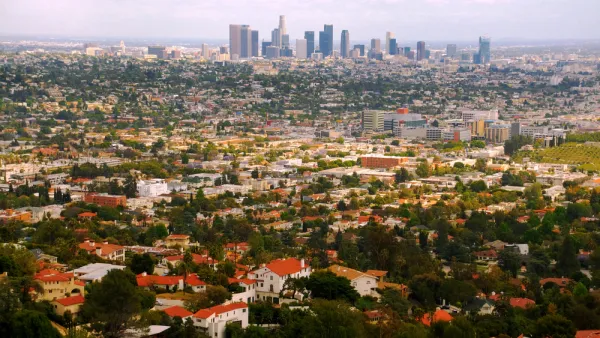
City of Los Angeles Tops 4 Million in Latest State Population Report
As usual, California's fastest growing counties were inland, far from coastal job centers. The big surprise was that the fastest growing city was an affluent Silicon Valley suburb that had been sued in 2012 by affordable housing advocates.
Is the Company Town Back? Sort Of.
Unlike the earlier iteration, today's full-amenity tech campuses provide their well-paid engineers with Millennial-friendly upper middle class comforts. But is that enough?
Big Tech Bets on the Big Apple
Amidst the uncertainty of the pandemic, the four biggest U.S. technology companies have leased or bought enough office space in New York City for 22,000 employees.

The state-sanctioned urbicide of Austin
People don’t kill cities. Freeways do.

US to reduce Colorado River water deliveries to Mexico
A new Colorado Treaty amendment reduces Mexico’s Colorado River water allocation by 250,000 acre feet.

New Jersey’s second-largest city bans standalone data centers
Jersey City will continue to allow co-location facilities, such as those meant for research institutions that store their own data.

Amtrak not solely to blame for New Jersey commuter rail's unreliability, report finds
A new study from the Garden State Initiative found that NJ Transit’s budget grew 20% across a 4 year period, but reliability declined significantly over the same period.

EPA erases limits on planet-warming pollution from power plants
Under Monday’s plan, power plants would still have some limits on how much mercury, arsenic and other contaminants they can emit.

Phoenix announces new on-demand transit service, more frequent RAPID buses
Both new services will launch in October, and are part of Phoenix's Project Effective Access Solutions for Easing Congestion.

FREE Course: Walkable City 1: Why Walkability?
After describing his path towards focusing on walkability as the essence of good planning, Jeff Speck marches through his five principal reasons for making more walkable places.
Reinventing Malls: Planning Alchemy—Turning Gray Fields Into Gold
The course focuses on the opportunities and imperatives that shape reinvention of mall sites.

Eagle County Government
Harvard University Graduate School of Design
Nashville Planning Department
The Architects Foundation
University of Cincinnati Online
The Pocatello Development Authority
The Urban Renewal Agency of the City of Pocatello
Journal of the American Planning Association