New legislation gives the federal agency power to identify the causes of deadly fires and recommend improvements.



The U.S. Fire Administration, part of the Federal Emergency Management Agency (FEMA), will use newly granted investigatory powers to identify buildings at high risk of fire and issue recommendations in an effort to avoid fatal fires like the one that killed 17 people at the Twin Parks North West housing complex a year ago.
As Jeffery C. Mays and Téa Kvetenadze report in the New York Times, “The blaze was sparked by an electric space heater that ignited a mattress, but the victims died of smoke inhalation, not the fire itself. Investigators believe that deadly smoke was able to spread to the upper floors of the 19-story building because of faulty self-closing doors.”
“Just like there is a federal process for investigating airplane incidents and cyber incidents, there ought to be a comparable process for investigating fire incidents in the hopes of translating the lessons learned into policies and practices that will prevent future fires and save lives.”—U.S. Representative Ritchie Torres (D-NY)
The problem is particularly acute in older buildings, many of which provide affordable housing for low-income households. “More than a million American households live in public housing units, and many lack lifesaving measures like sprinklers or hard-wired smoke detectors,” the article points out. Lori Moore-Merrell, head of the U.S. Fire Administration, is quoted as saying that “too many older buildings that serve as affordable housing are grandfathered in and not required to meet the building codes of new construction because of the myth that the improvements are too expensive.” The legislation does not specify any enforcement mechanisms beyond “cooperation with appropriate federal, state, local, tribal, and territorial authorities.”
FULL STORY: Year After Deadly Bronx Blaze, a Plan to Combat ‘America’s Fire Problem’

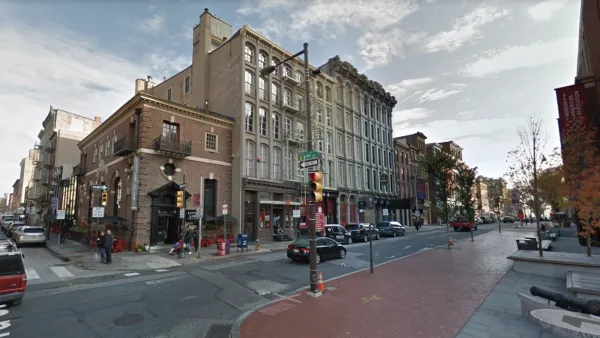
After Another Catastrophic Fire, Reexamining Fire Safety in Philadelphia
"Why does Old City keep burning?" That's the question posed by Philadelphia Inquirer architecture critic Inga Saffron.
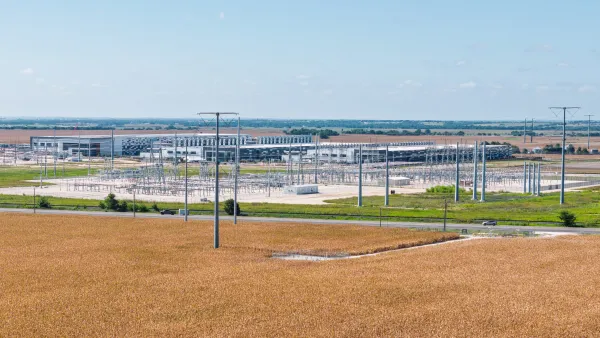
As Texans face soaring electricity costs, a public health crisis looms
Demand for electricity in Texas is surging, largely driven by data centers and other industries, and residential customers are footing the bill.
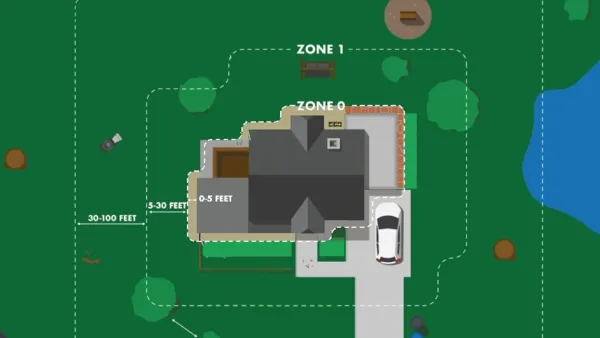
California implements strict new landscaping rules for residents in fire-prone areas
The new rules ban plants within one foot of homes and do not allow landowners to attach wooden fences to their homes.

Planetizen Federal Action Tracker
A weekly monitor of how Trump’s orders and actions are impacting planners and planning in America.

The state-sanctioned urbicide of Austin
People don’t kill cities. Freeways do.

US to reduce Colorado River water deliveries to Mexico
A new Colorado Treaty amendment reduces Mexico’s Colorado River water allocation by 250,000 acre feet.

Colorado’s Largest Data Center Could Rise Next to Homes — Without a Public Hearing
The proposed campus would consume 11 times the power of Denver International Airport; as it has across the country, opposition mounts.

5 New England states march closer to 800 megawatt wind energy project
Securing federal approval for the project may be complicated under the Trump administration, which has historically been hostile towards domestic wind power.

Baltimore to break ground on $50 million Transit Priority Project
The project will bring faster bus trips, safer streets and better bike connections to Baltimore.

FREE Course: Walkable City 1: Why Walkability?
After describing his path towards focusing on walkability as the essence of good planning, Jeff Speck marches through his five principal reasons for making more walkable places.
Reinventing Malls: Planning Alchemy—Turning Gray Fields Into Gold
The course focuses on the opportunities and imperatives that shape reinvention of mall sites.

Eagle County Government
Harvard University Graduate School of Design
Nashville Planning Department
The Architects Foundation
University of Cincinnati Online
The Pocatello Development Authority
The Urban Renewal Agency of the City of Pocatello
Journal of the American Planning Association