A new White House policy to reduce homelessness seeks to address the root issues that cause people to lose housing and stimulate housing production.



Writing for NPR, Jennifer Ludden reports on the Biden administration’s new plan to address the nation’s homelessness crisis. As Ludden explains, while hundreds of thousands of unhoused Americans have moved into housing in the last five years, roughly the same number have become homeless in the same period, canceling out any progress. “Over the course of this year, more than a million individuals and families were without housing at some point, and they were disproportionately people of color, a disparity the plan aims to address.”
The White House plan calls for a 25 percent reduction in the number of unsheltered people in the next three years. “The new plan includes a range of ways to boost the supply of affordable housing, as well as increase the number of emergency shelters and support programs. But its biggest change is a call for the ‘systematic prevention of homelessness,’ focusing on those who are struggling to keep them from losing their housing.”
The policy signals a shift toward addressing the root causes of homelessness and developing interventions that help people stay in their homes. In San Diego, a pilot program subsidizes rent for low—income seniors and others, distributing relatively small amounts of money—up to $500—that can make a crucial difference for households struggling to keep up with rent.
The article describes other programs designed to identify people at risk for losing their housing and providing assistance early on. Advocates say this not only helps keep people housed, but reduces the cost of interventions.
Meanwhile, the policy acknowledges the impact of the country’s housing shortage. “Among many other things, the Biden administration's plan on homelessness includes ongoing efforts to make it easier to use federal tax credits to build low income housing, and encourages communities to rezone for denser development.”
FULL STORY: It is the obvious thing.' The White House tries a new tack to combat homelessness

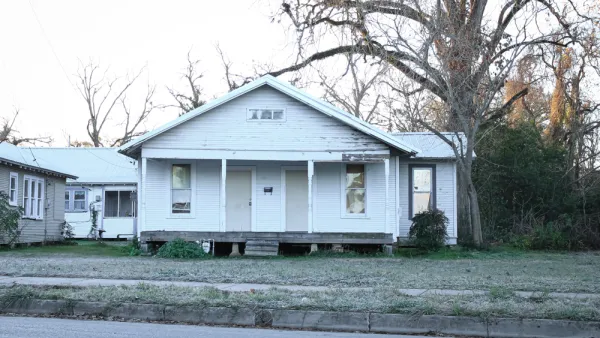
The Quiet Housing Crisis in Rural America
While housing shortages in major cities are grabbing headlines, rural communities are seeing higher rates of growth in housing prices and a silently spreading homelessness crisis.

Opinion: Los Angeles Needs More Housing, Fast
The shortage of housing at all price points in the region is the main driver of high costs and the growing homelessness crisis.

Dallas Housing Nonprofit Warns of Dwindling Resources
A nonprofit that works to house people experiencing homelessness is calling on more landlords to participate in programs that match housing voucher recipients with available units.

The state-sanctioned urbicide of Austin
People don’t kill cities. Freeways do.

US to reduce Colorado River water deliveries to Mexico
A new Colorado Treaty amendment reduces Mexico’s Colorado River water allocation by 250,000 acre feet.

New Jersey’s second-largest city bans standalone data centers
Jersey City will continue to allow co-location facilities, such as those meant for research institutions that store their own data.

Amtrak not solely to blame for New Jersey commuter rail's unreliability, report finds
A new study from the Garden State Initiative found that NJ Transit’s budget grew 20% across a 4 year period, but reliability declined significantly over the same period.

EPA erases limits on planet-warming pollution from power plants
Under Monday’s plan, power plants would still have some limits on how much mercury, arsenic and other contaminants they can emit.

Phoenix announces new on-demand transit service, more frequent RAPID buses
Both new services will launch in October, and are part of Phoenix's Project Effective Access Solutions for Easing Congestion.

FREE Course: Walkable City 1: Why Walkability?
After describing his path towards focusing on walkability as the essence of good planning, Jeff Speck marches through his five principal reasons for making more walkable places.
Reinventing Malls: Planning Alchemy—Turning Gray Fields Into Gold
The course focuses on the opportunities and imperatives that shape reinvention of mall sites.

Eagle County Government
Harvard University Graduate School of Design
Nashville Planning Department
The Architects Foundation
University of Cincinnati Online
The Pocatello Development Authority
The Urban Renewal Agency of the City of Pocatello
Journal of the American Planning Association