As businesses shortened their hours during the pandemic, Philadelphia residents found themselves with fewer options for places to spend their evenings.


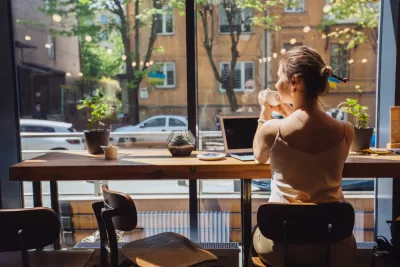
“Third spaces,” public or quasi-public spaces where people spend time between home and work, are rapidly disappearing in Philadelphia, according to an article by Jake Blumgart in the Philadelphia Inquirer. As Blumgart explains,
Few coffee shops in Center City or South Philadelphia stay open past 5 p.m. The city’s all-night diners are dwindling away. The Barnes & Noble on Walnut Street is downsizing, causing an outcry over the loss of a public restroom and accommodating public spaces. Fast food restaurants have largely vanished from downtown.
Blumgart points out that areas around universities tend to cultivate semi-public spaces that provide a pleasant respite for people beyond the campus community. In Philadelphia, “University City is home to so many “third spaces” partly because Penn and Drexel see them as part of a larger strategy to improve relations with the surrounding neighborhoods.”
But as businesses slashed their hours during the pandemic to accommodate city restrictions, lower demand, and reduced staff, many people find themselves without anywhere outside of bars to spend time in the evenings.
Read the full story: Why there’s nowhere to hang out at night in Philly anymore
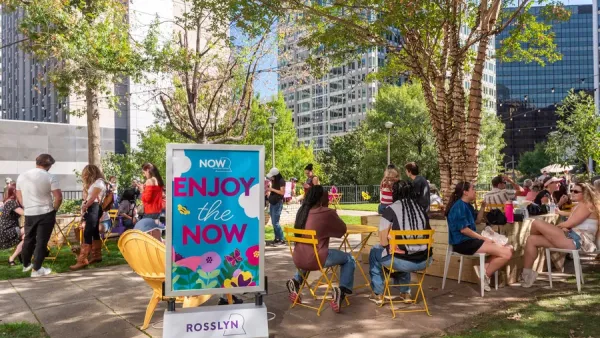
Arlington's 'pop-up park' activates a vacant plaza
Third spaces don't have to be permanent.
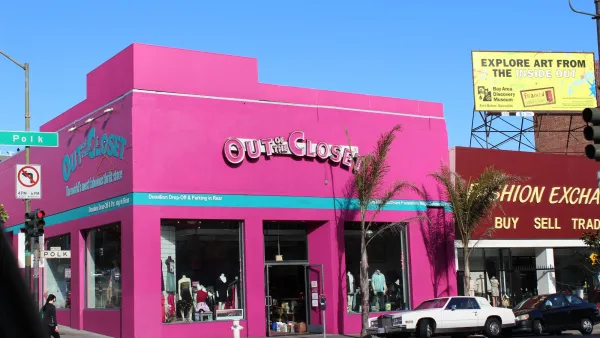
Thrift stores, public libraries and genderless bathrooms: How public amenities become trans infrastructure
Amenities like ample public transit, affordable retail and non-gendered bathroom spaces can make cities more safe and welcoming for transgender residents — and everyone else.
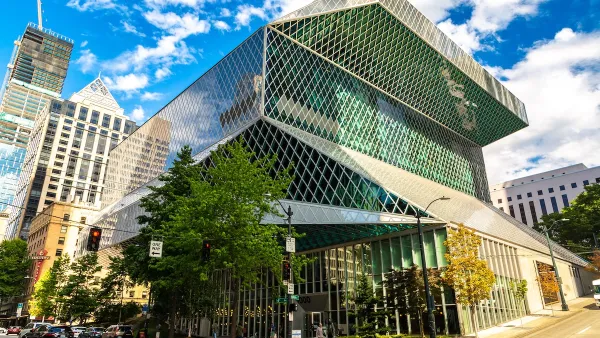
Public Libraries May Be More Relevant Than Ever
Libraries around the country are expanding their services in an effort to become ‘third spaces’ for the community.

Planetizen Federal Action Tracker
A weekly monitor of how Trump’s orders and actions are impacting planners and planning in America.

California plans to bury El Niño’s downpour
If the state plays its cards right, it may be able to store a billion acre-feet of El Niño’s water in aquifers.

Desperate measures: Advocates weigh draining Lake Powell to fill Colorado River
Draining the reservoir could reduce evaporation losses by a couple hundred thousand acre-feet.

US buildings threatened, destroyed by fires set to triple by 2060
Researchers found a high fire risk for socioeconomically vulnerable neighborhoods in the American West.

LA residents may be allowed to paint their own crosswalks
Councilwoman Katy Yaroslavsky put out a motion instructing the Los Angeles Department of Public Transportation to study the feasibility of allowing volunteers to paint crosswalks.

Dallas moves to overhaul its zoning code
The city's zoning reform will allow more multi-family and mixed-use developments.

FREE Course: Walkable City 1: Why Walkability?
After describing his path towards focusing on walkability as the essence of good planning, Jeff Speck marches through his five principal reasons for making more walkable places.
Reinventing Malls: Planning Alchemy—Turning Gray Fields Into Gold
The course focuses on the opportunities and imperatives that shape reinvention of mall sites.

City of Rosemead
Rutgers University, Edward J. Bloustein School of Planning and Public Policy
One Hundred Miles
Hunter College, City University of New York (CUNY)
The Architects Foundation
University of Cincinnati Online
City of Cambridge
Montrose County
The Pocatello Development Authority