City management models offer different benefits and drawbacks.


Alan Ehrenhalt, writing in Governing, describes the history of a little-known form of municipal government known as city commission government. Portland, Oregon, the only American city to use this management system, will now replace it with a “more conventional structure,” writes Ehrenhalt, using this as a jumping-off point for discussing the merits and drawbacks of different city management models.
Although city commissions are intended to “invest politicians with executive authority so that they would take government more seriously and to encourage voters to elect more capable candidates in the first place,” the problems with the model are easy to spot. “[The model gives] elected council members the authority to function as administrators of key city departments. You could win a place on the council and soon find yourself running the police department, even if (as was often the case) you didn’t know much about law enforcement.”
Nevertheless, the system paved the way for the city manager model common in many small cities and towns today. This system comes with its own flaws, such as how “city-manager government leaves no one in a position to serve as a public spokesperson and chief decision-maker.” Meanwhile, the strong-mayor system can lead to either success or corruption, depending on the people in office. As Ehrenhalt concludes, “A dedicated and shrewd public servant can make any system work — even a city commission — while a scoundrel or an incompetent can make any system fail.”
FULL STORY: Is There a Single Best Way to Manage a City?


Amtrak unveils proposal to restructure, split into 3 divisions
Agency officials say the new structure would offer more transparency and accountability.
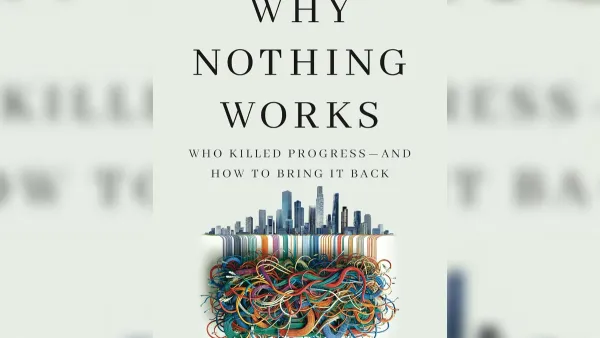
Review: Why Nothing Works
In “Why Nothing Works,” Marc Dunkelman argues that America’s political gridlock stems from an internal progressive conflict between Hamiltonian centralized efficiency and Jeffersonian individualized safeguards.
Are Black Mayors Being Pushed Out of Office?
The mayors of New York, St. Louis, and Pittsburgh all stand to lose their seats in the coming weeks. They also all happen to be Black.

Planetizen Federal Action Tracker
A weekly monitor of how Trump’s orders and actions are impacting planners and planning in America.

The state-sanctioned urbicide of Austin
People don’t kill cities. Freeways do.

US to reduce Colorado River water deliveries to Mexico
A new Colorado Treaty amendment reduces Mexico’s Colorado River water allocation by 250,000 acre feet.

5 New England states march closer to 800 megawatt wind energy project
Securing federal approval for the project may be complicated under the Trump administration, which has historically been hostile towards domestic wind power.

Baltimore to break ground on $50 million Transit Priority Project
The project will bring faster bus trips, safer streets and better bike connections to Baltimore.

Airbnb launches $250 million 'last-dollar financing' housing accelerator, makes first investment in Austin
The company will put $6.4 million towards affordable housing development in Texas’ capital.

FREE Course: Walkable City 1: Why Walkability?
After describing his path towards focusing on walkability as the essence of good planning, Jeff Speck marches through his five principal reasons for making more walkable places.
Reinventing Malls: Planning Alchemy—Turning Gray Fields Into Gold
The course focuses on the opportunities and imperatives that shape reinvention of mall sites.

Eagle County Government
Harvard University Graduate School of Design
Nashville Planning Department
The Architects Foundation
University of Cincinnati Online
The Pocatello Development Authority
The Urban Renewal Agency of the City of Pocatello
Journal of the American Planning Association