The $3.5 billion project aims to revitalize the historic waterfront with new mixed-use developments.


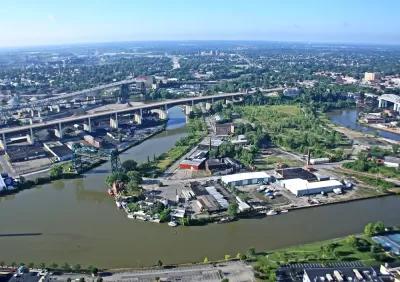
A $3.5 billion plan will revitalize the Cuyahoga River waterfront and bring “new residential units, office spaces, entertainment areas and parks, as well as open up other retail and recreation opportunities” to the area, reports Katie Priefer for Spectrum News 1.
Once so polluted it helped inspire the Clean Water Act, the Cuyahoga River has experienced vast improvements in recent years. According to Cleveland Mayor Justin Bibb,
For a long time our river has been seen as a national model for climate justice and a rebirth in this country and today’s vision you’re going to see will certainly be not just a national model but I believe a global model for how to truly create equity in terms of master planning and how to truly make sure our waterfronts and our riverfront can be a model for the nation.
The project is part of a broader plan to make Cleveland a “15-minute city” where residents can access most of their needs in their neighborhood without having to use a car. As Priefer explains, “The project will take 15 to 20 years to complete and puts an emphasis on accessibility, sustainability and equity.”
Read the full story: Cleveland announces $3.5B Cuyahoga riverfront plan

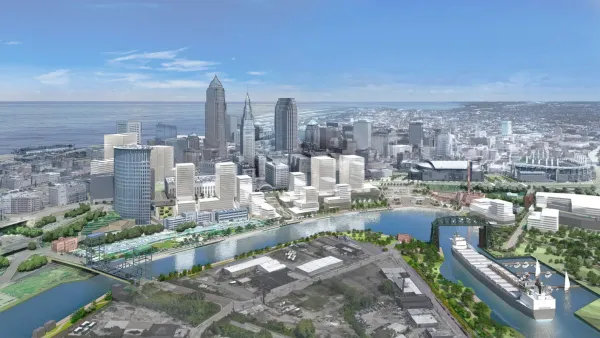
Cleveland Announces Transit-Oriented Riverfront Development
The proposed development would include 130 acres of housing, retail, and entertainment spaces.
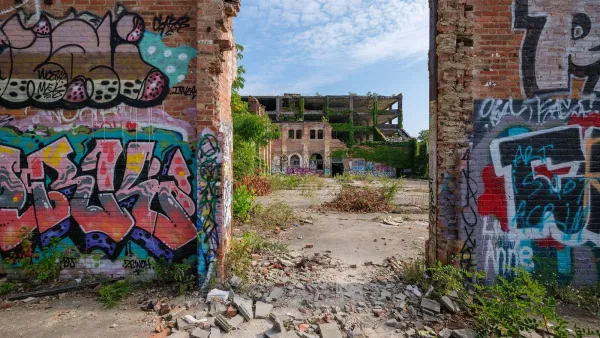
Cleveland announces new Midline industrial investment district
The plan calls for at least 1.5 million square feet of new industrial and commercial space alongside housing.
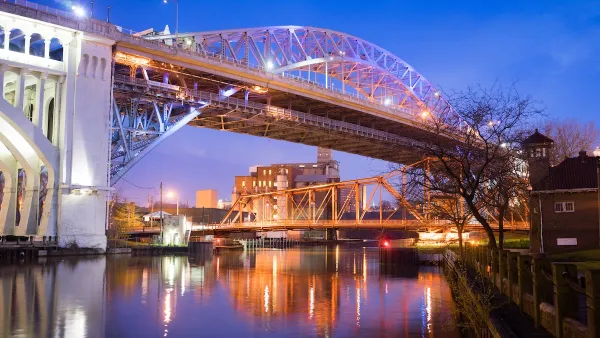
Defunct Streetcar Bridge Could Become Cleveland’s ‘Low Line’
The city will develop a plan to transform an unused streetcar deck on the Veterans Memorial Bridge into a connector for bikes and pedestrians as well as a welcoming public space.

Planetizen Federal Action Tracker
A weekly monitor of how Trump’s orders and actions are impacting planners and planning in America.

The state-sanctioned urbicide of Austin
People don’t kill cities. Freeways do.
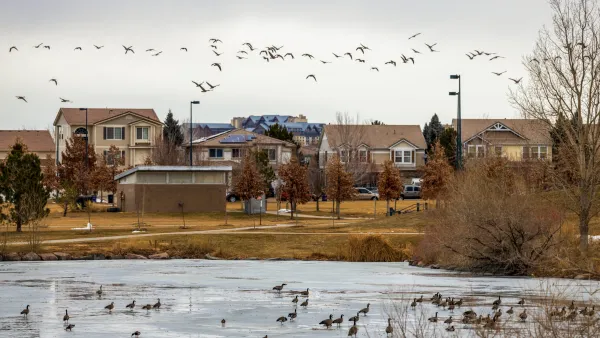
Colorado’s Largest Data Center Could Rise Next to Homes — Without a Public Hearing
The proposed campus would consume 11 times the power of Denver International Airport; as it has across the country, opposition mounts.

Nation's most wind-powered state turns to coal as data centers increase energy demand
For the first time in decades, Iowa has increased its generation of coal power.

NYC cools commuters with city's first rain garden above a bus stop
New York City officials say the plants in the rain garden can absorb 16 gallons of rainwater during heavy storms.

Brightline West’s future may rely on $6 billion federal loan
The company has until Nov. 2 to make a $400 million equity investment into its proposed high-speed rail line.

FREE Course: Walkable City 1: Why Walkability?
After describing his path towards focusing on walkability as the essence of good planning, Jeff Speck marches through his five principal reasons for making more walkable places.
Reinventing Malls: Planning Alchemy—Turning Gray Fields Into Gold
The course focuses on the opportunities and imperatives that shape reinvention of mall sites.

Greater Baltimore Committee
Eagle County Government
Harvard University Graduate School of Design
The Architects Foundation
University of Cincinnati Online
The Pocatello Development Authority
The Urban Renewal Agency of the City of Pocatello
Journal of the American Planning Association