Under a new bill, most new buildings will be banned from using natural gas in an effort to reduce greenhouse gas emissions and shift to all-electric power.


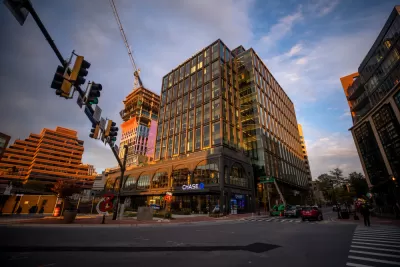
Writing in DCist, Callan Tansill-Suddath describes a new bill passed in Montgomery County that will require most new buildings to be powered exclusively by electricity. “The Comprehensive Building Decarbonization bill, introduced by outgoing At-Large Councilmember Hans Riemer, will require the County Executive to issue all-electric building standards for most new construction in the county.”
According to the article, “Certain buildings will be exempt from the requirements, including commercial kitchens, crematories, and buildings used for manufacturing.” Some types of buildings will get an additional year to meet the new requirements.
The bill comes on the heels of the county’s June 2021 Climate Action Plan, which sets a goal of reducing greenhouse gas emissions by 80 percent by 2027.
Read the full story: Montgomery County Council Passes Building Decarbonization Bill

Improving Indoor Air Quality, One Block at a Time
A movement to switch to electric appliances at the neighborhood scale is taking off in California.

The Search for a New Green Building Standard
The need to slash emissions from buildings is increasingly urgent, and critics say LEED won't get us there.
County Requires All New Homes To Be Green
All new homes in Montgomery County, Maryland, will be required to comply with environmental and energy-efficiency standards.

Planetizen Federal Action Tracker
A weekly monitor of how Trump’s orders and actions are impacting planners and planning in America.

Eastern Nebraska is running out of electricity
Data centers and electrification are straining eastern Nebraska’s grid, throttling economic development.

Study reveals best places in the U.S. for cycling, walking
New research from Streetlight Data examines bicycle and pedestrian miles per capita in the 100 largest U.S. cities by population.

Federal government nominates new FTA administrator
Mark Aesch is currently the founder and CEO of a transportation management consulting firm.

Developers reveal $10 billion stadium plan as ‘Hail Mary’ to keep Bears in Chicago
The plan would also boast a public park, high- and mid-rise buildings and a youth sports complex.

As Texas embraces carbon storage, a Black community questions the risks
Texas now issues permits for companies to store carbon dioxide underground. East Texas residents fear safety risks, and skeptics doubt the climate benefits.

FREE Course: Walkable City 1: Why Walkability?
After describing his path towards focusing on walkability as the essence of good planning, Jeff Speck marches through his five principal reasons for making more walkable places.
Reinventing Malls: Planning Alchemy—Turning Gray Fields Into Gold
The course focuses on the opportunities and imperatives that shape reinvention of mall sites.

City of Charlotte
City of Rosemead
Rutgers University, Edward J. Bloustein School of Planning and Public Policy
University of Michigan School for Environment and Sustainability (SEAS)
Hunter College, City University of New York (CUNY)
The Architects Foundation
City of Cambridge
The Pocatello Development Authority
The Urban Renewal Agency of the City of Pocatello