All new homes in Montgomery County, Maryland, will be required to comply with environmental and energy-efficiency standards.


"The measure, meant to reduce energy consumption by 15 to 30 percent, is part of a far-reaching environmental initiative. It includes property tax credits for residents who switch to renewable energy, a requirement that residents disclose utility costs when they sell a home and a plan to get county officials to trade in their government-issued sport-utility vehicles."
"Developers in the Washington region have been voluntarily building homes with energy-efficient appliances and heating and cooling systems. But Montgomery officials said the county would become the first in the country to require that new single-family homes and townhouses meet Energy Star standards created by the Environmental Protection Agency to encourage the use of energy-efficient windows, tightly sealed structures and effective insulation. Oregon, a Dallas suburb and Gaithersburg have similar programs."
"Other jurisdictions in the region have tackled pieces of Montgomery's energy package, but none has taken on so many issues at once. Arlington County fuels its diesel vehicles with biodiesel, almost 10 percent of Fairfax County's employees participate in a telecommuting program and Howard County provides tax credits to homeowners who install solar or geothermal heating systems."
Read the full story: Montgomery Aims to Make Green Homes Mandatory

Affordable Housing Renovations Halt Mid-Air Amidst DOGE Clawbacks
HUD may rescind over a billion dollars earmarked for green building upgrades.
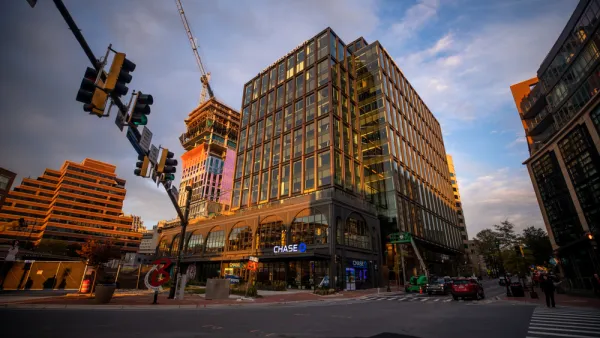
Montgomery County To Require Decarbonized New Construction
Under a new bill, most new buildings will be banned from using natural gas in an effort to reduce greenhouse gas emissions and shift to all-electric power.
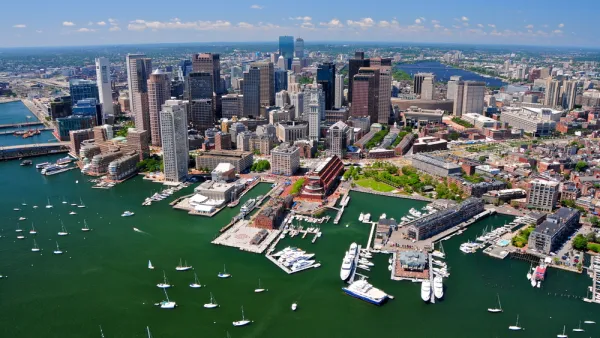
Boston Plans To Restrict Fossil Fuel Use in Buildings
As part of the city’s broader climate goals, Mayor Michelle Wu wants to require all new buildings to eliminate the use of fossil fuels.

Planetizen Federal Action Tracker
A weekly monitor of how Trump’s orders and actions are impacting planners and planning in America.

California plans to bury El Niño’s downpour
If the state plays its cards right, it may be able to store a billion acre-feet of El Niño’s water in aquifers.

Desperate measures: Advocates weigh draining Lake Powell to fill Colorado River
Draining the reservoir could reduce evaporation losses by a couple hundred thousand acre-feet.

Chicago voters approve permanent festival grounds, penalty for vacant property owners
Currently, major summer and fall festivals take over public parks for weeks at a time, drawing criticism from nearby residents

NYC votes to cut outdoor dining red tape, speed up permitting
New York City also voted to allow the Department of Transportation to begin work on urgent projects before notifying elected officials.

California appears to reject Prop. 45
The proposition would have expanded the projects that qualify for a streamlined environmental review, effectively paring down the California Environmental Quality Act.

FREE Course: Walkable City 1: Why Walkability?
After describing his path towards focusing on walkability as the essence of good planning, Jeff Speck marches through his five principal reasons for making more walkable places.
Reinventing Malls: Planning Alchemy—Turning Gray Fields Into Gold
The course focuses on the opportunities and imperatives that shape reinvention of mall sites.

City of Rosemead
Rutgers University, Edward J. Bloustein School of Planning and Public Policy
One Hundred Miles
Hunter College, City University of New York (CUNY)
The Architects Foundation
University of Cincinnati Online
City of Cambridge
Montrose County
The Pocatello Development Authority