Small, lightweight vehicles similar to golf carts could eliminate many Americans’ need for a second car and make roads safer for all users.


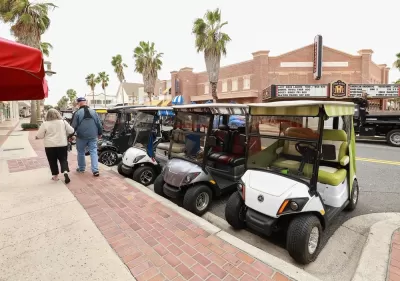
Writing in Fast Company, David Zipper highlights the disruptive potential of 'minimobility'—a variation on the more well-known micromobility—in particular, an emerging class of tiny vehicles modeled on golf carts. “While bikes and scooters have been around for well over a century, the addition of small electric batteries has been a revelation, letting riders comfortably handle steep hills and muggy weather (e-cargo bikes are especially helpful when lugging groceries or children).” Meanwhile, smaller, lighter vehicles pose less danger to pedestrians in collisions and produce fewer emissions for building and charging than larger electric cars.
As American cars get bigger and more expensive, small, efficient vehicles could become increasingly attractive to buyers. “Consumer preferences are already showing signs of shifting. In the U.S., more e-bikes are now sold than electric cars,” Zipper points out. “Golf carts—already ubiquitous in suburban enclaves like The Villages, Florida, and Peachtree City, Georgia—are popping up in places like Scottsdale, Arizona, and downtown Tampa.”
Zipper notes that the biggest obstacle to more widespread adoption is America’s tradition of car-centric development and road design, but that the tide is slowly turning in favor of multimodal infrastructure. “The prospect of a rapid shift toward small vehicles should be keeping auto executives awake at night. But from a societal perspective, it could be a dream come true.”
FULL STORY: Why car companies should fear the golf cart

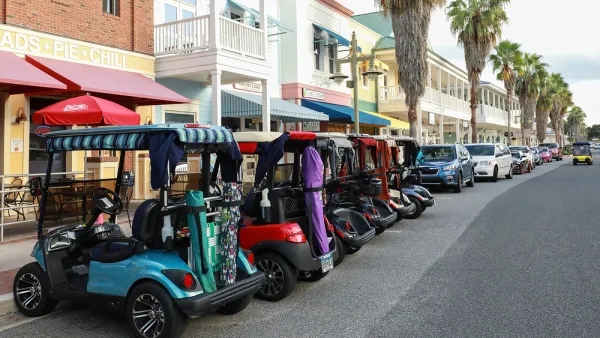
Why Golf Carts Could Quietly Revolutionize Transportation
More communities are catching on to the benefits of golf carts as a safe, low-emissions mode of transport for neighborhood trips.
NYC e-bike injury study highlights 'critical infrastructure deficiencies'
The sharp rise in e-mobility injuries points to a need for safer roads, not more punitive laws.
September Must-Reads: Top 10 Articles From Last Month
EV drivers can no longer use carpool lanes alone, Bay Area transit is saved — for now — by a $750 million loan, and a Florida commuter rail line loses its state subsidy, jeopardizing its future.

The state-sanctioned urbicide of Austin
People don’t kill cities. Freeways do.

US to reduce Colorado River water deliveries to Mexico
A new Colorado Treaty amendment reduces Mexico’s Colorado River water allocation by 250,000 acre feet.

New Jersey’s second-largest city bans standalone data centers
Jersey City will continue to allow co-location facilities, such as those meant for research institutions that store their own data.

Amtrak not solely to blame for New Jersey commuter rail's unreliability, report finds
A new study from the Garden State Initiative found that NJ Transit’s budget grew 20% across a 4 year period, but reliability declined significantly over the same period.

EPA erases limits on planet-warming pollution from power plants
Under Monday’s plan, power plants would still have some limits on how much mercury, arsenic and other contaminants they can emit.

Phoenix announces new on-demand transit service, more frequent RAPID buses
Both new services will launch in October, and are part of Phoenix's Project Effective Access Solutions for Easing Congestion.

FREE Course: Walkable City 1: Why Walkability?
After describing his path towards focusing on walkability as the essence of good planning, Jeff Speck marches through his five principal reasons for making more walkable places.
Reinventing Malls: Planning Alchemy—Turning Gray Fields Into Gold
The course focuses on the opportunities and imperatives that shape reinvention of mall sites.

Eagle County Government
Harvard University Graduate School of Design
Nashville Planning Department
The Architects Foundation
University of Cincinnati Online
The Pocatello Development Authority
The Urban Renewal Agency of the City of Pocatello
Journal of the American Planning Association