A new report suggests that despite recent challenges, the ‘value proposition’ of urban activity centers remains as strong as ever.


An analysis from the Bass Center for Transformative Placemaking presents evidence in favor of the argument that, despite pre-pandemic growth in suburban job centers and the pandemic-induced clearing out of central business districts, “cities’ value proposition is still very much intact.”
Tracy Hadden Loh and Jennifer S. Vey outline the results of the report for Bloomberg CityLab, writing that “these findings can inform city leaders on how workplace needs might continue to evolve — and how they can deploy policy and funding to shape a more resilient economic future.”
Presenting their evidence, Loh and Vey note that “In our model, every increase in median activity center job density of 1,000 jobs per square mile is worth an additional $1,723 in output per worker across the metro area.”
While correlation is not causation, this suggestive relationship between place and productivity is important for employers and workers to consider as they make decisions about where to locate — and for urban leaders to recognize as they work to sway those choices in their favor.
According to Loh and Vey, “There is substantial measurable value to employers and the economy when firms locate their workers in close proximity not just to their colleagues, but to workers from other firms and sectors.”
The authors describe steps cities can take to keep downtowns vibrant, such as ensuring frequent and reliable transit services to reduce the cost and time spent commuting, concentrating housing near job centers, and investing in inviting, safe, accessible public spaces that make people want to spend time in cities.
FULL STORY: The Productive Power of Urban ‘Activity Centers’

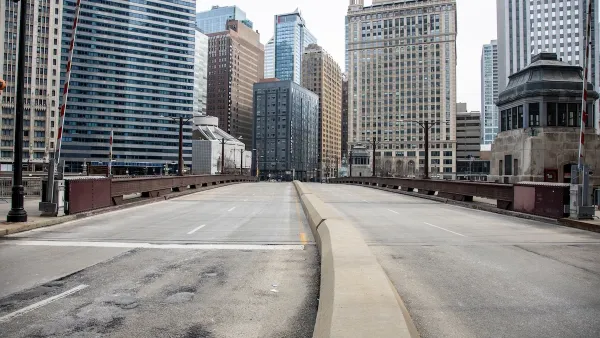
Major US Cities Still Suffering Downtown Decline
Research shows that the “donut effect” hollowing out central business districts since the pandemic continues to cause economic decline in the 12 largest American cities.
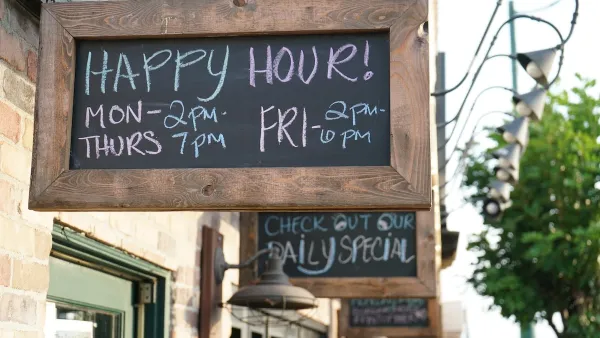
States Look to Eliminate Happy Hour Bans to Lure People Downtown
More than 20 states have laws banning or limiting happy hours at bars and restaurants. Now, some are revisiting these regulations in an effort to boost commerce in struggling downtown districts.
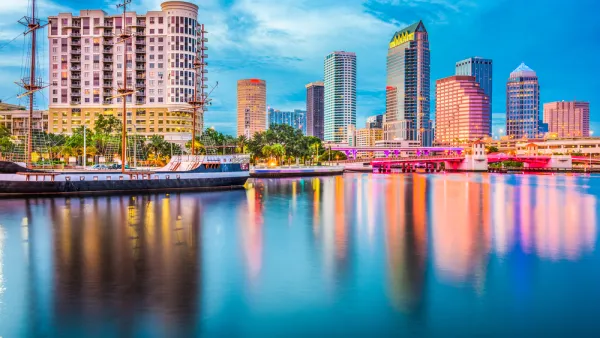
Comparing Downtown Recovery Across U.S. Cities
The Downtown Vitality Index measures how central cities are adjusting to post-pandemic conditions.

The state-sanctioned urbicide of Austin
People don’t kill cities. Freeways do.

US to reduce Colorado River water deliveries to Mexico
A new Colorado Treaty amendment reduces Mexico’s Colorado River water allocation by 250,000 acre feet.

New Jersey’s second-largest city bans standalone data centers
Jersey City will continue to allow co-location facilities, such as those meant for research institutions that store their own data.

Amtrak not solely to blame for New Jersey commuter rail's unreliability, report finds
A new study from the Garden State Initiative found that NJ Transit’s budget grew 20% across a 4 year period, but reliability declined significantly over the same period.

EPA erases limits on planet-warming pollution from power plants
Under Monday’s plan, power plants would still have some limits on how much mercury, arsenic and other contaminants they can emit.

Phoenix announces new on-demand transit service, more frequent RAPID buses
Both new services will launch in October, and are part of Phoenix's Project Effective Access Solutions for Easing Congestion.

FREE Course: Walkable City 1: Why Walkability?
After describing his path towards focusing on walkability as the essence of good planning, Jeff Speck marches through his five principal reasons for making more walkable places.
Reinventing Malls: Planning Alchemy—Turning Gray Fields Into Gold
The course focuses on the opportunities and imperatives that shape reinvention of mall sites.

Eagle County Government
Harvard University Graduate School of Design
Nashville Planning Department
The Architects Foundation
University of Cincinnati Online
The Pocatello Development Authority
The Urban Renewal Agency of the City of Pocatello
Journal of the American Planning Association