The city’s latest round of vouchers were snapped up by the public within minutes of being released, showing the unrelenting popularity of the e-bike rebate program.


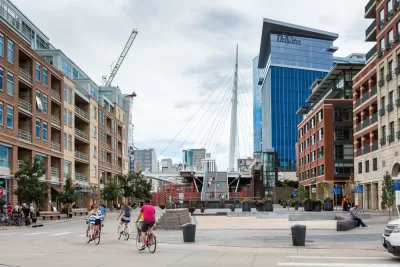
A Denver city program that gives e-bike buyers rebates of up to $1,700 continues to be a hit with residents, with vouchers being snapped up almost as quickly as they’re made available, reports Whitney Bauck for CityLab.
“The Denver initiative grew out of a 2020 vote in which residents approved a 0.25% sales tax increase to provide $40 million in funding per year for climate action, meant to move the city toward its goal of reaching net-zero emissions by 2040.” The initial round was so successful that the city shifted to a monthly voucher release, which is still drawing hundreds of interested Denverites, and “the city is now increasingly being looked to as a model by the rest of the country as local communities take on more initiatives to reach net-zero emissions targets.”
The article attributes the program’s success to its somewhat unique nature, which gives users a discount immediately at the point of sale rather than as a tax rebate. The rebates are also notably large, with the biggest discounts for low-income voucher recipients. “Another essential feature has been the city government’s partnership with local retailers, which helps to ensure that the bike vouchers are incentivizing recipients to keep money circulating in the local economy.”
FULL STORY: Denver’s E-Bike Rebates Are So Hot They're Gone Within Minutes

Washington’s E-Bike Rebate Rollout Shows Success for $1,200 Incentive, Low Redemption Rate for $300 Vouchers
The state’s first e-bike rebate program offers some valuable lessons for future rollouts.
California Cuts Funding for E-bike Rebates
The state cancelled an upcoming round of applications for the wildly popular e-bike incentive program that provided up to $2,000 toward the cost of an electric bike.
California E-Bike Rebate Demand Far Exceeds Supply
The queue to apply for California’s new e-bike incentive program, which only offered 1,500 vouchers, reached 100,000 people.

Planetizen Federal Action Tracker
A weekly monitor of how Trump’s orders and actions are impacting planners and planning in America.

The state-sanctioned urbicide of Austin
People don’t kill cities. Freeways do.

US to reduce Colorado River water deliveries to Mexico
A new Colorado Treaty amendment reduces Mexico’s Colorado River water allocation by 250,000 acre feet.

5 New England states march closer to 800 megawatt wind energy project
Securing federal approval for the project may be complicated under the Trump administration, which has historically been hostile towards domestic wind power.

Baltimore to break ground on $50 million Transit Priority Project
The project will bring faster bus trips, safer streets and better bike connections to Baltimore.

Airbnb launches $250 million 'last-dollar financing' housing accelerator, makes first investment in Austin
The company will put $6.4 million towards affordable housing development in Texas’ capital.

FREE Course: Walkable City 1: Why Walkability?
After describing his path towards focusing on walkability as the essence of good planning, Jeff Speck marches through his five principal reasons for making more walkable places.
Reinventing Malls: Planning Alchemy—Turning Gray Fields Into Gold
The course focuses on the opportunities and imperatives that shape reinvention of mall sites.

Eagle County Government
Harvard University Graduate School of Design
Nashville Planning Department
The Architects Foundation
University of Cincinnati Online
The Pocatello Development Authority
The Urban Renewal Agency of the City of Pocatello
Journal of the American Planning Association